
For over seven decades, the global discourse surrounding the Indian subcontinent has been dominated by narratives of ideological friction, territorial ambition and historical grievances rooted in the trauma of Partition
However, beneath this dense layer of diplomatic grandstanding and religious rhetoric lies a far more pragmatic and unforgiving reality that defines our national security paradigm. The enduring contest over Jammu and Kashmir is fundamentally a struggle for hydrological hegemony. Water, rather than ideology, constitutes the true centre of gravity in this complex geopolitical theatre.
To understand the perpetuation of violence and the continuous recalibration of proxy warfare in the region, one must discard the conventional lens of border disputes and examine the topographical maps that trace the descent of the Indus, Jhelum and Chenab rivers. It is within the powerful currents of these rivers that the survival of an entire agrarian economy rests, dictating state policy and military doctrine from the shadows. The intricate legal frameworks governing these resources often serve as arenas for a different kind of warfare, a battle fought with arbitration clauses and strategic delays to compromise Indian sovereignty.
The Anatomy of a Strategic Artery
The most revealing insight into the strategic mindset driving transnational hostility is found in a metaphor frequently invoked by the political and military elites in Islamabad. The characterisation of Kashmir as the Jugular vein of Pakistan is rarely analysed beyond its emotional resonance, yet it holds the key to their entire geopolitical posture.
In strict anatomical terms, the jugular vein is the critical vessel that carries deoxygenated blood from the head back down to the heart. When mapped onto the physical geography of the subcontinent, this biological analogy perfectly mirrors the hydropolitical reality on the ground. The high altitude glaciers and catchment areas of Jammu and Kashmir serve as the head, while the fertile plains of Punjab and Sindh represent the agricultural heart that sustains the neighbouring nation. If an upper riparian state retains the geographical leverage and the infrastructural capacity to constrict this vital flow, the downstream nation faces absolute systemic failure.
Therefore, the relentless pursuit of influence over Kashmir is not a romantic crusade for solidarity but a highly calculated mechanism designed to secure absolute control over the valves of national survival.
The archives of Hydropolitical intent
This deep reliance on Kashmiri waters has never been a closely guarded state secret, as the historical archives are replete with explicit admissions from top Pakistani leadership regarding their true strategic priorities. Following the signing of the Indus Waters Treaty in 1960, Field Marshal Ayub Khan bluntly noted that the allocation of the western rivers to his nation underscored the critical urgency of gaining physical control over their higher reaches.
This realisation crystallised into formal military doctrine over the subsequent decades. In 1990, while studying at the Royal College of Defence Studies, Brigadier Pervez Musharraf authored a comprehensive thesis that systematically stripped away the ideological camouflage of the conflict. He explicitly argued that the core strategic objective was not the acquisition of the entire Kashmir Valley, but rather the absolute domination of the specific districts in Jammu that form the catchment areas of the Chenab River.
This academic foresight later manifested in his military adventurism, proving that the domination of the river systems was the ultimate prize driving military calculus. Decades later, figures like Muhammad Anwar Khan, former President of Pakistan Occupied Kashmir, publicly validated this stance by declaring that the national economy is entirely dependent on agriculture and consequently reliant upon the uninterrupted flow of waters from Kashmir.
The convergence of state and proxy agendas
The operational execution of this hydropolitical strategy relies heavily on the seamless integration of state military objectives with the kinetic capabilities of non-state actors. We are currently witnessing the rise of the white collar terrorist, an elite strategist who analyses hydrological data and project timelines from secure locations to calibrate the exact level of violence required to stall developmental momentum on the ground. Furthermore, the rhetorical distinction between terrorist propaganda and official state policy has entirely evaporated in recent years.
The notorious threats of water terrorism historically championed by extremist figures like Hafiz Saeed have been formally adopted by the conventional military establishment. Recent statements from the official spokespersons promising to choke their neighbour if water flows are altered confirm that the proxy and the patron operate from an identical script.
This synchronised agenda is further illuminated by the maritime drills and underwater exercises conducted by the terrorist organisations in the Mangla Dam reservoir. These highly publicised exercises in Pakistan Occupied Kashmir are sophisticated psychological operations aimed at projecting a permanent asymmetric threat over the river basins, serving to constantly remind Indian planners that the waters of the Indus system remain a heavily contested frontline.
Asymmetric warfare and the catchment terrain
This strict doctrinal focus on water security provides the only coherent explanation for the recent and alarming tactical shifts in the theatre of conflict, particularly the deliberate intensification of militancy south of the Pir Panjal range. A popular, yet fundamentally superficial, narrative suggests that the redeployment of Indian military units to the Line of Actual Control created a sudden security vacuum that insurgent elements spontaneously exploited.
This perspective completely misreads the strategic intent of the adversary. The rugged terrains of Doda, Kishtwar, Rajouri and Poonch are not merely transit routes for infiltrators, but rather they are the primary catchment funnels for the Chenab and Jhelum basins.
The violence engineered in these specific districts is a deliberate and meticulously planned holding operation designed to compromise Indian national security at its source. By injecting highly trained proxy fighters into these specific zones, the architects of conflict execute a long term strategy of infrastructural denial. The primary objective is to maintain a perpetual state of militarised instability, thereby rendering the construction of Indian hydroelectric projects prohibitively expensive and logistically perilous.
It is an asymmetric veto designed to prevent the Indian state from consolidating its sovereign footprint in the very areas where the rivers gather their strength.
The unmasking of a resource war
Recognising this geographical pivot is absolute paramount for the future of Indian national security strategy, as it definitively strips away the ideological camouflage that Rawalpindi has maintained for decades. The grand narrative of fighting for the rights and solidarity of the Kashmiri people has been entirely exposed as a hollow fabrication. It is now undeniably bare that the establishment across the border has been waging a brutal water war all along. For over a half century, they have callously utilised the people of Jammu and Kashmir as expendable cannon fodder, sacrificing local youth and destabilising communities merely to guarantee the survival of their own agricultural economy. The fact that the militancy has deliberately migrated south of the Pir Panjal is the ultimate confirmation that the adversary is no longer fighting for the demographic centres of the Kashmir Valley, but rather they are fighting a desperate kinetic war for the water taps in the Chenab and Jhelum basins.
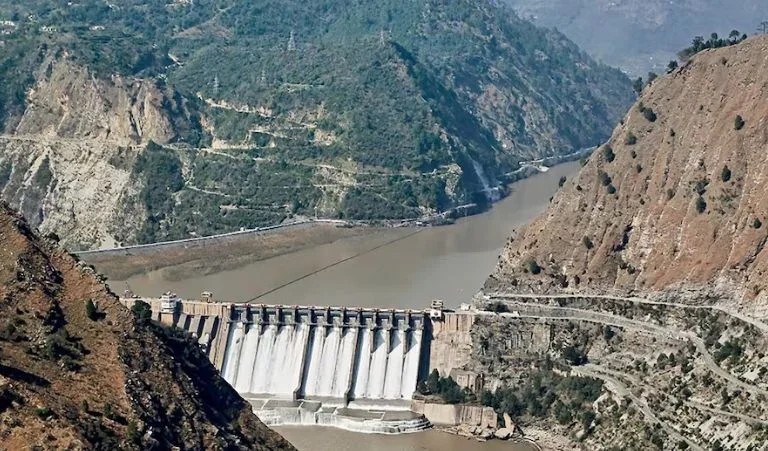
Therefore, the defence of Rajouri, Poonch, Doda and Kishtwar can no longer be viewed merely as a routine border management challenge or a standard counter insurgency operation. Securing this specific southern geography is synonymous with securing the hydrological sovereignty of the Indian republic. If the adversary uses asymmetric violence as an infrastructure veto to stall run of the river projects like Ratle, PakalDul and Kiru, then the Indian security apparatus must view the rapid unhindered construction of these exact dams as the ultimate weapon of deterrence. We must unequivocally shatter the illusion that proxy warfare can dictate our developmental pace in the catchment areas. Neutralising the terror networks operating south of the Pir Panjal and accelerating our hydropolitical dominance in the Chenab valley are not two separate endeavours, but rather they are the exact same national security objective. By transforming the southern districts from a vulnerable bleeding ground into an impenetrable fortress of sovereign infrastructure, India will permanently dismantle the grand hydropolitical design of a hostile neighbour and finally emancipate the Kashmiri people from being casualties in someone else’s war for water.
The author Ajmal Shah is an advocate practicing at the High Court of Jammu & Kashmir and Ladakh, at Srinagar.

