
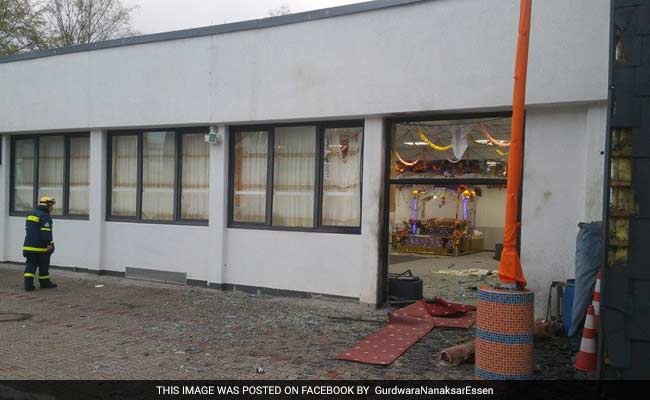
In a shocking incident marking a disturbing escalation in violence linked to sections of the Sikh diaspora in the West, two Indian men – Rajinder Singh and Gurmit Singh – were shot dead by an unidentified assailant shortly after exiting a warehouse functioning as a gurudwara – Gurudwara Mata Sahib Kaur Ji.
The incident followed a Vaisakhi gathering at Covo in the Bergamo province of Italy, on the night of April 17, 2026. According to reports, the assailants approached the victims, fired multiple shots, and fled the scene by car, along with three accomplices. A third individual was also grazed by gunfire.
Authorities have released limited information, maintaining strict confidentiality; however, investigators are reportedly examining the possibility of a targeted, “coldly planned execution.” Sources indicate that three Indian nationals from the Sikh community are under investigation.
Citing an eyewitness, local reports suggest that the shooter may have been “an Indian from Antegnate” and a frequent visitor to Gurudwara Mata Sahib Kaur Ji. One of the victims, Rajinder Singh, had previously served as president of a Sikh cultural association and was involved in the gurudwara’s management. He had stepped down at the end of the previous year and was reportedly engaged in a dispute with a rival faction based in Antegnate over control of the gurudwara. Unverified claims circulating on social media, attributed to the Khalistani separatist group Sikhs For Justice (SFJ), allege that Rajinder Singh had links to the Indian consulate and had been involved in disagreements during Khalsa Day celebrations.
Less than 72 hours later, a separate incident further underscored escalating tensions when at least 11 persons were injured in a violent clash at Gurudwara Singh Sabha in Moers, near Duisburg, Germany, on April 19, 2026. Reports indicate that over 40 persons were involved in the confrontation, which occurred between current and former ‘sevadars’ (administrators) over control of the gurudwara’s ‘golak’ (donation box), which holds community contributions and funds.
Preliminary accounts and eyewitness reports suggest the use of pepper spray, knives, and kirpans (sacred sword) during the clash, while cartridge cases were also recovered, indicating that a firearm – possibly a weapon firing blanks – had been discharged. Witnesses further alleged that the attack may have been premeditated, and at least one suspect was subsequently arrested by security authorities.
Although no official motive has been established, these incidents appear consistent with a broader pattern of intra-diaspora violence, often linked to factional rivalries and criminal networks within extremist and criminal segments of the Sikh diaspora across Europe and the wider West. The European record of gurudwara-linked violence, though often underreported, is not a new phenomenon. Some major incidents have been documented in open sources and social media in the past, including:
In September 2025, four individuals were injured in a violent clash between Nihangs and pro-Khalistan activists reportedly linked to SFJ at a gurudwara in Novellara, Italy. The incident, which originated in a dispute over the display of traditional weapons during Dussehra festivities at the gurudwara, escalated into a broader confrontation between the two groups. Reports indicate that the pro-Khalistan faction accused the Nihangs of refusing to participate in anti-India protests and levelled allegations of corruption against the gurudwara management, including the alleged misuse of funds derived from agricultural land leased by the institution.
On July 26, 2025, an altercation at the Gurudwara Sahib in Leamington Spa and Warwick, United Kingdom (UK), arose over a proposed mixed-faith Anand Karaj (Sikh marriage) ceremony. A sizable group of ‘Sikh protesters’ opposed the ceremony, contending that the Anand Karaj should be restricted to practising Sikhs, and subsequently disrupted proceedings after engaging with gurudwara committee members. Ultimately, the couple received a modified religious blessing in the presence of the Guru Granth Sahib, in lieu of a full Anand Karaj ceremony.
On January 15, 2025, a 52-year-old Sikh man from Punjab, Bakhtawar Singh Bajwa aka Balora, was killed during a dispute at a gurudwara on Lange Molensstraat in Vilvoorde, Flemish Brabant, Belgium. The killing is believed to be linked to an ongoing gurudwara-related conflict, originating from a confrontation on December 15, 2024 between rival factions of pro-Khalistan elements, over institutional control. The dispute reportedly centred on competing claims over the gurudwara’s management committee, financial resources, and logistical networks. The gurudwara has faced repeated instability – shut in 2016 over violence and illegal migrant-related allegations, reopened in May 2022, closed again in November 2022 amid leadership clashes and, despite reopening in January 2023, tensions persist.
In August, 2024, pro-Khalistan activists linked to SFJ reportedly confronted committee members of two gurudwaras in Italy – Gurudwara Singh Sabha in Flero, Brescia, and Gurudwara Sri Kalgidhar Sahib in Torre de’ Picenardi, Cremona – over their participation in India’s Independence Day celebrations with Indian officials in Milan on August 15, 2024. However, on August 18, 2024, gurudwara committees, supported by the wider Sikh Sangat (community), publicly condemned SFJ’s actions and removed Khalistani banners and flags that had been placed on the premises by sympathizers.
On September 29, 2023, India’s High Commissioner to the UK, Vikram Doraiswami, was obstructed and heckled by pro-Khalistan activists while attempting to visit a gurudwara in Glasgow. The protesters reportedly attempted to attack his vehicle, filmed the incident, and circulated the footage on social media, invoking an alleged “ban” on Indian officials and citing grievances against the Government of India following the death of Khalistani separatist Hardeep Singh Nijjar in Canada.
On May 7, 2018, Sikh preacher Amrik Singh Chandigarh was violently assaulted at the Sri Guru Singh Sabha Gurudwara on Park Avenue in Southall, London. The incident sparked widespread controversy within the global Sikh community, particularly due to the removal of the preacher’s turban during the attack. Reports indicated that the assailants were affiliated with a faction of the Damdami Taksal, with the assault reportedly stemming from doctrinal disagreements over the preacher’s interpretations and style of discourse.
A major instance of violence arising from factional Sikh politics in gurudwaras was the Vienna gurudwara attack on May 24, 2009. The incident, which took place at the Guru Ravidass Gurudwara Vienna, marked a pivotal moment in intra-community conflict, involving lethal violence between orthodox Sikh groups and followers of the Dera Sachkhand Ballan. Six assailants armed with a handgun and knives stormed the gurudwara during a sermon, killing Sant Ramanand Dass and injuring Sant Niranjan Dass, along with several others. The attack stemmed from entrenched tensions over caste and religious protocol and transformed longstanding socio-religious friction into a durable theological rupture, ultimately contributing to the consolidation of a distinct Ravidassia religious identity. Crucially, the incident also triggered unrest in Punjab, illustrating the transnational feedback loop between diaspora conflict and domestic instability.
In recent years, fringe elements associated with Khalistani mobilisation within sections of the Sikh diaspora have intensified their activities in Western countries such as Canada and the UK, exemplified by multiple incidents, including the 2023 attack on the Indian High Commission in London (as well as the arson attack on the Indian consulate in San Francisco, USA, that year) and the spread of “referendum” campaigns across major Western cities. According to Indian intelligence assessments, heightened scrutiny in countries such as the United States (US), UK, and Canada has prompted a shift toward newer geographies in the West – such as Australia, France, Portugal, Germany, Italy, and New Zealand – where regulatory oversight is comparatively less consolidated.
A critical dimension of this escalation is the convergence between extremist networks and transnational crime syndicates. Gurudwaras have emerged as important nodes within this ecosystem. Historically centres of community life and religious practice, some gurudwaras in the West have become sites of factional contestation, with competing management committees often aligned with radical or extremist factions. Control over gurudwara governance provides access to financial resources, community influence, and symbolic legitimacy. In several instances across Europe and Canada, disputes over management have escalated into violence, including physical assaults, intimidation, and, in extreme cases, shootings.
In the UK, which functions as a significant ideological and institutional hub for Khalistani activism in Europe, gurudwara committee elections have frequently been marked by intimidation, physical altercations, and factional mobilisation aligned with competing political positions, particularly pro- and anti-Khalistan constituencies. Although such incidents rarely escalate to lethal violence, they reflect entrenched coercive practices in struggles over institutional control.
Across Europe, gurudwaras have increasingly evolved into contested political arenas. Control over these institutions provides access to financial flows (including donations and event funding), symbolic legitimacy, and influence over diaspora narratives. Consequently, elections and management disputes often assume zero-sum dynamics, with violence at times emerging as a means of enforcement.
Canada – often characterised as a central hub of Khalistani separatist activity – remains a focal point of gurudwara-linked violence in the West, where the intersection of organised crime, separatist politics, and diaspora coercion is widely regarded as most developed. The controversial assassination of Hardeep Singh Nijjar in Surrey, Canada, in June 2023 has, in some accounts, been linked to his leadership role within a prominent gurudwara and his influence over diaspora mobilisation. Similarly, the 2022 killing of Ripudaman Singh Malik – a controversial figure associated with gurudwara politics in Canada, a Nijjar rival, and one of the principal accused in the 1985 Air India flight Kanishka bombing – underscored [LINK: SAIR 22:1] how internal rivalries, ideological divisions, and criminal linkages can intersect within diaspora spaces.
The recent surge in extortion-related shootings attributed to Punjab-origin transnational organised criminal gangs targeting South Asians in Canada, along with the March 3, 2026, killing of Punjabi-origin social media influencer Nancy Grewal – reportedly suspected to be by some Khalistani elements – points to an environment marked by heightened suspicion, factional enforcement, and increasingly blurred boundaries between political and criminal violence within segments of the Sikh diaspora. Networks operating in Canada are understood to maintain linkages with counterparts in the UK, Germany, Italy, and beyond, facilitating the transnational diffusion of both ideological mobilisation and criminal capabilities.
Intelligence assessments have repeatedly flagged the presence of criminal networks in Western countries with linkages to individuals associated with Khalistani activism. In Italy, the large Punjabi migrant workforce has also witnessed the emergence of organised criminal clusters engaged in labour exploitation and other illicit activities, creating conditions conducive to overlap with ideological actors.
According to the National Investigation Agency (NIA), several individuals implicated in eight incidents of targeted killings and attempted killings in Punjab during 2016 and 2017, were based in Italy. Investigations further indicated that approximately INR 23 lakh was transferred between July 2016 and November 2017 from Italy, Australia, and the UK through channels, including wire transfers and hawala networks, to facilitate these operations.
Overlaying this ecosystem is the role of Pakistan’s Inter-Services Intelligence (ISI), which has historically sought to exploit diaspora networks to sustain low-intensity destabilisation against India. By leveraging both ideological proxies and criminal intermediaries, external actors can amplify the reach and resilience of Khalistani networks while maintaining plausible deniability.
While countries such as the UK, US, and Canada have started to undertake measures to address concerns related to violent Khalistani separatist activities, other jurisdictions in the west are increasingly confronted with the need to respond to Khalistan-linked criminal elements. At the same time, liberal democracies in the West often face challenges in distinguishing between the Sikh religion and the Khalistan separatist movement within their jurisdictions. In August 2025, the Charity Commission for England and Wales permitted Gurudwara Sri Guru Singh Sabha Slough to retain signage featuring the term “Khalistan,” determining that it did not violate political neutrality requirements for registered charities. The Commission concluded that, the term ‘Khalistan’ holds religious or cultural significance for many Sikhs and does not constitute political advocacy.
The politicisation of religious events carries risks beyond intra-community dynamics. Religious processions such as Nagar Kirtans (processional singing of hymns) have also acquired visible political overtones. In Canada, the Vaisakhi celebrations on April 18, 2026, featured one of the largest Nagar Kirtans outside India, reportedly marking the 40th anniversary of the Khalistan movement and commemorating Hardeep Singh Nijjar, alongside prominent displays of Khalistani flags. While these events remain primarily devotional, segments have increasingly incorporated separatist symbolism and messaging, indicating the growing assertiveness of small pro-Khalistan groups.
In New Zealand, on December 20, 2025, reports indicate that the overt use of Nagar Kirtans for political messaging by pro-Khalistani activists triggered a backlash from right-wing groups, contributing to anti-Sikh rhetoric. This illustrates how diaspora political signalling can inadvertently generate localised social tensions and broader reputational consequences for the Sikh community.
The costs are borne primarily by the Sikh mainstream. Visible manifestations of extremism – ranging from vandalism and diplomatic confrontations to politicised processions and targeted violence – risk fuelling the very forms of anti-Sikh prejudice that Khalistanis often claim to oppose.
Gurudwara-linked violence needs to be situated within this evolving context. Rather than constituting isolated episodes, such incidents reflect deeper structural trends: the politicisation of diaspora spaces, the criminalisation of extremist networks, and the geopolitical instrumentalisation of identity-based movements. Gurudwara politics thus emerges as a critical battleground, where control over institutions translates into influence over narratives, financial resources, and patterns of mobilisation.
The violence in gurudwaras in the west are not merely isolated criminal incidents, but a manifestation of a deeper structural problem. Addressing it requires coordinated international cooperation, strengthened financial and criminal investigations, and sustained engagement with diaspora communities to isolate extremist elements. Without such measures, the convergence of extremist ideologies, crime, and external interference will likely continue to generate cycles of violence – undermining both community cohesion and security interests both in the West and in India.
For the Sikh community, such gurudwara-linked political violence raises a broader question regarding the future articulation of Sikh identity in the diaspora – whether it will remain grounded in traditions of faith, service, and community, or be shaped by the pressures of separatist politics. For India, the challenge lies in sustaining intelligence cooperation and diaspora outreach without overreach. For Western governments, the imperative is to distinguish legitimate religious practice from transnational extremism and criminal enterprise. Failure to do so risks further radicalisation, deepening community fractures, and increased domestic security costs. Only by disrupting the nexus between criminal networks, separatist mobilisation, and alleged external support, particularly from ISI, can the Sikh diaspora across Europe and the wider West reclaim gurudwaras as spaces of community and religious harmony, rather than sites of political and criminal conflict.
Author Nijeesh N: Research Associate; Institute for Conflict Management

