
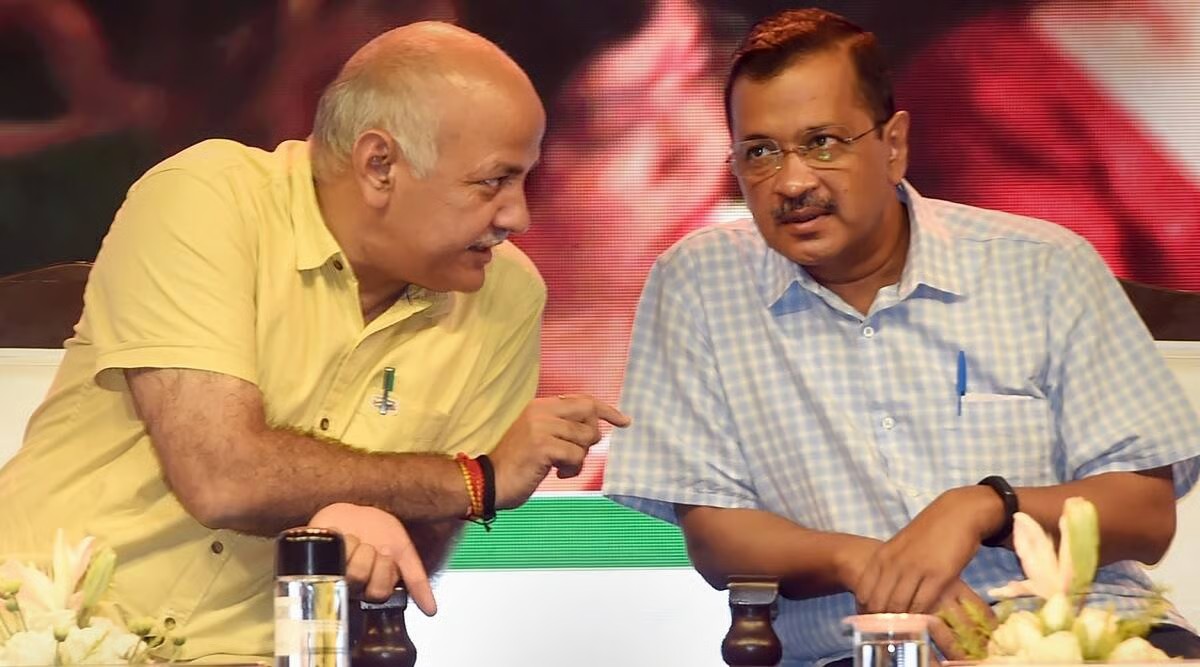
The recent decision by Arvind Kejriwal and Manish Sisodia to refuse appearance before the Delhi High Court has triggered a sharp debate on whether the Aam Aadmi Party (AAP) is undermining judicial authority or engaging in a form of political protest. At the heart of the controversy lies the ongoing legal battle over the Delhi excise policy case, which has increasingly taken on both legal and political overtones.
The immediate trigger for this confrontation is the refusal of both leaders to appear before Justice Swarana Kanta Sharma after their plea seeking her recusal was rejected. Kejriwal publicly questioned the judge’s neutrality, stating that his “hope of getting justice” had been shattered, and declared he would neither appear personally nor through counsel. Sisodia soon followed suit, writing to the court that he too would not participate in proceedings and invoking “satyagraha” as his chosen path.
AAP has framed this as a moral and constitutional stand rather than defiance. By invoking Mahatma Gandhi’s philosophy of satyagraha, Kejriwal is attempting to position the boycott as a non-violent resistance against what he perceives as judicial bias. This narrative seeks to transform a legal setback into a political message—suggesting that institutions may be compromised and that dissent is justified.
However, critics argue that this approach dangerously blurs the line between legitimate legal recourse and institutional disrespect. The judiciary operates on the principle that disagreements with a judge’s conduct or rulings must be addressed through established legal mechanisms—appeals, reviews, or higher courts—not by refusing to participate altogether. The Delhi High Court itself has reportedly criticized such actions as “forum shopping,” emphasizing that mere allegations of bias without evidence cannot justify recusal.
This raises a deeper concern: if political leaders begin selectively engaging with courts based on perceived convenience, it risks eroding public confidence in the justice system. The rule of law depends not only on judicial independence but also on the willingness of litigants—especially influential public figures—to abide by due process.
At the same time, AAP’s stance cannot be viewed in isolation from the broader political context. The party has long maintained that cases like the excise policy probe are politically motivated. Notably, a lower court had earlier discharged Kejriwal, Sisodia, and others citing lack of evidence, though that decision is under challenge in higher courts. This backdrop reinforces AAP’s claim of victimhood and feeds into its narrative of systemic targeting.
Yet, even if one accepts the possibility of political pressure, the method of resistance remains contentious. Democratic systems provide institutional safeguards precisely to handle such disputes. Choosing boycott over engagement may yield short-term political gains but risks long-term institutional damage.
Ultimately, AAP’s actions reflect a calculated political gamble—one that seeks to mobilize public opinion by framing the judiciary as suspect. Whether this resonates with voters or backfires as an attack on constitutional norms will shape not just the party’s future, but also the delicate balance between politics and the judiciary in India.

