
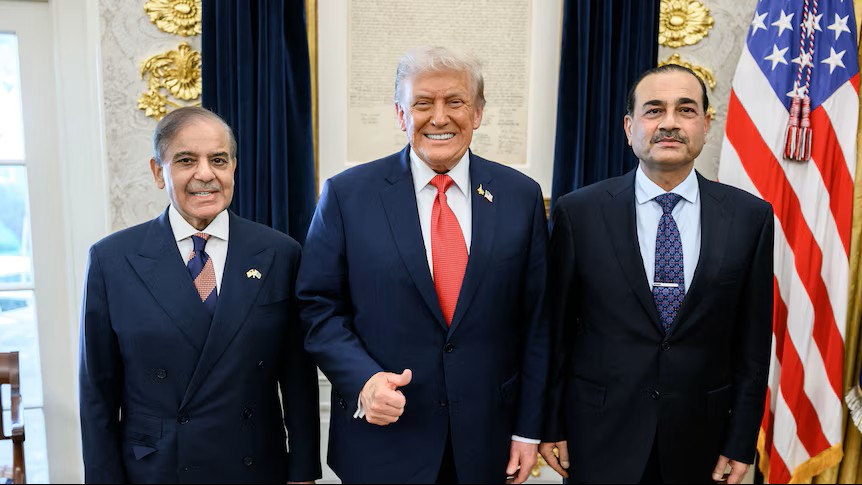
What was initially hailed as a dramatic diplomatic breakthrough has rapidly descended into confusion, contradiction, and near-collapse. The two-week ceasefire between the United States and Iran—brokered by Pakistan at the last minute—now appears less like a pathway to peace and more like a fragile pause riddled with chaos.
When the truce was announced on April 8, it came just hours before a potential large-scale military escalation. Pakistan’s intervention, involving direct outreach by its leadership, helped avert immediate conflict and earned Islamabad rare diplomatic praise. But beyond the symbolism of that success, the structure of the ceasefire itself was weak, undefined, and overly dependent on goodwill that simply did not exist.
From the very beginning, the agreement lacked clarity. There was no detailed roadmap for negotiations, no firm commitments on contentious issues, and no enforcement mechanism to ensure compliance. Even as the ceasefire came into effect, both Washington and Tehran continued to push competing narratives—each accusing the other of violations and bad faith.
The result: a ceasefire in name, but confrontation in practice.
The most visible sign of this breakdown came with the U.S. seizure of an Iranian-flagged vessel near the Strait of Hormuz, an act Tehran labeled as “piracy” and a direct violation of the truce. Such incidents have not been isolated. Reports of naval blockades, sporadic military activity, and renewed threats have dominated headlines, undermining any sense of de-escalation.
Meanwhile, diplomatic efforts in Islamabad—the very heart of Pakistan’s mediation—have failed to deliver results. Marathon talks ended without agreement, and even the possibility of a second round remains uncertain. Iran has at times refused to attend further negotiations altogether, casting serious doubt on the viability of the entire process.
This inconsistency highlights a deeper problem: the disconnect between optics and reality. Pakistan succeeded in bringing both sides to the table, but it could not bridge the vast strategic divide between them. The United States continues to demand sweeping concessions on Iran’s nuclear and military programs, while Iran insists on sanctions relief and sovereignty guarantees. These positions are not just far apart—they are fundamentally incompatible in the short term.
Adding to the chaos is the constant flux in messaging. One day, there are signals of progress; the next, outright rejection. Pakistani officials suggest Iran’s hesitation may be “posturing,” while global markets react nervously to every new development. Oil prices have swung sharply, reflecting how little confidence exists in the ceasefire holding.
In many ways, the ceasefire has come to resemble a stopgap improvisation rather than a structured peace initiative. It bought time—but did not use it effectively. The absence of trust, coupled with continued military brinkmanship, has turned what should have been a cooling-off period into a stage for further escalation.
Critically, Pakistan’s role as mediator—though commendable in intent—has also exposed its limitations. Acting as a bridge between two deeply hostile powers requires not just access, but leverage. Islamabad had the former, but clearly lacked the latter. Without the ability to enforce commitments or guarantee outcomes, its mediation has struggled to move beyond symbolic diplomacy.
As the ceasefire nears its expiration, the situation remains as volatile as ever. There is no clear framework for extending the truce, no confirmed schedule for talks, and no visible reduction in tensions on the ground.
What remains is uncertainty—layered with mistrust, punctuated by provocations, and defined by chaos.
In the end, the Pakistan-brokered ceasefire may be remembered not as a diplomatic triumph, but as a stark reminder that stopping a war, even temporarily, is far easier than building a lasting peace

