
The majestic Jhelum winds through the heart of the Kashmir valley with an almost glassy serenity that projects a captivating illusion to the casual observer. On its surface the waters glide with pristine perfection to reflect the quiet majesty of the surrounding peaks, yet hidden just beneath this placid exterior are fierce and unpredictable currents that churn with a relentless intensity.
This profound natural duality serves as the perfect metaphor for the contemporary security environment in Jammu and Kashmir. The bustling marketplaces, the unprecedented influx of tourists and the rapid development that has characterised the streets in recent years project a highly comforting narrative of absolute normalcy. However, this tranquility is fundamentally deceptive, representing a fragile condition defined strictly by the enforced absence of street violence and maintained by a robust security grid. It is a negative perception of peace where temporary silence is mistaken for the genuine resolution of complex security challenges. Confusing this temporary silence with a permanent transition from conflict to enduring harmony is a strategic error the Indian state cannot afford to make.
The ultimate litmus test exposing the danger of this assumption arrived recently following the assassination of Iranian Supreme Leader Ayatollah Ali Khamenei. The expectation was that a civil society which had tasted the tangible economic dividends of peace would maintain a democratic and non-violent posture. Instead, the initial gatherings aimed at expressing solidarity swiftly deteriorated into violent protests that paralysed districts across the valley.
This sudden volatility proved that the local environment, despite significant stabilisation, retains a latent vulnerability and can easily deteriorate even in response to distant geopolitical events that have absolutely no bearing on the daily governance of the region. This swift descent into chaos exposes the grim reality that the current peace relies heavily on a necessary but exhaustive brake pedal mechanism of rigorous law and order management, where the environment remains peaceful only as long as the state keeps pushing the brake pedal. The moment the foot from the brake pedal is released, the violence returns, demonstrating that the state has merely managed the symptoms of unrest rather than curing the chronic illness.
The roots of this chronic illness are deeply entwined with the inherent vulnerability of Jammu and Kashmir as a border state, ensuring that it will remain a focal point for hostile neighbours, but the state must recognise that local administrative grievances have rarely been the sole catalysts for violence.
The region harbours a highly reactive political consciousness that is deeply tethered to the broader global landscape, requiring only a distant spark to ignite a local inferno. Massive geopolitical upheavals such as the Afghan Jihad and the Iranian Revolution acted as the fundamental ideological precursors to the armed militancy that eventually engulfed Kashmir. Even seemingly unrelated events, such as the hanging of former Pakistani Prime Minister Zulfiqar Ali Bhutto by General Zia ul Haq, became immediate catalysts for severe law and order breakdowns in the valley. While the historic abrogation of Article 370 successfully dismantled the legal architecture of separatism and clarified the question of national identity, the recent violent reactions to Middle Eastern geopolitics prove that the reactive psychological conditioning of the populace remains largely intact.
Because this reactive conditioning has never been fully neutralised, the trajectory of this conflict has never been linear but has operated much like a sine wave characterised by sharp peaks of violence followed by deep trenches of calm that generate a perilous illusion of enduring peace. The period between 2003 and 2007 is often cited as one of the most peaceful eras on the streets, yet that specific phase covertly laid the foundational basis for the unprecedented security nightmare of 2008, which marked a dangerous transition from an armed insurgency to a state of widespread social disruption.
A similarly deceptive pattern has consistently played out in the kinetic domain. Around the year 2004, when the indigenous Hizbul Mujahideen was heavily decimated by sustained military operations, foreign terror groups quietly took the centre spot while maintaining a deceptively low profile. They patiently preserved their resources and established deep sleeper cells, eventually providing the organisational plinth for the highly disruptive New Age Local Militancy that paralysed the region for almost a decade, which means today, the relative lack of kinetic encounters and the improvement in overall statistics must never be misconstrued as the complete eradication of terrorism.
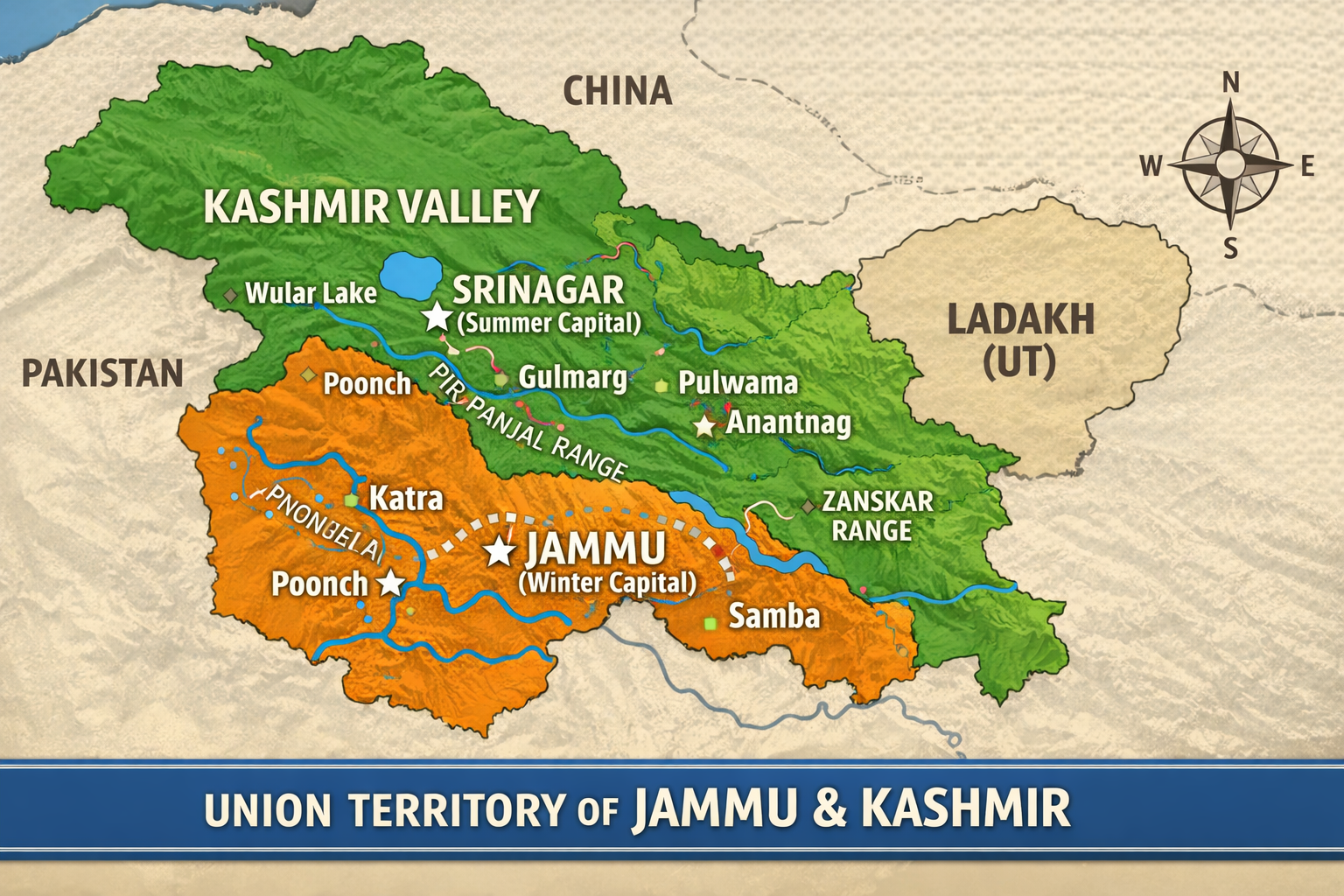
This misconstruction is particularly dangerous because history has repeatedly proven that adversaries constantly probe for vulnerabilities and territory left unguarded will inevitably be reclaimed by insurgents. When counterinsurgency grids were deemed unnecessary in the remote heights of the Pir Panjal range in the past, foreign mercenaries established formidable sanctuaries in places like Hill Kaka until massive military intervention was required to clear them.
We recently witnessed a tragic repetition of this pattern as the geographical focus of militancy shifted towards the Jammu division. As battle hardened troops were strategically redeployed to counter external conventional threats on the northern borders, the resulting security vacuum south of the Pir Panjal range in the dense forests of Doda, Poonch and Rajouri was swiftly exploited by highly trained terror syndicates.
Unlike the new age local militants who carelessly utilised smartphones to broadcast their propaganda and inadvertently revealed their coordinates to electronic surveillance grids, these foreign operatives are well versed in advanced tradecraft and military tactics. They maintain strict operational discipline and lay incredibly low until a specific signal for action is transmitted from their handlers. Furthermore, these syndicates have executed a complete overhaul of their logistical infrastructure by utilising an Al-Qaeda style courier system that operates on a strict point to point basis, ensuring that no single over ground worker knows the full chain of command.
This strict compartmentalisation of logistics is further weaponised by the most formidable challenge associated with these foreign operatives, which is the total obscuration of their identity that forces the state to rethink how it measures the actual militant infestation on the ground.
As former Director General of Police R.R. Swain, in a recent podcast, accurately highlighted, the identity of a foreign terrorist remains heavily camouflaged and it is an arduous task to ascertain the identity of a foreign terrorist among civilians. If a highly trained operative operating in Shopian moves around without his primary weapon and leaves his combat gear secured in a hidden cache, he seamlessly blends into the local population as just another labourer working in the apple orchards.
Without a weapon, his identity is entirely indistinguishable from that of a common civilian and his true allegiance is revealed only when he executes a targeted attack. This operational invisibility has been compounded by a severe degradation in human intelligence capabilities. Because the security apparatus grew heavily accustomed to the ease of tracking the digital footprints of tech obsessed local insurgents, the painstaking and essential work of cultivating grassroots human informants was largely sacrificed. The current breed of foreign terrorists relies almost exclusively on physical courier communication, leaving very little scope for the cultivation of technical intelligence and forcing the security forces to operate in the blind.
However, operating in the tactical blind is only half the crisis, as an equally critical vulnerability exists in the psychological domain where the state has profoundly failed to communicate the dividends of peace to the people residing in the valley.
The strategic communication of the administration has been overwhelmingly outward looking, focusing almost entirely on broadcasting a comforting narrative of normalcy to the rest of the country to assure the broader national audience. This relentless pursuit of external validation has created a severe strategic void, leaving the administration wholly incapable of shaping the ideological prism through which the local populace interprets this era of calm. Because the state has left this crucial communicative vacuum at the local level, the agile rumour networks operated by the conflict entrepreneur ecosystem have expertly stepped in to seize control of the discourse. They continuously peddle a highly destructive narrative of hopelessness alongside various mainstream political leaders. By amplifying rhetoric centred entirely on disenfranchisement, they weaponise the feelings of unbelongingness to manufacture a psychological darkness that makes the impressionable youth highly susceptible to radicalisation.
Combating this manufactured darkness requires recognising the fact that while the administrative machinery has undoubtedly mastered the immediate art of managing a law and order crisis, this capability remains a tactical containment strategy that cannot be stretched indefinitely. To truly secure the region and transcend this brake pedal syndrome, the state must urgently pivot toward a comprehensive long term strategy that moves beyond conventional security measures.
On the operational front, this requires a fundamental overhaul that prioritises the painstaking reconstruction of robust human intelligence networks built on absolute community trust. Simultaneously, achieving a permanent resolution demands a profound political and psychological intervention. The state must overhaul its strategic communication mechanism to actively dismantle the agile rumour networks operated by the conflict entrepreneur ecosystem and the pervasive narrative of hopelessness. That said, acknowledging the genuine grievances of the youngsters is equally necessary. The administration must launch a robust outreach initiative specifically designed to engage the Kashmiri youth, actively listening to their concerns and neutralising the feelings of unbelongingness. It is only by bridging this vast gulf of mistrust and neutralising the psychological manipulation orchestrated by the conflict entrepreneur ecosystem that the region can truly emerge from its fragile state. Until the state executes this dual strategy of formidable vigilance and profound psychological healing, the true peace we seek will remain a distant horizon and this bout of peace will remain a mere trench in the perpetual sine wave of the conflict ecosystem in Jammu and Kashmir.

