
Every constitutional democracy is defined by its ability to preserve principled distinctions inter dissentum et subversionem, between dissent and disruption; inter protestationem et provocationem, between lawful protest and incitement; and ultimately between civil resistance and organised attempts to undermine constitutional order.
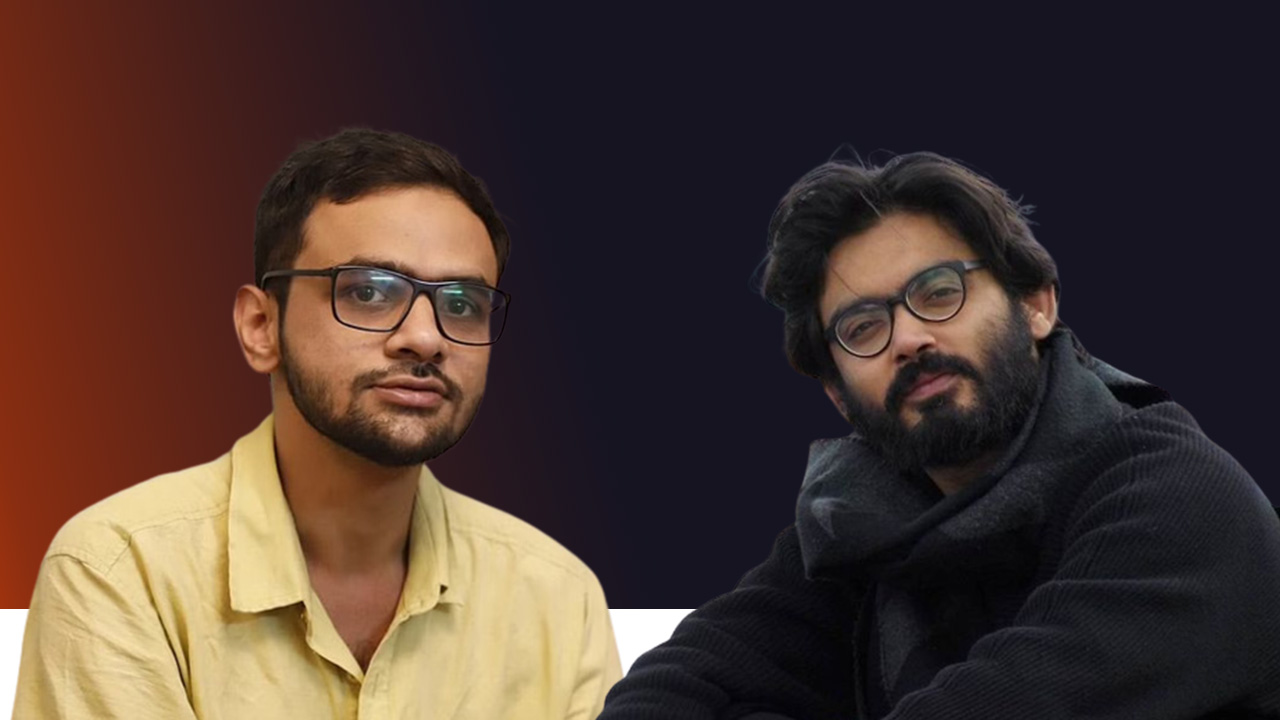
India confronted this test in February 2020, when the National Capital Territory of Delhi witnessed one of the gravest episodes of communal violence in recent decades. That test now re-emerges, not on the streets, but within the constitutional forum of last resort, following the Hon’ble Supreme Court’s refusal to grant bail to Umar Khalid and Sharjeel Imam under the Unlawful Activities (Prevention) Act.
To characterise such a judicial determination as an ‘assault on democracy’, as has been done, is not a disagreement with the ratio decidendi, but a challenge to the legitimacy of constitutional adjudication itself. It proceeds on a fallacious premise that adverse judicial outcomes may be recast as political persecution. Such reasoning is alien to constitutional law. In a republic governed secundum legem, courts act bona fide within jurisdiction, and their orders command institutional respect. To delegitimise them through ideological insinuation is to erode public confidence in the judiciary and, by extension, weaken the democratic order it is sworn to protect.
From protest to polarisation
The story of the Delhi riots did not begin with police action or arrests. It began with a nationwide mobilisation against the Citizenship Amendment Act (CAA). Opposition to the CAA was legitimate, constitutionally permissible and widely expressed across the country. However, a different trajectory of violence and anti-nationalism emerged in Delhi, where roads were blocked indefinitely. Public spaces were paralysed. Daily life for ordinary citizens, workers, patients and students was deliberately disrupted. Protest sites became permanent, non-negotiable pressure points. This was not spontaneous dissent; it was strategic obstruction.
Where Article 19 guarantees the right to protest, but it also authorises the State to impose reasonable restrictions in the interests of sovereignty, security, and public order. The anti-CAA agitations and campus mobilisations demonstrated how protest can be deliberately transformed from democratic expression into sustained coercion through road blockades, disruption of essential services, religious incitement masked as activism and the creation of ‘liberated zones’ where the authority of the State is openly challenged. Once protest shifts from persuasion to paralysis, it forfeits constitutional protection. In such circumstances, the application of laws like the UAPA is not an attack on dissent but a response to organised attempts to normalise disorder, mobilise violence and delegitimise the constitutional state itself. A democracy cannot permit freedoms to be weaponised to dismantle the very framework that guarantees them.
Conspiracy – A distinct offence
One of the central claims advanced by critics of the Supreme Court’s order is that neither Umar Khalid nor Sharjeel Imam was physically present at the sites of violence. This argument may be emotionally persuasive, but it is legally irrelevant under anti-terror and conspiracy jurisprudence. Criminal jurisprudence does not make physical presence a sine qua non for conspiracy, that may rely on decentralised coordination, ideological mobilisation, coded messaging and distributed execution.
Criminal laws and courts across democracies recognise this reality. Conspiracy as a crime falls within the category of inchoate offences for which ‘physical presence’ has never been an essential ingredient. In State v. Nalini (Rajiv Gandhi Assasination case), the Supreme Court had categorically held that “it is the unlawful agreement which is the gravamen of the crime of conspiracy.” To argue that absence from Delhi should automatically entitle an accused to bail is to misunderstand both, how conspiracy is defined in law and contemporary security threats.
When speech becomes subversion
The case against Sharjeel Imam and Umar Khalid is about speech that directly challenges the sovereignty, integrity, and security of the Indian State and does so with foreseeable, destabilising consequences. Sharjeel Imam’s call to ‘cut-off’ the Northeast via the Siliguri Corridor directly targeted India’s strategic integrity. On the other hand, Umar Khalid’s had repeatedly questioned Kashmir’s constitutional status as an integral part of the Union and labelled India as ‘occupying’ Kashmir. Such language is not neutral dissent, rather it closely aligns with secessionist narratives that have historically fuelled instability and violence. This is precisely why Parliament enacted and courts have upheld the architecture of the UAPA.
Indian constitutional law has never treated all speech as equal. From its earliest jurisprudence, the Hon’ble Supreme Court has drawn a clear line between dissent that seeks reform and expression that seeks rupture. In Kedarnath Singh v. State of Bihar (1962), the Apex Court held that criticism of the government is protected, but speech that incites violence or public disorder, or threatens the stability of the State, falls outside Article 19’s shield. That principle has not diluted with time; it has hardened in response to new forms of internal security threats.
Terrorsim versus personal liberty
Terrorism in modern law is not confined to bombs or firearms. It includes acts that are physical or ideological intended to threaten the unity, integrity, security, or economic stability of the nation. Criminal jurisprudence recognises instigation, conspiracy and/or aiding to commit an offence at par with commission of such offence. Section 15 of the UAPA explicitly recognises this expanded domain by incorporating the phrase “by any other means.”
As the bail jurisprudence provides, the existence or non-existence of a ‘prima facie’ case in favour of prosecution has always been an essential and necessary condition for courts to consider while deciding to grant or refuse bail. Furthermore, the courts are required to draw balance between an individual’s liberty and the larger societal interest of incarcerating an offender. This principle of salus populi (welfare of the people) forms the bedrock of the criminal law procedure. Section 43D(5) further reflects legislative intent that courts exercise restraint at the bail stage when prima facie material exists.
In National Investigation Agency v. Zahoor Ahmad Shah Watali (2019), the Hon’ble Supreme Court made this explicit: at the bail stage under UAPA, courts are not to conduct a mini-trial or weigh the evidence for conviction. The Court’s refusal to grant bail to Khalid and Imam flows directly from this binding precedent, not from political preference. Equally important is the fact that the Court did not declare guilt. It did not silence dissent. It applied the law as written and interpreted by earlier constitutional benches. To describe this as repression is to demand that courts ignore Parliament, precedent and statutory thresholds in favour of emotive narratives.
Due process, not delay
Much is made of prolonged incarceration. The ‘delay’ in commencement of the trial has been a major ground for seeking bail in the present case. However, the procedural history and order sheets of the ongoing case in trial court show that delay is not attributed to prosecutorial or judicial inaction. The trial court orders show that despite prosecution’s readiness to proceed with the trial, the requests for deferment were made on behalf of the accused. The record further shows that despite repeated directions of the court, certain accused declined to receive copies of the charge-sheet which is an essential prerequisite for framing of charges and proceeding of trial.
Moreover, large scale cases, such as the present one, where riots in the national capital continued for about three days, claiming about 54 lives, including some public servants, and extensive damage was caused to over 1500 public and private properties, that does not just disrupt public order but also endangers national security, require extensive scrutiny to meet the ends of justice. In such cases, subjecting the judicial process to a fixed time-frame may circumvent the fairness of the trial and thus affect the justice delivery system.
Conclusion
The Hon’ble Supreme Court’s refusal to grant bail to Umar Khalid and Sharjeel Imam must be understood in this broader context. It reflects an institutional recognition that India can no longer afford strategic permissiveness in the face of organised internal destabilisation. Parliament has equipped the State with legal instruments like the UAPA not out of impulse, but out of experience of terrorism, insurgency and repeated attempts to fracture national unity through indirect means.
A democracy that aspires to both freedom and security must be willing to act early, lawfully, and decisively. That is not authoritarianism; it is responsible governance. At this juncture, the debate must move beyond legal semantics and confront a deeper national question. Can a sovereign republic afford to sentimentalise speech that openly contemplates internal blockade, mass disruption and civil breakdown? Can emotional appeals override the collective right of citizens to security, stability and constitutional order?
A democracy that refuses to enforce the distinction between criticism and dissent, and coercion and subversion, does not become freer, but becomes defenceless. Delegitimising the judiciary because a verdict does not align with one’s ideological position further erodes the democratic edifice of a nation. Democracies do not survive when every adverse ruling is branded authoritarian and every court becomes suspect the moment it resists political pressure.
(Authors – Sanhita Pandey and Koushik Upadhyay are practicing Advocates and political enthusiasts)

