
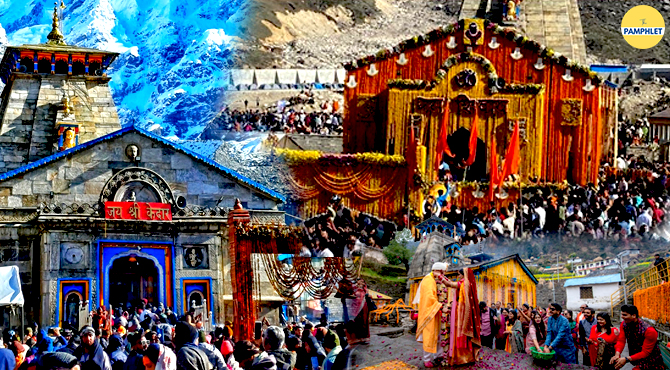
Members of the Yamunotri Temple Committee have joined the two other temple committees – the Badrinath and Kedarnath Temple Committee and the Gangotri Temple Committee in Uttarakhand in resolving to ban the entry of non-Hindus on the premises of the Char Dhams, according to reports. The four dhams – Badrinath, Kedarnath, Gangotri and Yamunotri – the sacred abodes of deities in Uttarakhand, occupy a critical position in establishing and sustaining the foundations of Sanatan Dharma and Indic cultural heritage.
Recently, the Badrinath and Kedarnath Temple Committee took a decision to ban non-Hindus from Badrinath dham – one of four dhams of Sanatan pilgrimage in Bharat and one of the four dhams in Uttarakhand, Kedarnath Dham – one of the 12 Jyotirlingas, and 45 other temples, for the preservation of Hindu traditions, sanctity of sacred spaces and the preservation of longstanding temple traditions. After the announcement on this decision from the BKTC, the Shri Gangotri Temple Committee, too, took a similar decision under which non-Hindus will be prohibited from entering the Gangotri Dham and Mukhba — the winter abode of Ma Ganga. These developments came after the Shri Ganga Sabha in Haridwar, which manages traditional activities at the different ghats and the upkeep of the different ghats of Haridwar, demanded that non-Hindus should be banned from entering the ghats in the Haridwar-Kumbh area. The demand is backed by seers in the Shri Ganga Sabha. Haridwar is one of the ancient Saptapuris of Sanatan and spiritual significance and the Ganga ghats and Har Ki Paudi – the nerves of Hindu devotion.
On the demand raised by the Ganga Sabha, chief Minister Pushkar Singh Dhami said that the state government will “consider the view of all stakeholders”. He added that laws related to religious sites will be reviewed and discussed with stakeholders involved in the management of the sites, temple and pilgrimage committees, and those involved in the management of the sites. Congress leaders have criticised the move. Former chief minister of Uttarakhand and senior Congress leader Harish Rawat has criticised the move.
This author spoke to the chairman of the Shri Badrinath-Kedarnath Temple Committee, Hemant Dwivedi. He said, “This (the decision for the ban) is for the protection of Sanatan traditions and heritage. The decisions being taken are in alignment with the tradition established by Guru Adi Shankaracharya. It is for the preservation of the belief and dharmic sanctity of the centres of pilgrimage and worship of Shri Badrinath and Shri Kedarnath dham – which are the prime symbols of Sanatan dharm and our identity.”
According to Dwivedi, the decision is “not a new decision.” He says, “there was an incident in Badrinath involving a non-Hindu that angered the local people in the past. Across Uttarakhand, incidents that challenge the sanctity and culture of the pilgrimage centres have come to our notice. Stakeholders including the ‘teerth purohits’ have expressed concerns regarding certain scenarios building in the state. Our aim is to exercise some pre-existing norms in the right manner. We have got positive feedback from Gangotri ji, Yamunotri ji, the Ganga Sabha, the Kedar Sabha, the Dimber Panchayat, and ‘teerth purohits’. They all have supported the move.”
Political assertion and urgency shown in reinstating the longstanding and ancient often interrogate and challenge standards that are normalised to weaken boundaries meant for preservation of sacred spaces of Sanatan dharma. As seen in the past, the act of protecting Hindu heritage at the state level, in Uttarakhand, has acquired the tone of national debate, once again. As the groundwork is laid for reclamation – through several laborious inputs of actions and decisions – those who are in generational-opposition to Hindu reclamation, rebuilding and reinstating, create an impression that the move is hurtling India into the past by centuries instead of the future. This is done through newspaper editorials, social media and politics. There were people who tried to create a similar impression when KM Munshi was working to put a movement in place to rebuild the Somnath Mandir after Independence. Generational efforts towards reclamation are pitted against generational efforts to oppose reclamation of Hindu sacred spaces in different dimensions during the 21st century.
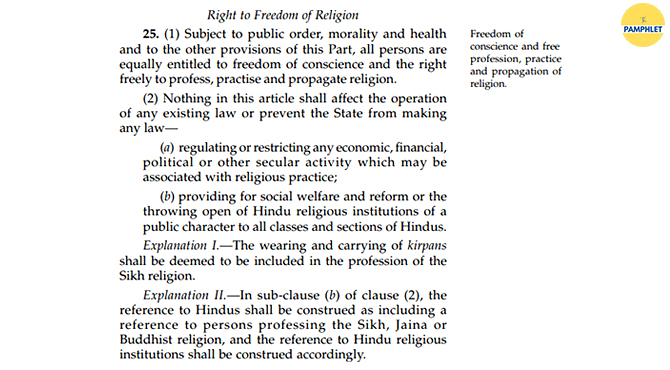
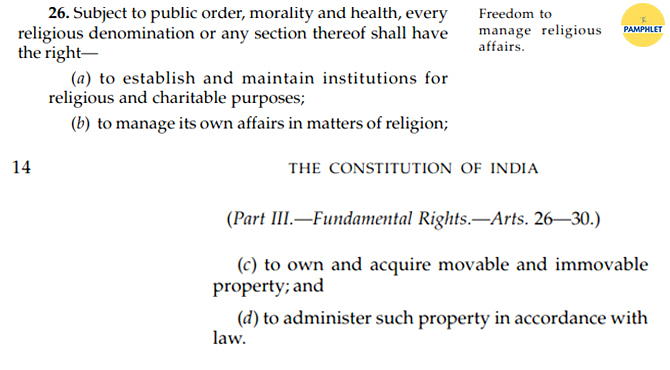
The contemplation of the barring of non-Hindus from the Badrinath and Kedarnath temples and 45 other temples that come under the Badrinath and Kedarnath Temple Committee (BKTC) has failed the only approval that does not matter. This is the approval of people who object to Hindu autonomy over Hindu temples and Hindu sacred spaces. Hemant Dwivedi adds: “Hum samvidhan ko maan ne waale loag hain (we are people who believe in the Constitution).” He cites Article 25 and Article 26 of the Constitution. “Samvidhan mein Article 25 ke khand 2 aur upkhand, usmein saaf hai Hindu ke sandharb mein likha hua — Sikh, Jain aur Buddhist — inko usmein sammilit mana jata hai. Article 26 mein likha hua hai ki pratyek dharmic sampradaya ho, apne dharmik maamlo ke prabhandhan karne ka, aur prampamparaaon ki raksha karne ka adhikar – usmein diya hua hai.”
The step can be seen as the Badrinath Kedarnath Samiti in Uttarakhand launching a movement to reclaim religious and cultural autonomy and cultural autonomy. The Left intelligentsia, including sections of the media, is terming Hindus of Uttarakhand and outside, “communal” for supporting it.
Editorials in newspapers that support lopsided secularism are weighing in on communities excluded. It helps them in portraying Hindus who are reclaiming religious autonomy as “exclusionists” and corrective measures as “exclusionary”. To lend this exercise a tone of credence, they are giving it the colour of lack of “constitutional morality”. Dwivedi says: “Yeh dham hamare Bharat ki adhyatmik chetana ke dhwaj vahak hain (the dhams are flag bearers of our spiritual awakening and resurgence). Jo Chaar Dham hain hamare, Badrinath Kedarnath Gangotri, Yamunotri, ya jahan jo parampara aur shastriya mariyada, wo hazaron vasrshon se hai (the four dhams and the spiritual and cultural heritage of the four dhams have existed for millennia). Aastha ki raksha ke uddheshya ke liye ye banaya gaya (this decision has been taken from the point of view of protecting devotion).”
Temples and Hindu sacred spaces are convergence points for the devotion of all Hindus. They unite Hindus. Sections of the media and politicians are creating optics that would serve as valid reasons for taking temple control away from state control – which they defend as the way to “counter casteism”. While mentioning that the BJP-led government scrapped the Char Dham Devasthanam Board Act (in 2021), which was passed in 2019, they are forgetting or pretending to forget the circumstances in the state that led to the scrapping of the Board.
They are forgetting or pretending to forget that the BKTC is where the lines of state temple control are blurred. The BKTC is an autonomous body. It was created in 1939 to oversee the two prime temples — Badrinath and Kedarnath. Uttarakhand has a unique model where the BKTC looks after two dhams and two different temple committees look after the other two (Gangotri and Yamunotri), while the state government provides support in several aspects for safe and secure completion of the Char Dham Yatra for the four Dhams. The management of the Yamunotri and Gangotri Dhams is neither under the government, nor under the BKTC. And that’s how Uttarakhand presents a unique combination in temple management – the range of outcomes of which – whether under BKTC or under private control – are evident in news reports.
In 2025, the BKTC approved a budget of Rs 127 crore for the financial year 2025–26. The BKTC ensures it gets the support from the state government for safe and smooth completion of the Char Dham Yatra. In October 2025, 17.7 lakh devotees visited the Kedarnath Dham during the Char Dham Yatra, according to reports. The number was 1.25 lakh more than 2024. The four dhams in Uttarakhand witnessed 50 lakh devotees coming for darshan in 2025. BKTC, the two other temple committees of Gangotri and Yamunotri dhams, and the government, work together to absorb these massive numbers in the challenging geography and weather conditions – with support in organisation, law and order, infrastructure, arrangements and other related facets.
Lopsided secular editorials are perhaps choosing to not mention that when the Uttarakhand government withdrew the Uttarakhand Char Dham Devasthanam Management Act and Board, the development was seen as a victory by the ‘purohit samaj’ for the reasons of Hindu autonomy and preservation. The Char Dham Teerth Purohit Mahapanchayat and the Vishva Hindu Parishad were happy because this development was seen as part of the larger Hindu movement – which wants to ensure that the government has no control on the temples. The main reason was the securing of Hindu resources, their use for the Hindu society, and their protection for Hindu welfare and Hindu welfare alone.
Such editorials and sections of intelligentsia expose their disconnection from the ground. Here is how:
One: they are portraying the banning of the entry of non Hindus from Badrinath and Kedarnath and other temples falling under the BKTC as an outcome of the demands made by the ‘purohit samaj’ alone. If they connected with people in the region and referred to news reports of the past, they would learn that people living in the region have made similar demands due to a set of concerns during the Yatra season and outside it. Betraying their own colonial view of the people in the region, such editorials are making an attempt to mix issues to create confusions. They are short-changing the vastly-improved and gradually-strengthened temple ecosystem of Hindus for Hindus.
Two: the BKTC has made clear its purpose behind the contemplation for a ban on entry of non-Hindus. The BKTC is repeatedly mentioning that its step is well within Article 25 and Article 26 of the Constitution. The opposition to the BKTC’s step coming from different quarters is suggesting that the decision will lead to “segregation” the unconstitutional way. On the other hand, the BKTC reiterates that saying this is incorrect, because of what Article 25(2)(b) of the Constitution mentions. They are referring to the “Explanation II” particularly. “Explanation II.—In sub-clause (b) of clause (2), the reference to Hindus shall be construed as including a reference to persons professing the Sikh, Jaina or Buddhist religion, and the reference to Hindu religious institutions shall be construed accordingly.”
Three: The Hindu society is continuously working to address the need for interventions against caste-based exclusions in temples across Bharat and temples play a fundamental, imperative, decisive, urgent and central role in asserting equality. The footfall at the Badrinath and Kedarnath Dham, and 45 other temples under BKTC during the Yatra season, is a symbol of the big Hindu tent converging as a single unit during the recent years. Registration portals spiral up over awe-inspiring numbers of pilgrimages during the Yatra season. The pilgrim knows the other pilgrim as a Hindu and not by his caste. Caste is not the identity marker here, but at times, states are — owing to the profound interest that pilgrims have in the distance covered and the arduous journey they see other pilgrims undertaking. And that establishes the unifying pan-India nature of this Hindu pilgrimage of deep civilisational importance.
Devotees from across castes from across India visit the Triyuginarayan Mandir for darshan. Here, marriages are held as the temple holds significance as the sacred venue where Shiva and Parvati were married. Recently, a bride and groom were seen walking through fresh snowfall to the Triyuginarayan Mandir for their wedding-rituals in visuals on social media. Hindus on social media welcomed this moment in joy. The intersections of darshan, religious tourism and wedding-related tourism in Uttarakhand, have been mentioned by PM Modi in the past. They boost local economy and local participation.
Dwivedi says that the BKTC, like Hindu religious institutions, is adhering to the Constitution and that the norms on access decided by the BKTC are asserting religious freedom — within the Constitution. In this light and context, the intelligentsia’s “access for all” slogan is more than misleading for the reason that it is projecting “access to all Hindus” as “exclusionary”. Those opposing this move must make it clear whether they are choosing to term the inclusion of all Hindus – Hindus, Sikh, Jain, Buddhist as “unconstitutional”, because it is a movement for Hindu- strengthening of Hindu sacred spaces and the bolstering of the unity of “Hindu” — Hindu, Sikh, Jain, Buddhist – according to the Constitution. Here is a question: which “hard battle” are sections of the media claiming to fight, when all castes in Hindus and all Hindus, are being included under this proposed decision?
Four: defending state control on temples as a step for caste-inclusion and opposing autonomous BKTC’s move for asserting Hindu autonomy is contradictory. Such a stance sidesteps the fact that the BKTC has the right to establish the preservation of Hindu sacred space while exercising the right to govern access in a state where pilgrimage is the nerve of cultural sanctity and tradition for Hindus – all Hindus – in the state and across Bharat. Events of the recent past in politics show that any step from the government that the people in the region decode as “encroachment upon centuries-old traditional rights” will see a political counter within the political constituencies — including decisions to field “own candidates.” CM Pushkar Dhami’s tenure itself has shown that in the public mind-space, there is ample room for government-cooperation and no space for what is considered “government-intrusion” in the matter of Hindu belief, tradition, sanctity and protection of culture.
Five: Registration of pilgrims is stated to be an important step if the ban comes into play. CM Dhami himself is known for being particular about the registration of pilgrims during the Char Dham Yatra for the reasons of safety and security of pilgrims during the Yatra. The BKTC is moving towards a meeting with the government on the issue of the ban of non-Hindus. A lot might depend on the registration of the pilgrims.
Dwivedi explains: “The establishing of the identity will be done with the help of registration. Our aim as a ‘mandir samiti’ is dedicated to providing ‘saral’ and ‘sulabh’ darshan to the pilgrims. There is a limited area in the outer area of the temple premises that has been notified as a part which they will stay within – as per the restriction.” He adds that in places of worship of importance to other faiths, there are restrictions and banners informing about restriction of access. He says, “Where is the problem for bringing such restrictions to sacred spaces in Sanatan Dharm? Norms regarding sanctity of sacred spaces in Sanatan Dharma have been in place since the times of Sri Adishankaracharya. Entry will be restricted to the ‘garbha griha’ and spaces of rituals and spaces of importance to related arrangements.”
Six: The CM is answerable to the pilgrims. The CM is answerable to the ‘teerth purohits’. The CM is answerable to the people of the region. The ability of the BKTC to determine the sanctity of Hindu spaces that are the nerve of the Vedic tradition, in a BJP-ruled state, will ascertain and specify the effectiveness in communication for the upholding of common values. These pilgrimage centres are the core of Sanatan dharma, Sanatan culture and Sanatan philosophy. “We at the BKTC have to preserve the sanctity of the ‘aastha’ and ‘vishwas’ (belief and devotion) of the pilgrims at the Badrinath Temple, the Kedarnath Temple and 45 other temples in the region – including the Panch Kedar, Panch Badri, Kalimath, Triyuginarayan, Narasingha Mandir, and others. These temples have a distinct identity in Sanatan Dharma. Their antiquity itself establishes their importance as centres of spiritual importance and resurgence. Adi Shankaracharya ji had established them as the centres of our devotion.” Stands taken by those opposing this move will shape the future course of politics surrounding matters relating to devotion and the four dhams. It is the first time that the BKTC has found itself at the centrestage.
Seven: BKTC itself upholds the views, opinions on traditions of those who are “working for dharma” in the region through their contribution to the upholding of the sanctity of the Badrinath Dham and Kedarnath Dham and 45 other temples under BKTC. Here is what Dwivedi told this author: “Jahan tak devbhoomi ki baat hai, Uttarakhand Devbhoomi ki pehchan aur iski identity desh aur duniya mein hai. Desh aur duniya se karodon sanatan dharm ko maan-ne waale loag yahan aate hain. Main samjhta hoon ki sabki maang thhee, wahan ke sthaaniye teerth purohiton ki, sant jo sanatan dharm ke liye wahan kaam karte hain, un sabne kaha ki gair Hinduon ka pravesh varjit hona chahiye.” As far as the Devbhoomi is concerned, it is well-known the word over, crores of pilgrims who believe in the Sanatan Dharm visit the four dhams. I believe that the demand from everyone – the local ‘teerth purohits’, those who work for Sanatan Dharm, have all said that the entry of non-Hindus should be prohibited.
Eight: Dwivedi points that accusing the BKTC of bringing in “segregation” is denying it the lens of “devotion” and “devotional”. Dwivedi presents the view: “Chaar dham yatra mein wohi teerth yatri yahan pahunchta hai jinki sanatan dharm ke prati aastha hai, jinki Kedarnath ji ke prati aastha hai, jinki Ma Ganga ke prati aastha hai. Those who believe in Sanatan Dharma, have devotion for and understand Ma Ganga, Gangotri, Ma Yamuna and Yamunotri. Those who are dedicated to the centres of pilgrimage, those who understand and are dedicated to the antiquity, sanctity, and identity of the temples, those who come for pilgrimage with a sense of complete and unflinching surrender (to the deities), are welcome. This is the question of dharmic demeanour and sanctity.”
Nine: The BKTC has attended the first meeting regarding the upcoming Chaar Dham Yatra with all stakeholders including the government. The BKTC is set to place curbs on mobile phone-use by video influencers and those misusing the sacred spaces for such purposes. “People undertake the difficult journey for darshan of the Jyotirling (Kedarnath), the space is limited and the number of people coming to Kedarnath is increasing by the day. The notification of areas for such activities will take place in Kedarnath ji.“
It conveys that the BKTC is continuing with the steps it has taken during the last few years and introducing some more to ensure discipline during the yatra. That discipline is perceived as a roleplayer in protecting the sanctity of darshan. The aspect of darshan is central to the continuity of pilgrimage. Pilgrimage is the bedrock of Sanatan. Governmental intrusion is not welcomed by people — as seen in the political events of 2021-2022. Back then, the BJP had to invest huge reserves of political effort, humility and dialogue in breaking emotional deadlocks before the 2022 Assembly polls in the region. Temple doors in Uttarakhand are opening wider and wider for Hindus – the big tent that includes Sikh, Jain, and Buddhist.
Ten: Gangotri dham management does not fall under the BKTC. The Gangotri Dham committee has taken a similar decision on the ban on the entry of non-Hindus keeping in consideration the protection of the sanctity of the ghats and the worship of the Devi and the manifestations of the Devi. The feminine aspect of the deity seems to play a strong role in the decision taken here. This author spoke to Suresh Semwal from the Gangotri Dham committee. According to him, Gangotri Dham is the centre of Sanatan belief, values and philosophy and the way forward – towards strengthening culture is through ensuring that certain measures are put in place. “We are Sanatanis. We worship Ma Bhagwati Ganga, Ma Gayatri and Ma Gau. It is a matter of deep sadness that those who do not believe in our values and our belief in the protection of Ma Gau, they intrude into our dharmic sthhals. We have nothing against anyone, but we have decided that it was time to stop that. We believe that Ma Ganga can cleanse everyone but not those who do not have the same values as us on the protection of Ma Gau.” He adds, “Secondly, those who do not share the same values on the protection of Ma Gau are also trying to intrude on our cultural and devotional sphere. We have discouraged the entry of such elements at the ghats even in the past. But there are several factors taking place in Uttarkashi that compel us to protect our dharmic sthhals. Hindus – including Sikh, Buddhists and Jains are welcome.”
The dual aspect of cow protection and the sanctity of the feminine deity in Semwal’s words is noteworthy. Despite the difference in the management patterns, the BKTC and the Gangotri Dham Temple Committee, and now the Yamunotri temple committee, have displayed an aspect of continuity and harmony of values and decision-making. There is a strong messaging in the unified voice of the four committees (including the Ganga Sabha in Haridwar) that sections of the media are missing — when it comes to how the region and Uttarakhand view “preservation” of Hindu temples and traditions.
It is seen that people who support such moves often get distracted by the autonomy enjoyed by religious bodies of other faiths and the gatekeeping in place and practice to keep non-believers at a distance from spaces of religious importance in other faiths. While that stance is not incorrect, and not misplaced, it tends to push the cause of the assertion of Hindu autonomy over Hindu sacred spaces to a reactionary approach. Making such comparisons weakens the voice for determining the rightful, traditional, cultural for Hindus and above all – Bharatiya. The issue of the autonomy of Hindu autonomy itself gets watered down in repeating those comparisons every time, because rituals, provenance, Puranic significance, the tradition of pilgrimage, the tradition of generational worship in Hindu communities, and the sanctity of the sacred spaces established by Guru Adi Shankaracharya, preserved by the efforts of devotees such as Devi Ahilyabai Holkar, then tend to stand secondary to the approval of the secular to what is paramount and Hindu and should be asserted as civilisational to the continuity of India. Where the sanctity of Hindu spaces is essential to the intricate and layered process of preservation of Hindu unity and continuity, efforts to tilt the perception-referring in a secular boxing rink, is not, should not, be chased by Hindus.
Asserting preservation and reclamation of consequentially the sanctity should become the refrain, the slogan and the underlying argument. Sentences such as “our ghats and temples are not public parks” are not incorrect, but they give the deviously-illogical and selectively-communal Left the chance ad space to term the actions of the BKTC as ‘orthodox’. Those who want the BJP-led Uttarakhand government to turn down the BKTC’s proposal, are also those who tend to turn down local beliefs and cultural sensibilities surrounding devotion in Sanatan Dharma. Their view of the Char Dhams as merely destinations, “rich temples”, as tourism nodes for bringing good tourism-bucks turnovers, and as energy points of the state/Indian growth sectors, reveals their lack of devotion and wisdom. More than anything else, it reveals that they do not understand Uttarakhand as Devbhoomi and a border-state.

