
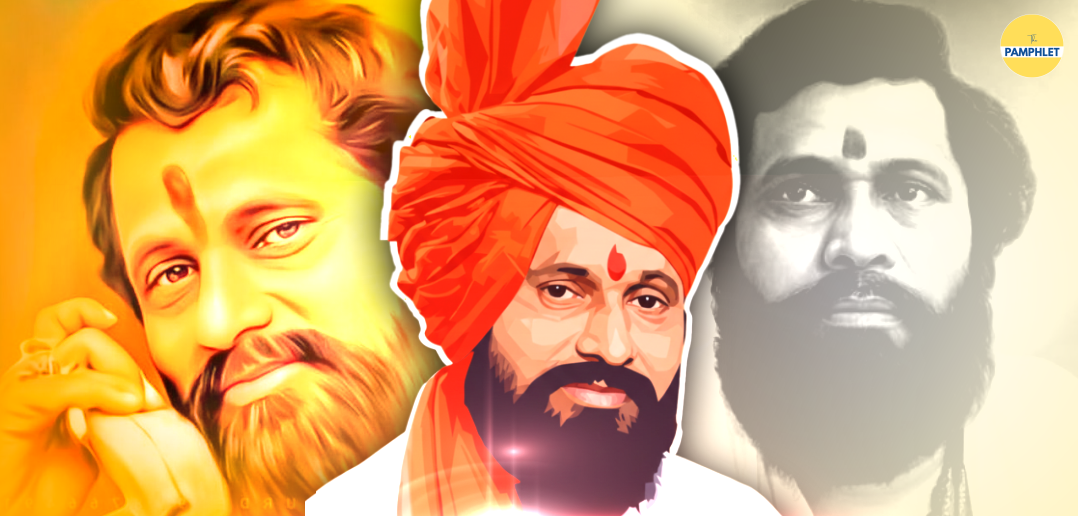
Jayanti is usually reduced to optics. A photograph, a garland, and a routine tribute. But Anand Dighe’s Jayanti was never meant to be quiet. Because the man himself never lived quietly.
On 27th January, remembering Dharamveer Anand Dighe is not an act of nostalgia. It is a test of honesty. A question of ownership. And a reminder that legacies are not inherited by claiming them, they are earned by living them.
Before the Hindutva debate, there was Thane
Before Hindutva became a panel-discussion language, before “Marathi Asmita” was reduced to caricature, there was Anand Dighe on the streets of Thane — resolving disputes, helping families, confronting criminals, correcting administrators.
- No security ring
- No media choreography
- Just presence
Born on 27th January 1951, Dighe emerged as the most grounded and feared face of Hindutva in Maharashtra under Balasaheb Thackeray. Their bond was neither symbolic nor transactional. Balasaheb shaped ideology; Dighe enforced it on the ground. A Guru who trusted. A Shishya who delivered.
What Marathi Asmita actually meant
This must be stated without ambiguity, because deliberate distortion has blurred history.
Marathi Asmita, for Anand Dighe, never meant attacking someone for speaking Hindi. It never meant humiliating a worker for not knowing Marathi. It never meant linguistic vigilantism.
That accusation was manufactured by those who never faced exclusion, yet lectured others on “cosmopolitanism.”
For Dighe, Marathi Asmita meant fairness in Shivaji Maharaj’s land.
It meant that Marathi youth would not be structurally sidelined in factories, offices, and institutions operating in Maharashtra. It meant equal opportunity — not ethnic dominance. It meant dignity, not hostility.
If a non-Marathi worked honestly, respected the land, and lived peacefully, Dighe had no conflict with him. Thane itself — diverse, functional, and industrious — stands as evidence. His politics was about correcting the imbalance, not creating a new hierarchy.
Reducing this to “Marathi vs Hindi” is not misunderstanding — it is intellectual dishonesty.
Rise of Dighe: Power without office
Anand Dighe joined Shiv Sena at 18, not chasing designation, but purpose. He organised workers’ unions across the Thane–Kalyan–Dombivli belt, taking on entrenched managements that treated local labour as disposable.
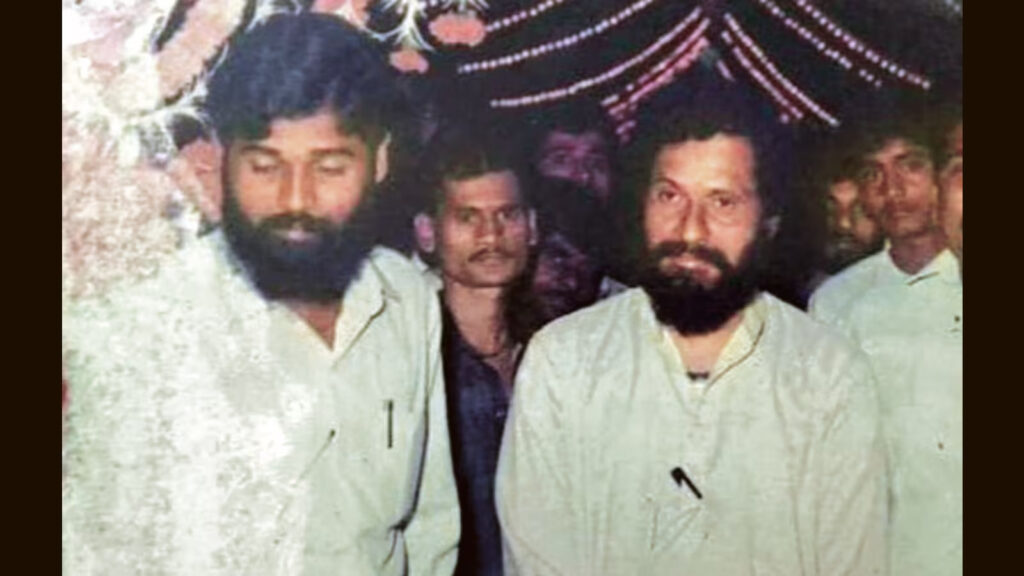
What separated Dighe from conventional politicians was accessibility.
Governance happened at Tembi Naka, not only in Mantralaya.
His Janata Darbar became a parallel institution when the formal state moved too slowly or selectively. People knocked at his door at three in the morning, and it opened. Not as charity, but as duty.
For over two decades, Dighe served as Zilla Pramukh, yet never contested an election. He exercised authority without position, a rarity in Indian politics.
Culture as assertion, Not spectacle
For Anand Dighe, festivals were not holidays; they were statements.
The Dahi Handi at Tembi Naka, today the most prominent in Maharashtra, was his creation. Ganesh Utsav, Navratri, and Shiv Jayanti were reclaimed as community anchors, not decorative events.
This was not soft culture. It was territorial reassurance. Public space was reclaimed, not occupied.
Malanggad: Confronting inconvenient history
The Haji Malang–Malanggad agitation was one of the most ideologically charged chapters of Dighe’s life.
The site, widely known as Haji Malang, was asserted by Hindu groups to be Malanggad, associated with Shri Machhindranath of the Nath sect, predating Islamic presence. Dighe, himself from the Nath tradition, led the movement for historical recognition.
In 1996, after sustained mobilisation, the official name was changed to Malanggad.
- It triggered tension.
- It invited opposition.
- And it was never meant to be comfortable.
Because Dighe did not believe history should survive only when it offends no one.
Bhiwandi Riots: Sequence of incidents matter
The Bhiwandi riots of the 1970s are often discussed with convenient amnesia.
Bhiwandi did not burn because leaders shouted slogans. Bhiwandi burned because the state collapsed first.
Delayed police action, administrative paralysis, and selective enforcement turned neighbourhoods into killing zones. When institutions abdicate responsibility, local power fills the vacuum; always.
Anand Dighe did not arrive to ignite violence. He arrived when Hindu localities had already been abandoned.
- Was it chaotic? Yes.
- Was it ugly? Yes.
- Was it preventable? Absolutely — by timely governance.
But judgment without sequence is propaganda.
History may debate methods — It cannot erase causality.
When homes burn, and the state disappears, people do not ask for ideology — They ask for protection.
Ram Bhakti, TADA, and the cost of authority
After the demolition of the disputed structure in Ayodhya, Anand Dighe sent the first silver brick for the Ram Mandir. No announcement. No spectacle.
His arrest under TADA in the murder case of corporator Shridhar Khopkar shook Thane. The city shut down for three days, not by party order, but by spontaneous public reaction. Calm returned only when Dighe himself appealed for restraint.
That was not influence. That was a command.
Like Guru, Like Shishya
Balasaheb Thackeray once remarked: “Eknath Shinde hi Anand Dighe che talmeet tayar jhaleli mule aahet.”
Shinde’s politics — discipline, organisational loyalty, and grassroots accountability — was shaped under Dighe. His rise was not accidental, but cultivated through a culture where service preceded ambition.
Political lineages are not symbolic. They are behavioural.
Why Uddhav Thackeray cannot claim Anand Dighe
Today, Uddhav Thackeray invokes Anand Dighe’s name. Photographs surface. Memory is curated.
But Anand Dighe’s legacy is not a photograph to be framed after convenient forgetting.
Dighe’s politics was:
- Unambiguous Hindutva
- Cadre-first organisation
- Zero tolerance for ideological dilution
He never abandoned his base to preserve power. He never replaced conviction with convenience.
One cannot hollow out Shiv Sena’s spine and then claim its strongest vertebra.
Legacy does not flow through inheritance. It flows through conduct.
Conclusion: Amol Dighe’s Jayanti is a reminder
India has thousands of districts; very few have seen a man who ruled without ruling.
- Anand Dighe did not want the office.
- He wanted dignity and order and fearlessness.
The political dispute over his legacy will continue. But in Thane, the verdict is settled.
Dharamveer is not remembered. He is followed. And on his Jayanti, one truth stands firm:
गद्दारांना शमा नाही.
आणि वारशाला शॉर्टकट नाही.

