
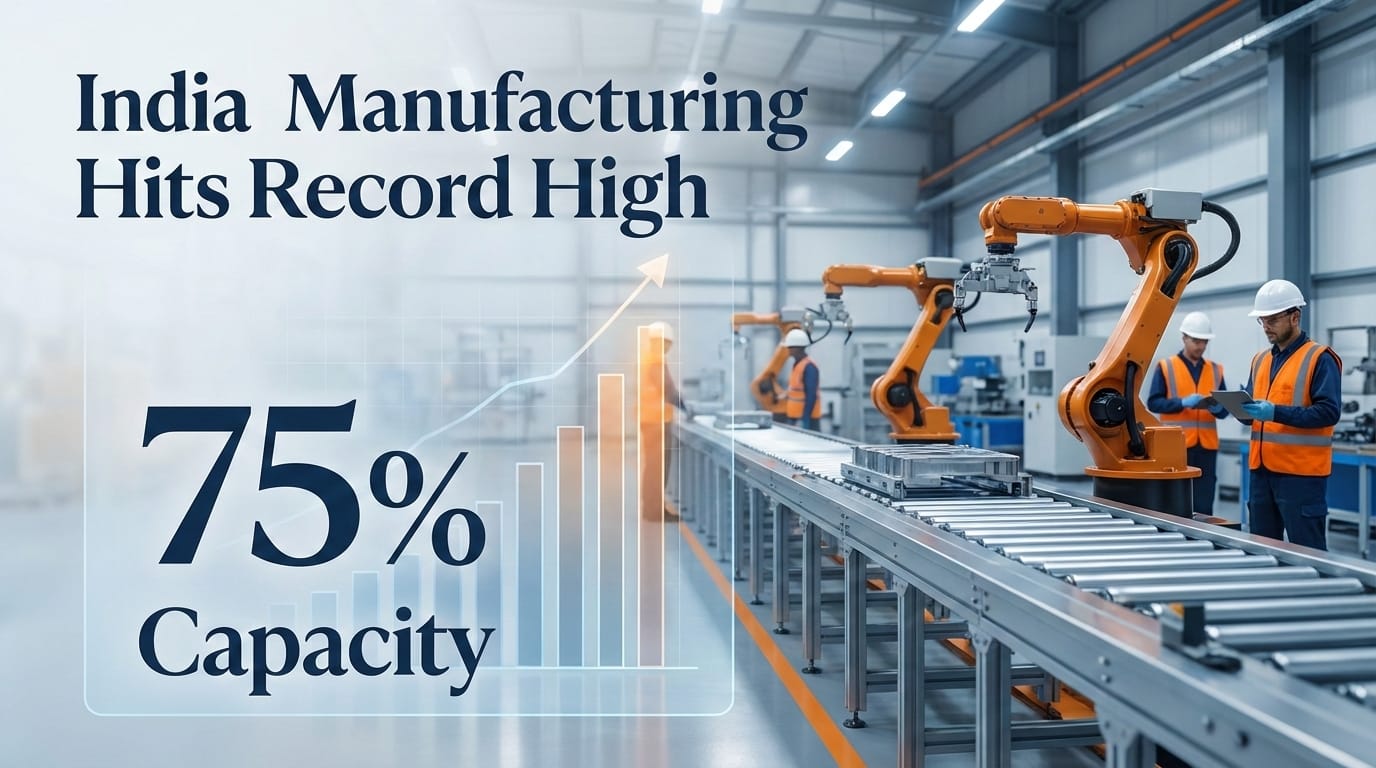
FICCI’s latest Quarterly Survey on Manufacturing shows India’s factories sustained strong momentum in October–December 2025, with a record share of companies reporting steady-to-higher output and improved demand expectations, even as cost pressures and global uncertainties continued to weigh on expansion plans.
India’s manufacturing activity climbed to an all-time high in the third quarter of FY26, reflecting broad-based resilience in output and sentiment, according to the 68th edition of FICCI’s Quarterly Survey on Manufacturing covering October to December 2025.
The survey, which spans eight key segments—auto components, capital goods, chemicals, pharmaceuticals, electronics, machine tools, metals and textiles—draws responses from large firms and SMEs with a combined annual turnover of more than ₹3 lakh crore, offering a wide snapshot of shop-floor conditions and near-term expectations.
On production, about 91% of participating firms said output during Q3 FY26 was either higher or unchanged, improving from 87% in the preceding quarter and indicating that the recovery remains on track across most categories.
Demand sentiment also firmed up, with 86% of companies expecting domestic orders to be higher or stable during the quarter, a trend respondents linked in part to recent GST rate cuts that supported purchasing conditions and order pipelines.
Capacity utilisation remained close to 75% on average, signalling that plants are operating at a healthy clip and that demand is sufficiently firm to keep lines running without a major slackening. While the outlook for fresh investments and capacity expansion over the coming six months stayed broadly steady, manufacturers pointed to global and geopolitical developments, day-to-day operational hurdles and regulatory frictions as the main factors that could limit the pace of new projects or scale-ups.
Export conditions appeared supportive, with around 69% of respondents reporting exports were higher or unchanged in Q2 FY26, and more than 70% expecting export performance in Q3 FY26 to be higher or stable compared with the same period a year earlier.
Employment sentiment improved as well, as 38% of surveyed companies said they plan to add workers over the next three months, compared with 35% in the corresponding quarter last year, suggesting companies are gradually building teams in line with demand visibility.
Financial conditions for manufacturers were mixed but broadly stable, with the average interest rate paid by respondents at about 8.9% and more than 87% reporting adequate access to bank funding. At the same time, cost stress remained a key concern: nearly 57% of firms said production costs as a share of sales increased, driven by higher raw material prices, currency depreciation effects and rising logistics, power and utility expenses, which could pressure margins if not offset by productivity gains or improved pricing power.
Looking ahead by sector, respondents expected electronics and electricals to lead growth, while capital goods, chemicals, pharmaceuticals, metals, machine tools, textiles and auto components were projected to expand at a moderate pace. On labour availability, around 80% of companies reported no shortage of workers, but the remainder continued to flag a shortfall in skilled manpower, underlining the need for sustained skilling efforts and stronger coordination between industry and government to close capability gaps as manufacturing scales.

