
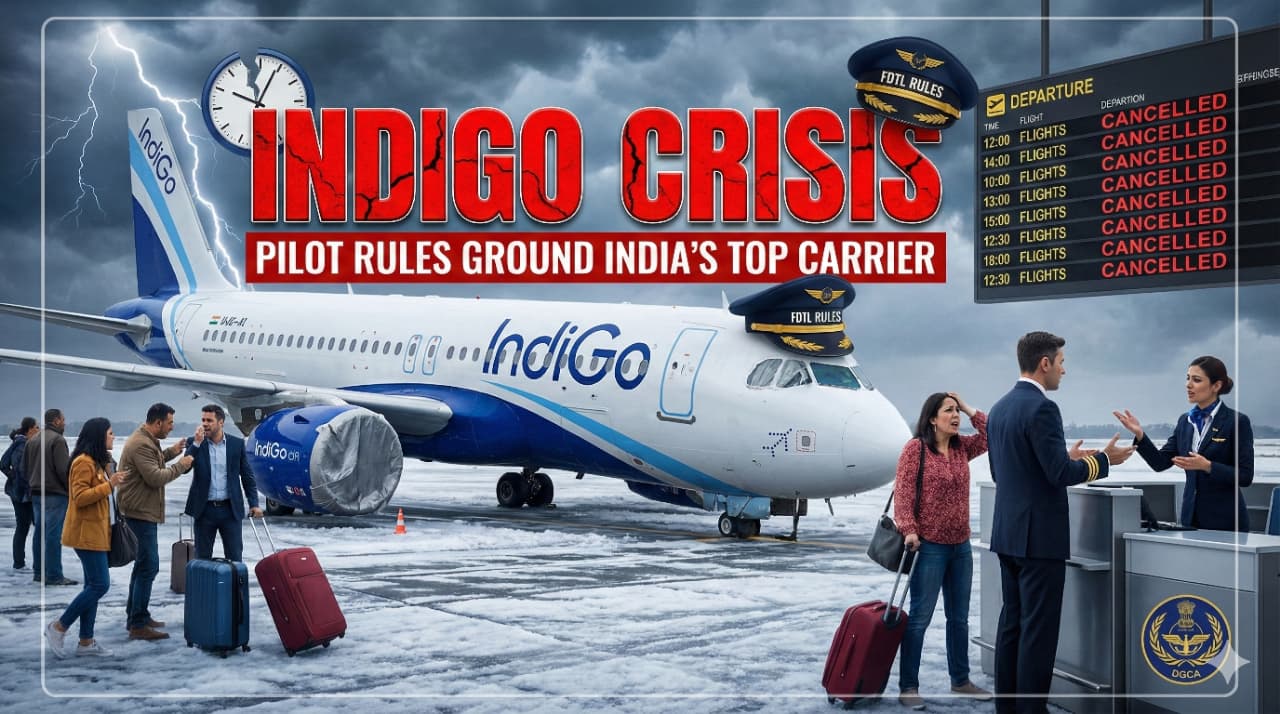
Imagine the Indian skies full of flights and all done on time and this was known to be IndiGo’s territory and suddenly in early December 2025, in the middle of the winter travel rush, the empire was left in ruins. The statistics for the delays on Tuesday, December 2, are simply tragic: Only about 30% of flights managed to take off from the airport as scheduled, 130 were canceled, and 150 were delayed, probably even until Wednesday.
People from New Delhi who were waiting in long queues and those from Hyderabad who were stuck in the airport reacted with anger and thus passengers took to the streets—families separated, Ayyappa pilgrims furious—refunding tweets flew like fire over social media. IndiGo, a giant of Indian aviation, was not brought down by a storm or an act of sabotage but by its own collision with the unyielding regulatory skies.
At the very center of the storm was the Directorate General of Civil Aviation (DGCA) Flight Duty Time Limitations (FDTL) which is a fatigue-fighting fortress built on November 1, 2025, under the direction of the Delhi High Court. The six night landings from midnight to 6 a.m. were reduced to only two per pilot; weekly rest hours were increased to 48; flying hours were limited to 35 per week and 125 per month; no more than two consecutive night shifts were allowed.
These were not sneaky suggestions but orders, a result of investigations into accidents and pilot appeals, which airlines’ desperate lobbying for delays had been ignored. Representatives of IndiGo were quoted saying that the situation was due to “tech glitches, fog, congestion,” however, the reality was that the rules, which had been anticipated for a long time, were very strictly enforced, thus revealing that the airline was the one that was most deprived of crews that were ready to comply.
The peak season, on the other hand, was like gasoline on fire—holidays, festivals, and the return of the diaspora—making the lack of pilots a snowball effect of dreams that had to be left on the ground.
IndiGo’s mistake? Betting on regulatory mercy like a sorcerer. Executives put a halt to new hires, slowed down the promotion of first officers to captains, and were hopeful of postponements although there was a two-year notice.
Their crew buffer of 4%—the rescue for sudden changes—was reduced almost to zero under the weight of the FDTL. The airline’s management team looked into the numbers: pilots who were said to be “underutilized” were flying on average 57 hours a month while they were paid for 70. What a foolish mistake! The best performers of the metro routes such as Delhi-Mumbai were at their maximum while smaller stations like Lucknow were quiet, thus the statistics were deceiving.
The problems with the fleet escalated the situation: the Airbus delivery slowly added 24 planes a year; more than 40 were grounded because of the Pratt & Whitney engine problems; 20 were leases and were operated by foreign pilots; in other words, they were useless buffers. What was intended to be a saving measure turned into a poison at the moment when Gulf carriers—Emirates, and Etihad—were luring away talent with attractive salary packages just when IndiGo was planning to expand to Europe-Australia routes.
Just like the soldiers on a battlefield, the aviators became unwilling participants of a roster roulette game. In addition, deadheading was a major time-consuming factor—pilots as passengers were flying to far-off airports for work. The reroutes were making the pilots’ shifts longer than they could bear; planes were staying idle for two hours after landing. November’s desperate attempt—an internal overtime incentive—was not successful as most of the pilots were already exhausted and therefore yawned.
Conversations were full of rage: “Last week flights were grounded forever; everybody is zombies. Management is out of touch with the reality on the ground.” The morale dropped to the bottom of the pit while Air India was leveling up as more hiring was done proactively. The pilots’ union fired the first volley: “Pay freeze, winter expansions without recruits—strategic sabotage?” Tech problems and winter fog were just the villains’ helpers; the real villain was the manpower crisis which led to 1,232 cancellations in November (62% due to crew) and more than 300 on single days.
The new COO, Isidro Porqueras, faces a challenging situation: DGCA summons several investigations, “calibrated schedule cuts” promise 48 hours of stability along with refunds. The analysts are very loud in their statements: cost control through very efficient management cannot overcome the problem of compliance.
At the same time, as there are international bids, Europe’s very high delay penalties are like sharks waiting for their prey. The story of IndiGo is a very loud lesson: in the aviation industry which is very risky, if you take the souls for granted you will suffer a disaster. This turmoil tells a story of a carrier that has been brought down to the floor and is asking for mended wings before the next storm crisis comes from bufferless bets to fatigue’s rage.

