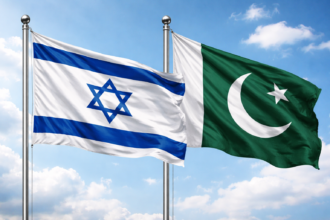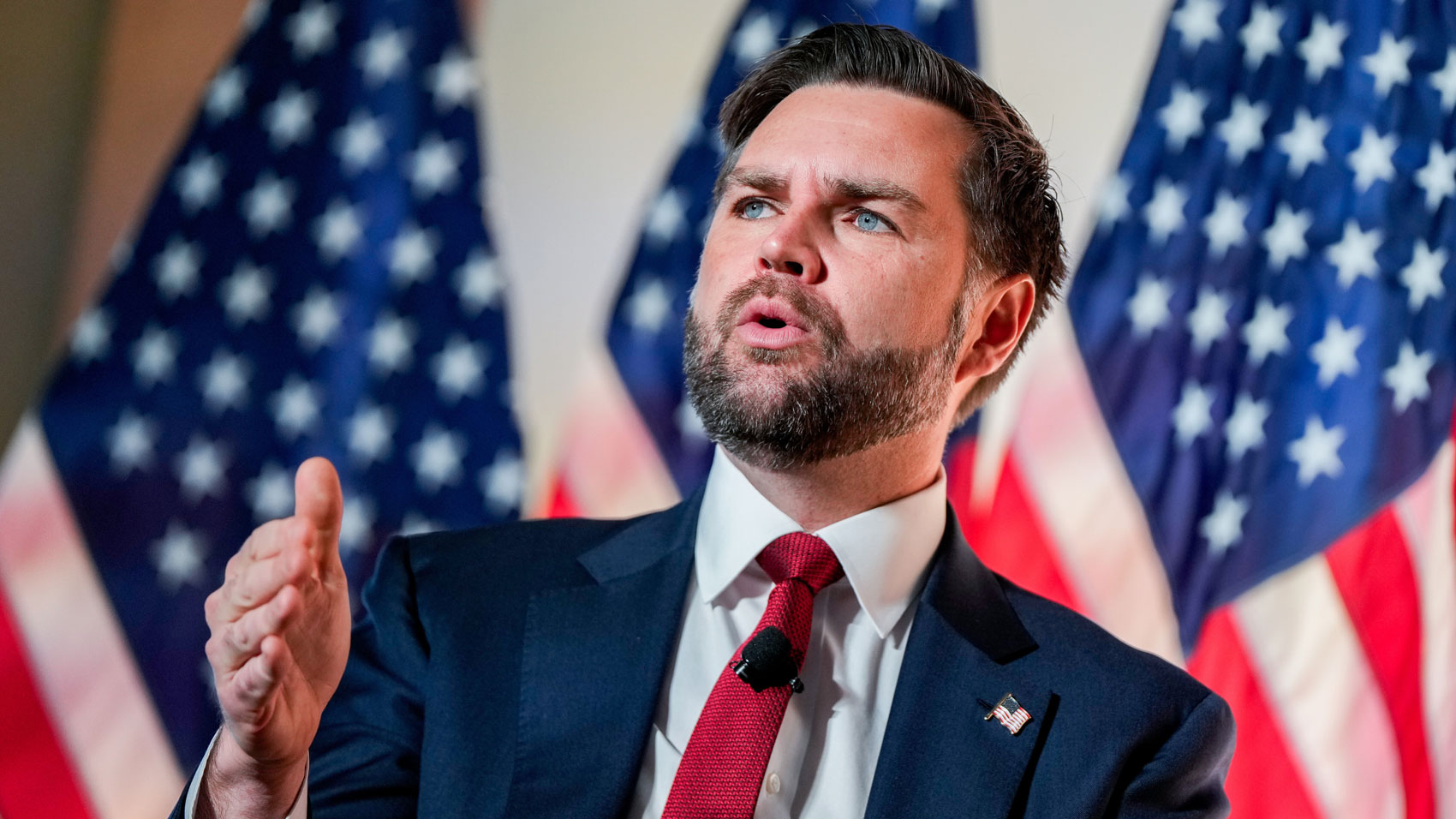
He was welcomed by Pakistani officials, including Deputy Prime Minister Ishaq Dar and Army Chief General Asim Munir. The US delegation is here for talks with Iran, aiming to ease tensions in the region.
He arrived in Islamabad on a military flight, welcomed at the airport by Foreign Minister Ishaq Dar and Army Chief Asim Munir. Vance is set to hold talks with Iran later today, accompanied by US special envoy Steve Vicktor and Jared Kushner.
Vance and his negotiating team left for Pakistan yesterday, telling reporters before departure they’re “expecting talks,” but warned if Iran “wants to play games with us,” the consequences will be serious.
Iran’s delegation has arrived in Pakistan ahead of Saturday’s talks in Islamabad. Here are key points to know before the talks begin.
-Talks between Iran and the US are being led by Pakistan.
Iran has formally informed mediators it’s not ready to meet US officials in Islamabad in the coming days.
Efforts for a ceasefire between Iran and the US are facing setbacks.
Regional countries are working to end the US-Iran conflict.
Pakistan has been playing a mediating role between the two sides for several weeks. Pakistan has historical ties with Iran, and US President Donald Trump says Pakistani Army Chief Asim Munir knows Iran (much) better.
Trump says the US has received a 10-point proposal from Iran, which he considers a “workable basis” for negotiations. The proposal includes Iran’s control over the Strait of Hormuz, acceptance of uranium enrichment, lifting of sanctions, and withdrawal of US forces from the region
Iran’s Foreign Minister Abbas Araghchi mentioned a 15-point proposal, which, according to US President Donald Trump’s negotiating team, could resolve the crisis.
Araghchi stated that the US has failed in its aggressive goals, like quick victory and regime change, and Iran has shown that no one can play with the Islamic Republic. He emphasized that Iran is ready for both war and negotiations, and the current situation is under control.
Neither proposal has been officially released, but reports have revealed their contents, and diplomatic journalists say there’s a significant gap between the two.
The US has proposed a 15-point plan, which includes a ceasefire, restrictions on Iran’s nuclear program, and guarantees for maritime security in the Gulf. Iran, on the other hand, has presented a 10-point counter-proposal, focusing on lifting sanctions, recognizing its right to control the Strait of Hormuz, and receiving compensation for damages.
Israel’s ongoing bombardment of Lebanon is raising doubts about peace talks, Israeli Prime Minister Benjamin Netanyahu insists Lebanon is not part of the ceasefire agreement. On Wednesday, Israeli forces bombed various parts of Lebanon, killing up to 300 people, according to Lebanon’s Health Ministry.
The escalation began after Hezbollah launched rockets at northern Israel, prompting Israel to unleash large-scale air strikes across Lebanon, including Beirut’s southern suburbs. Lebanon’s President Joseph Aoun condemned the Israeli strikes, warning against using Lebanon as a conflict platform
Lebanon announced on Friday it will hold talks with Israel in Washington next week regarding a ceasefire. US Vice President J.D. Vance is on route to Islamabad to represent the US in these talks, accompanied by special envoy Steve Vicktor and Jared Kushner, President Trump’s son-in-law and advisor.
Iran’s state TV reported on Telegram that the Iranian delegation is led by Parliament Speaker Mohammad Bagher Ghalibaf. According to reports, the delegation includes Foreign Minister Abbas Araghchi, Supreme National Security Council Secretary Ali Akbar Ahmadian, Central Bank Governor Abdolnasser Hemmati, and several parliament members.
Ghalibaf told two Iranian conditions for talks with US remain unmet. Iran’s Parliament Speaker Mohammad Bagher Ghalibaf says two Iranian conditions for negotiations with the US haven’t been met yet.
He wrote on his X page: “Two steps agreed upon by both sides haven’t been implemented: a ceasefire in Lebanon and the unfreezing of Iran’s assets before talks begin. These two issues need to be resolved before negotiations start.”
Meanwhile, Iran’s state media reports Israel has agreed to a ceasefire in Lebanon, but Israeli officials haven’t commented on it yet.
The UN Secretary-General has urged Iran and the US to start peace talks with “good faith”.
UN Secretary-General António Guterres has welcomed talks between the US and Iran, urging both sides to engage with “good faith”.
At a UN press conference on Friday, Secretary-General’s spokesperson Stéphane Dujarric said Guterres “calls on parties to seize this diplomatic opportunity and work in good faith towards a durable and comprehensive agreement that reduces violence and prevents the resumption of conflict.”
Dujarric added, “The Secretary-General stresses there is no alternative to peaceful resolution of international disputes, and it must be in accordance with international law, particularly the UN Charter.”
He added that Guterres’ special envoy is in the region to support diplomatic efforts.
By- Laiba Yousafzai