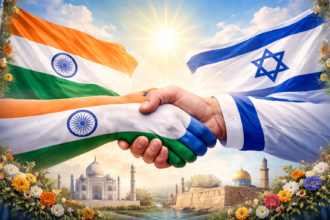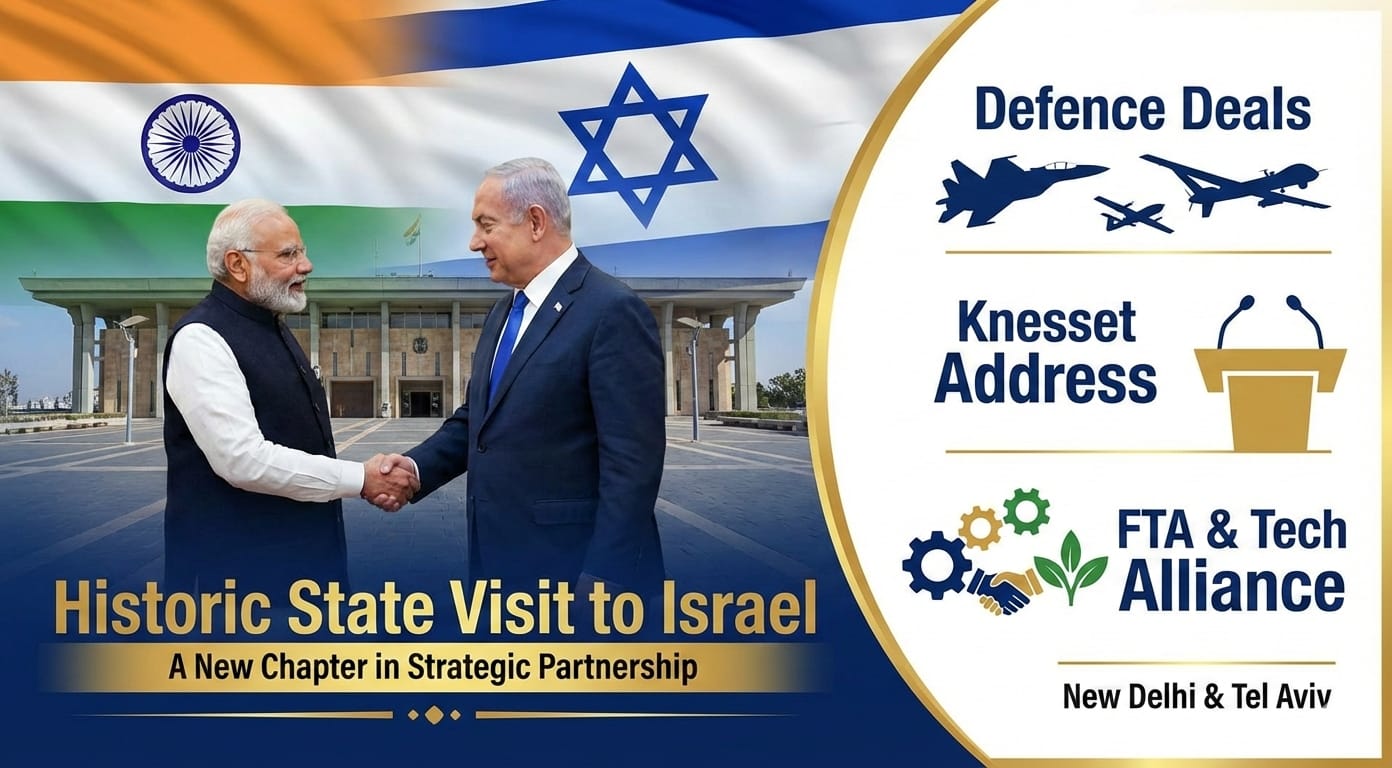
Prime Minister Narendra Modi’s two-day State visit to Israel on February 25–26 comes at a moment when New Delhi and Tel Aviv are trying to turn an already close strategic partnership into a deeper economic and technology-driven alliance. Invited by his “dear friend” Prime Minister Benjamin Netanyahu, Modi will be in Israel for the second time as Prime Minister, almost nine years after his pathbreaking 2017 trip that ended the diplomatic hesitation of previous decades.
This visit is being projected in both capitals as a chance to reset priorities, respond to shifting geopolitics in West Asia, and give clear political direction to a relationship that has rapidly expanded in defence, intelligence and high technology but now needs a fresh economic spine through a Free Trade Agreement.
The visit is officially structured around the India–Israel Strategic Partnership, a framework that has been quietly but steadily growing since India and Israel established full diplomatic relations in 1992. Over those three decades, the two nations have built cooperation across defence, agriculture, water management, technology, and innovation. This visit is being seen as a moment to take that partnership to a qualitatively higher level, with both sides ready to move from goodwill into concrete agreements.
At the heart of the diplomatic agenda is the question of trade. Simultaneous with Modi’s arrival in Israel, the first formal round of India–Israel Free Trade Agreement negotiations has begun back in New Delhi. This is a significant milestone. A comprehensive FTA between the two countries has been discussed for years, but actual negotiations have often stalled or been postponed.
The fact that talks are now officially underway signals that both sides have the political will to finally get a deal done. Such an agreement could open up new markets for Indian goods — particularly pharmaceuticals, textiles, and agricultural products — while Israeli high-tech companies and agricultural technology firms would gain easier access to India’s massive consumer base.
Defence cooperation is another major pillar of the discussions. India is one of the largest buyers of Israeli military equipment in the world. From drones and surveillance systems to missile defence technologies, the two countries have developed a deep buyer-supplier relationship that has gradually evolved into joint development and production.
Modi’s talks with Netanyahu are expected to push this further, with discussions around co-production agreements and deeper integration of Israeli innovation into India’s broader defence manufacturing ambitions under the Make in India initiative.
Beyond the formal negotiations, there is a powerful symbolic dimension to this visit. PM Modi is scheduled to address the Knesset, Israel’s parliament, making him one of very few foreign leaders to have been extended this rare honour.
A speech before the Knesset is not just a diplomatic courtesy — it is a statement about the depth of trust and respect between the two countries. Modi is expected to speak about shared democratic values, the importance of innovation, and the role both nations can play in building a more stable and prosperous world.
Modi will also hold a separate meeting with Israeli President Isaac Herzog. While the Israeli presidency is largely a ceremonial role, the meeting underscores the comprehensive nature of the engagement — reaching across all levels of Israeli public and political life, not just the government.
Agriculture and technology are two other areas where real, on-the-ground cooperation between India and Israel has delivered visible results for ordinary people. Indian farmers in several states have already benefited from Israeli drip irrigation techniques and greenhouse farming methods.
The two sides are expected to deepen these programmes, with new agreements on agri-tech collaboration and water conservation that could help India address its growing challenges around food security and water scarcity.
At its core, this State visit is about two countries that see each other clearly — as partners with complementary strengths, shared strategic interests, and a genuine desire to build something lasting together. With an FTA on the table, defence ties deepening, and a Knesset address that will be watched around the world, PM Modi’s visit to Israel marks the beginning of a truly mature and forward-looking partnership between the two nations.