In the evening of November 10, 2025, a car explosion at Delhi’s Red Fort disrupted what began otherwise as an ordinary day in the capital. Fifteen people were killed and more than twenty were injured in the blast, which occurred near the Lahori Gate, an area usually filled with tourists, office-goers, and vendors. The incident shook the city not because of the scale alone, but because it came after years of relative stability in India’s major metros.
As investigators pieced together what happened, they uncovered a much deeper and a sinister plot. This was not a lone wolf attack but a part of a long-running plan by Jaish-e-Mohammed (JeM), a Pakistan-based terror organization with a long record of targeting India. Evidence began to show that the planning for this strike and others like it had started as early as 2023, with Delhi merely being the first target on the list to be hit. The revelation forced Indian security agencies once again to confront the uncomfortable reality that cross-border terror networks now have an expanded global footprint.
The echo of 26/11
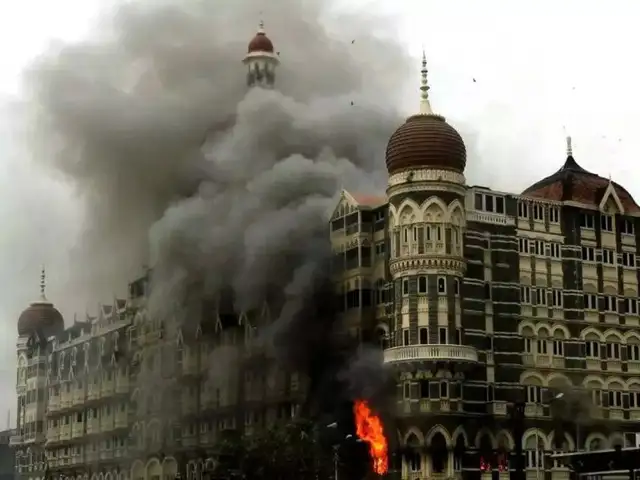
To understand the significance of the Red Fort attack, one must remember the day of November 26, 2008, arguably the most defining moment in modern Indian counter-terror history. That evening, ten Lashkar-e-Taiba (LeT) militants slipped into Mumbai by sea from Karachi, executing a coordinated assault that lasted nearly 60 hours. Their targets ranging from prime locations like the Taj Mahal Palace Hotel, the Oberoi Trident, the Chhatrapati Shivaji Terminus, and other major public landmarks, were chosen with the intention of maximizing casualties and media impact.
The attack killed 166 people and injured more than 300, but the psychological aftershock went far beyond the numbers. The world watched in real time as gunmen roamed the halls of luxury hotels and opened fire on commuters at a crowded railway station. Indian intelligence agencies were scrutinized for missing warnings about a possible sea-borne infiltration. Families of victims demanded accountability, and public anger-built pressure that finally set the ball rolling for reshaping the national security policy. India responded with new counter-terror protocols, expanded intelligence capabilities, and, years later, military operations such as the 2016 surgical strikes, the 2019 Balakot airstrikes and the recent Operation Sindoor became a standard response procedure to major terror attacks that were perpetrated from across the border.
Internationally, 26/11 also forced governments to reassess Pakistan’s role in harbouring extremist groups. Even as global institutions-imposed sanctions on Pakistan and the United States pressed for action, Pakistan’s deep state continued shielding key operatives. Groups like LeT rebranded itself under new charitable fronts, and institutions that connected to their networks continued to function. The world moved on, but India carried the memory and the burden.
Pakistan’s proxy infrastructure: A strategy of calculated denial
The Red Fort blast is another link in a chain that stretches back decades. Since the 1980s, Pakistan’s Inter-Services Intelligence (ISI) has nurtured a network of proxy terror groups, first as part of the Afghan jihad and later as instruments of asymmetric warfare against India. The doctrine that emerged, often summarized as “bleed India with a thousand cuts,” relied on terror organizations that could carry out attacks while allowing Pakistan to deny direct involvement.
Lashkar-e-Taiba (LeT) and Jaish-e-Mohammed (JeM) sit at the core of this proxy architecture. LeT, established in the late 1980s by Hafiz Saeed, and JeM, created in 2000 by Masood Azhar, have benefitted from safe havens within Pakistan. Their funding often flows through Gulf-based charities, informal money-transfer networks (Hawala), and institutions operating with minimal oversight. Their training camps in places like Muridke and Bahawalpur in Pakistan have long been known to intelligence services, and their cadres have been deployed repeatedly in attacks inside India.
Over the years, these groups have refined their methods, from the 2001 Parliament attack to the 2006 Mumbai train bombings, to 2008 Mumbai attacks and then the 2019 Pulwama suicide attack, followed by Pahalgam terror attack earlier this year, have all borne signatures of evolving strategies that these terror groups have adopted time and again. Despite the international pressure and occurrences of FATF scrutiny, Pakistan has not only avoided taking decisive action against these groups but instead have brazenly provided them with state patronage. Its security establishment continues to see them as useful leverage in its long-standing rivalry with India.
The consequences of continued terror from across the border have been clear. More than 500 terror-related incidents have occurred in Jammu and Kashmir alone since 2019, many linked to offshoots or affiliates of LeT and JeM. Each event demonstrates that these organizations remain active and capable, and that the state structures protecting them are still intact.
The Delhi plot: Terror redesigned for a new era
The Red Fort attack in Delhi this month marks an evolution in how Pakistan-backed groups operate. Unlike the Mumbai attackers who carried out a multi-day siege with assault rifles and grenades, the perpetrators of the Red Fort blast relied on tactics suited for densely populated urban environments where anonymity is easier to maintain.
Investigators learned that the Delhi attack was only one part of a much larger plan. According to confessions from JeM recruit Muzammil Shakeel, the group intended to carry out synchronized car bombings in Mumbai, Bangalore, and Ahmedabad. The strategy was to trigger multiple car bomb blasts around the same time, overwhelming emergency services and creating widespread panic across the country.
This approach signals a dangerous shift. The attackers relied on encrypted communication platforms, making it harder for intelligence agencies to intercept messages. Recruitment was not limited to traditional militant strongholds but expanded to an educational institute that included educated, tech-savvy individuals capable of managing logistics and blending into city life. Radicalization was happening quietly through online networks and targeted outreach, lowering the visibility of the plot until the moment of attack.
For the Indian government, particularly after Prime Minister Narendra Modi’s 2025 declaration that major terror attacks would be treated as an “act of war,” the blast poses difficult questions. The Delhi bomb blast investigation has revealed a wider footprint that expands far beyond the borders of Pakistan into the heart of Istanbul, Turkey.
India’s dilemma and the world’s continued indifference
From Mumbai in 2008 to Delhi in 2025, India has endured repeated blows from the same pattern of state-supported terrorism across its western border. The problem is not only the groups that carry out attacks but the infrastructure that sustains them, an ecosystem of funding, training, ideology, and state protection that is nurtured by the state of Pakistan.
The global community, while occasionally vocal, has often been inconsistent. After major attacks, there is condemnation and pressure on Pakistan. But once headlines fade, diplomatic considerations return to the forefront. Pakistan avoids long-term consequences, and the terror groups it fosters lie low until conditions are favourable again and then its business as usual for them.
India, meanwhile, must continue strengthening its defences. It needs deeper coordination among intelligence agencies, new technological tools for surveillance, and a counter-terror strategy insulated from political shifts. But even these steps will be limited if the world continues treating Pakistan’s use of state sponsored terrorism as an issue to be managed rather than confronted.
The Red Fort blast underscores a broader truth that terror networks adapt quickly, thrive in ambiguity, and exploit geopolitical hesitation. If India’s warnings are ignored, and if Pakistan’s denial strategy continues to face no serious international cost, more attacks may follow.
The question is not whether India will respond, but whether the world will finally acknowledge that these are not isolated incidents but part of an enduring strategy that seriously threatens global peace and stability.
Note: The article is written by Raja Muneeb, independent journalist and geopolitics expert. He can be reached on X at @rajamuneeb.