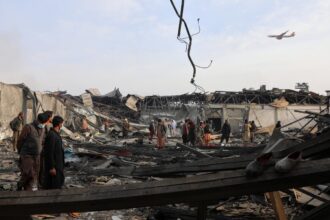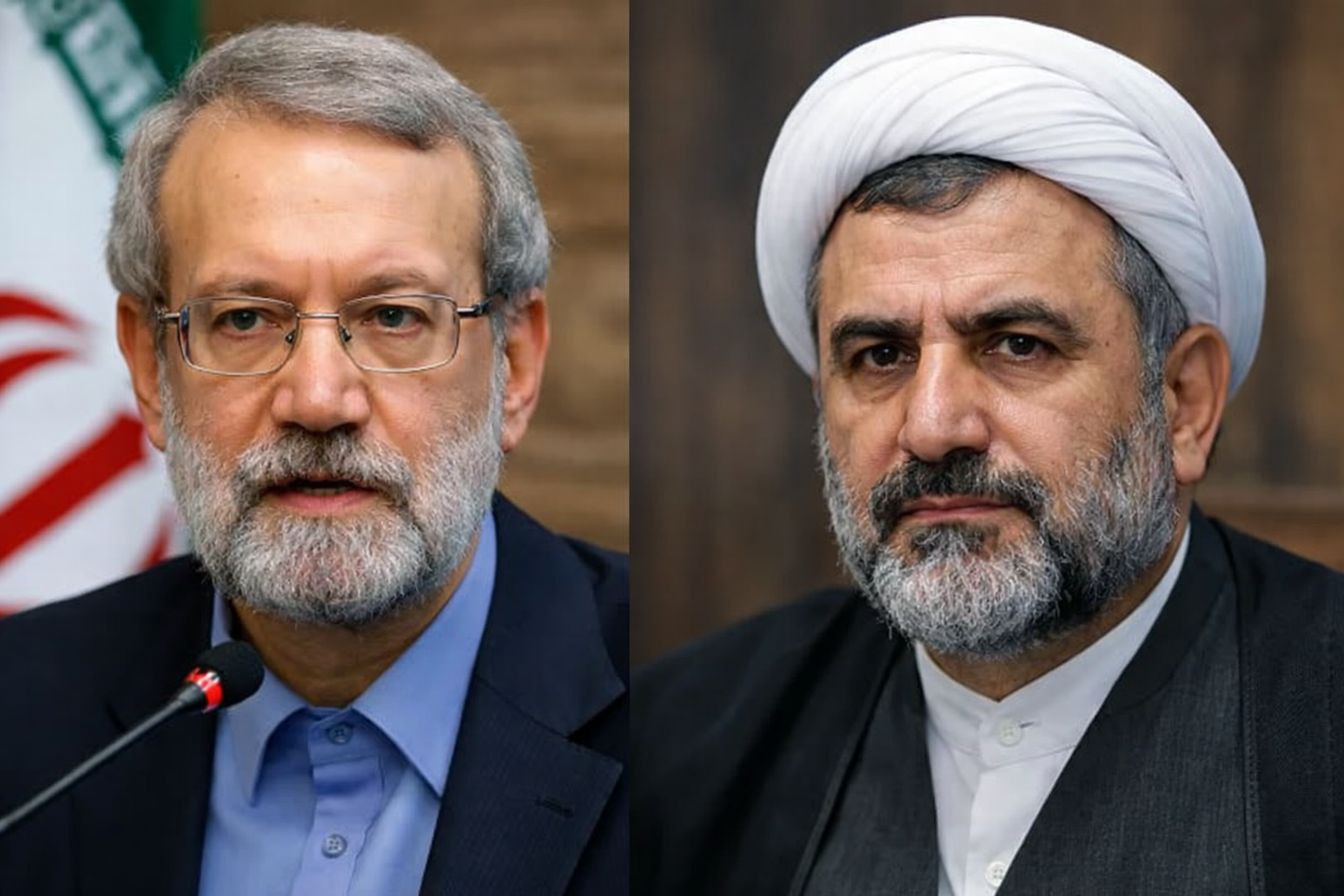
The ongoing war in West Asia continues to escalate with Israel continuing to launch precision strikes on Iran and even targeting Iran’s oil fields. In these precision strikes, Israel has eliminated 2 most powerful men in Iran, security chief Ali Larijani and Intelligence Minister Esmail Khatib. The 2 assassinations within 24 hours are a crippling blow to Iran’s security infrastructure.
These high profile killings come days after Ayatollah Khameini was eliminated in a similar precision strike. As the conflict continues, Iran is increasingly facing a leadership vacuum with many of its leaders who oversaw its security being eliminated by Israel.
These strikes have significantly weakened Iran regime’s security infrastructure, intelligence operations, and crisis-management capability. The way these precisio9n strikes have been carried out have also highlighted how extensive Israel’s spy operations are in the Persian country.
Ali Larijani: The de-facto leader of Iran
Ali Larijani was widely regarded as one of the most influential figures in Iran’s political and security establishment and was widely considered as the man who effectively ran Iran over the past few years, Larijani’s assassination has hence come as a body blow to the Iranian security apparatus. He held several important posts before rising through the ranks and becoming the country’s security chief and becoming the de-facto ruler of Iran.
Born in 1957 in Najaf to a prominent clerical family, Larijani emerged as a key figure within the Islamic Republic’s ruling establishment after joining the Islamic Revolutionary Guard Corps during the early years of the revolution. Larijani held various posts through the years in every part of the government. His grip on Iran’s politics gradually tightened till he started calling all the shots behind the scenes in Iran.
Ali Larjani served as Speaker of the Iranian parliament from 2008 to 2020. Following that, he became the key figure in Iranian security establishment. Last year, he was appointed Secretary of the Supreme National Security Council. Thus, emerging as the main strategist behind Iran’s intelligence, defense and foreign policy.
Ali Larijani’s influence went far beyond this role. He was also influential in bringing together Iran regime’s competing factions and move them in one direction.
He was the main pillar of Iran’s security infrastructure and his killing by Israel is really going to have a major impact on Iran.
The Assassination of Larijani
Larijani was killed in an Israeli airstrike on the outskirts of Tehran on the night of 16-17 March 2026. Larijani was killed in a precision strike when he was visiting his daughter’s house. Larijani’s son and several associates were also killed in the attack.
This strike and Israel’s knowledge of Larijani’s movements again highlights how deeply Israeli spy agency Mossad has penetrated Iran’s security system. Even though Larijani was a highly cautious man and tried to keep his location a secret, Mossad had the intel of his exact location and movements.
The assassination has triggered panic within Iran’s political elite. Officials reportedly feared that Israel had the capability to systematically eliminate top leadership figures.
Esmail Khatib: The man who ran Iran’s intelligence network
If Larijani represented the strategic brain of Iran’s security apparatus, Esmail Khatib was its operational nerve center.
Khatib served as Iran’s Minister of Intelligence since 2021 and oversaw the country’s main civilian intelligence service. This ministry conducts counter-intelligence operations, surveillance of domestic dissidents, and covert operations abroad.
Born in 1961 and educated in the religious city of Qom, Khatib rose through the ranks of Iran’s security institutions before becoming intelligence minister.
He was considered a loyal ally of Iran’s clerical leadership and had deep connections with the intelligence wings of the Revolutionary Guards. His ministry coordinated operations against perceived enemies of the Islamic Republic both inside and outside the country.
As part of his role, Khatib monitored political dissent within the country, ran spy operations abroad, counter-intelligence, provided important intel for military operations. He played an important role in crushing protests in Iran earlier this year.
Israel’s assassination of Khatib
Khatib was killed in a targeted Israeli strike in Tehran, reportedly carried out by the Israeli Air Force with intelligence guidance.
The attack occurred just one day after the assassination of Larijani, making it the third major killing of an Iranian official within 48 hours.
Israeli officials claimed the strike was precise and based on real-time intelligence. The rapid succession of these assassinations signals a clear strategy from Israel, dismantling Iran’s command structure by eliminating key decision-makers.
A Devastating blow to Iran’s security infrastructure
The deaths of Larijani and Khatib together represent a severe disruption to Iran’s national security architecture.
Three major areas have been affected.
1. Strategic Decision-Making Paralysis
Larijani played a central role in coordinating Iran’s national security strategy. His position at the Supreme National Security Council allowed him to connect military planning, diplomatic negotiations, and intelligence operations.
Without him, Iran loses a key strategist capable of navigating internal power struggles and managing crisis responses.
Experts say replacing such a figure during wartime is extremely difficult.
2. Intelligence System Disruption
Khatib’s death directly affects Iran’s intelligence operations.
Losing the minister in charge creates temporary chaos in command structures and disrupts ongoing operations.
Leadership transitions in intelligence organizations often lead to communication breakdowns, delays in decision-making, and loss of operational secrecy.
3. Exposure of Security Vulnerabilities
Perhaps the most damaging aspect of these assassinations is what they reveal about Iran’s internal vulnerabilities.
For Israel to track and eliminate figures like Larijani and Khatib, it likely relied on intelligence from within Iran. These kind of strikes have highlighted the vulnerabilities within Iran’s security apparatus.
The successful targeting of two top security officials suggests that Israel has penetrated Iran’s security system at multiple levels.
This revelation alone could trigger paranoia and purges within Iran’s intelligence agencies.
Israel going for the jugular by targeting Iranian leadership
The killings of Larijani and Khatib are part of a larger pattern.
In recent weeks, multiple senior Iranian officials have reportedly been eliminated, including military commanders and intelligence leaders.
Such operations are often described as “leadership decapitation” strategies — designed to destabilize a government by removing key decision-makers.
Historically, this tactic has been used by several countries against adversarial regimes or militant groups.
In Iran’s case, the goal appears to be weakening the regime’s ability to coordinate military responses across multiple fronts — including Syria, Lebanon, Iraq, and the Persian Gulf.
Political consequences inside Iran
The assassinations could also reshape Iran’s internal power dynamics.
Larijani was one of the few leaders capable of balancing different factions within the regime. His absence may increase the influence of hardline military elements, particularly the Revolutionary Guards.
Some analysts believe the power vacuum could allow the military establishment to dominate political decision-making.
This could lead to a more aggressive foreign policy posture.
Beyond strategic damage, the killings carry enormous psychological impact.
Iran’s leadership has long projected an image of strength and security. The ability of foreign intelligence services to strike inside Tehran undermines that narrative.
The deaths of such senior officials create fear among other leaders who may now believe they could be targeted next.
According to reports, Iranian officials reacted with shock and anxiety after the assassination of Larijani.
This sense of vulnerability can affect decision-making at the highest levels of government.
Iran’s response to these major blows
The assassinations have already triggered retaliation from Iran, including missile strikes against Israel and threats against regional infrastructure.
Such escalation raises the risk of a wider regional conflict involving multiple actors across the Middle East.
With the leadership structure weakened and emotions running high, miscalculation becomes more likely.
The targeted killings of Ali Larijani and Esmail Khatib mark a turning point in the shadow war between Israel and Iran.
Larijani represented the strategic brain behind Iran’s national security policy, while Khatib controlled the country’s intelligence machinery. Eliminating both men within days of each other has disrupted Iran’s command structure and exposed serious weaknesses in its security system.
Beyond the immediate operational damage, the assassinations send a powerful signal: Iran’s most senior leaders are no longer beyond the reach of foreign intelligence and military power.
Whether Iran can rebuild its security apparatus quickly enough to restore stability remains uncertain. What is clear, however, is that these strikes have shaken the foundations of the Islamic Republic’s security state — and may reshape the geopolitical balance of the Middle East in the months to come.