Back in December 2025, when the United States started the Pax Silica plan, India’s absence from the member list caused surprise in New Delhi policy circles. The plan, a U.S.-led group to secure important tech supply chains and cut dependence on China, was seen as a key move in the global race for AI and semiconductor leadership. While allies like Japan, the Netherlands, South Korea, and Australia joined early, India’s exclusion seemed to show growing worry in what was a strong relationship. Now, after two months, that gap has been closed and turned into a deep partnership.
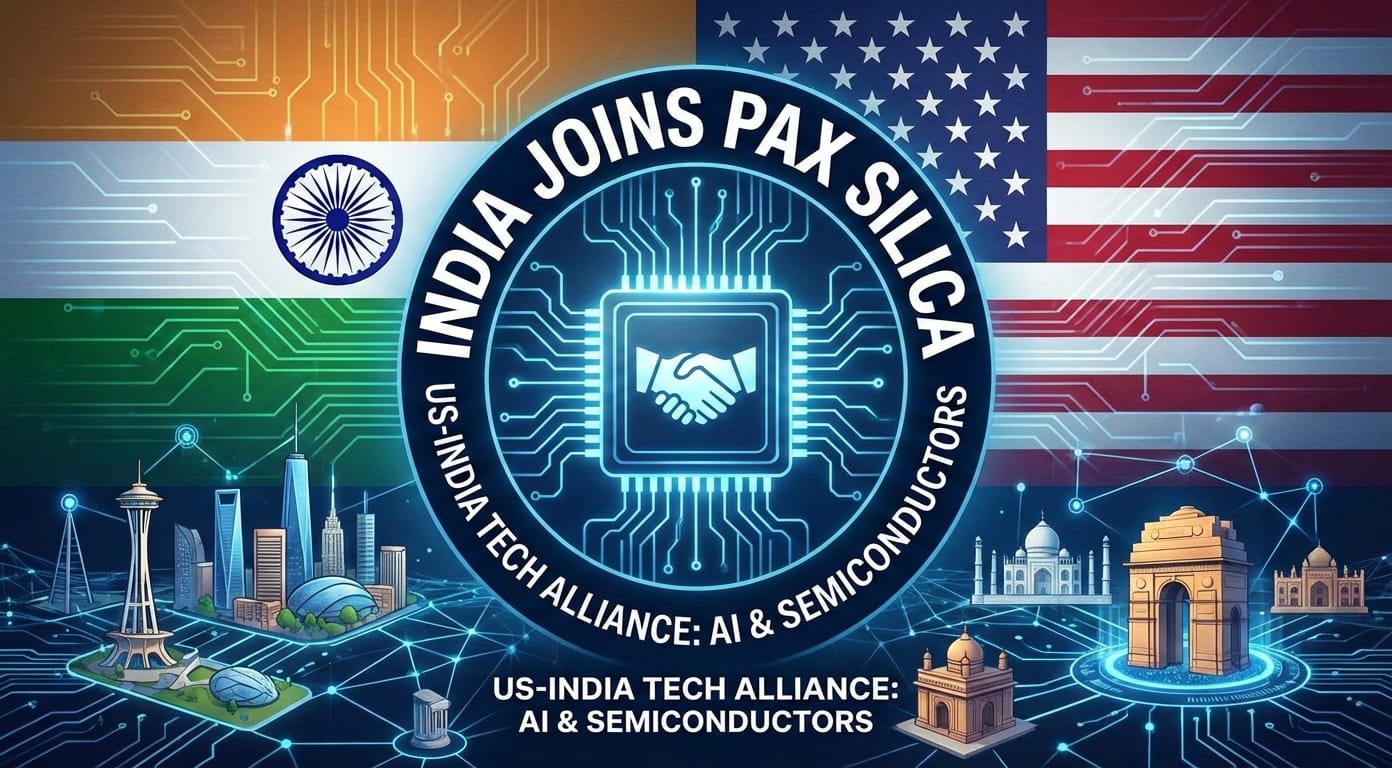
On Friday, India officially signed the Pax Silica Declaration in New Delhi, joining an exclusive group of trusted tech partners led by Washington. The deal was signed at the India AI Impact Summit 2026, with IT Minister Ashwini Vaishnaw representing India and U.S. Under Secretary of State for Economic Affairs Jacob Helberg leading the American side. With tech leaders like Sundar Pichai and Sam Altman present, the meaning was clear: India had reached the top level of future tech cooperation.
The Pax Silica plan wants to secure and expand global supply chains for AI, semiconductors, and critical minerals, which support modern digital economies. The U.S. State Department said the group’s main goal is to make sure key technologies are safe, reliable, and not controlled by hostile groups. It’s about lowering the world’s dependence on China’s manufacturing power and strengthening a network of democracies that can support innovation without pressure.
For India, joining Pax Silica confirms its reputation as a dependable and skilled tech partner. In the last three years, New Delhi has been strongly pushing its semiconductor and electronics manufacturing goals, but progress has been slow. Being part of Pax Silica brings more than just respect; it comes with the potential for large investment from American companies that can improve India’s AI and chip facilities. Officials suggest that many U.S. tech companies are thinking about co-investment chances in data centers, chip factories, and AI research centers in India.
The partnership also has geopolitical meaning. As the United States wants to lower risks in its supply chains and fight China’s influence, India’s involvement strengthens the democratic tech path from Silicon Valley to Bengaluru. Washington’s message is clear: it sees India as a key part in the global tech world. For Delhi, the move strengthens its image as a key player in the next stage of innovation diplomacy, where chips, data, and AI models are the new signs of power.
The timing of the deal is also important. Recently, ties between the two countries were strained because of trade disagreements and questions about market access. The arrival of U.S. Ambassador Sergio Gor and his confirmation that India would soon join Pax Silica helped calm tensions. Now, with the deal in place, officials say that both countries have completed the plan for their long-talked-about trade agreement, making tech cooperation easier.
Besides the diplomacy, Pax Silica’s goals match India’s concerns. The plan’s focus on trusted networks and secure digital systems fits with India’s worries about Chinese participation in its telecom and infrastructure areas. For years, India has been removing Chinese equipment from key networks, like 5G and power systems. Joining this U.S.-led group puts India’s national security goals into a larger plan backed by innovation and investment.
As the AI Impact Summit in New Delhi goes on, with developers, CEOs, and leaders sharing ideas on using AI responsibly, there’s a feeling that India’s slow start in the semiconductor and AI areas may not decide its future. The Pax Silica membership provides not just access to advanced technology but also a part in shaping the global rules of digital control.
For a country aiming to be the world’s next digital leader, that is more than just a diplomatic victory, it is hope for a tech jump.