India’s manufacturing sector is facing one of its toughest tests in recent years as the war in West Asia sends shockwaves through global energy and trade networks. The conflict, which has caused the partial closure of the crucial Strait of Hormuz, has disrupted shipping routes, raised freight prices, and delayed cargo for weeks. This has created a chain reaction that is choking raw material supply, increasing operating costs, and even threatening the survival of small and medium manufacturers in India.
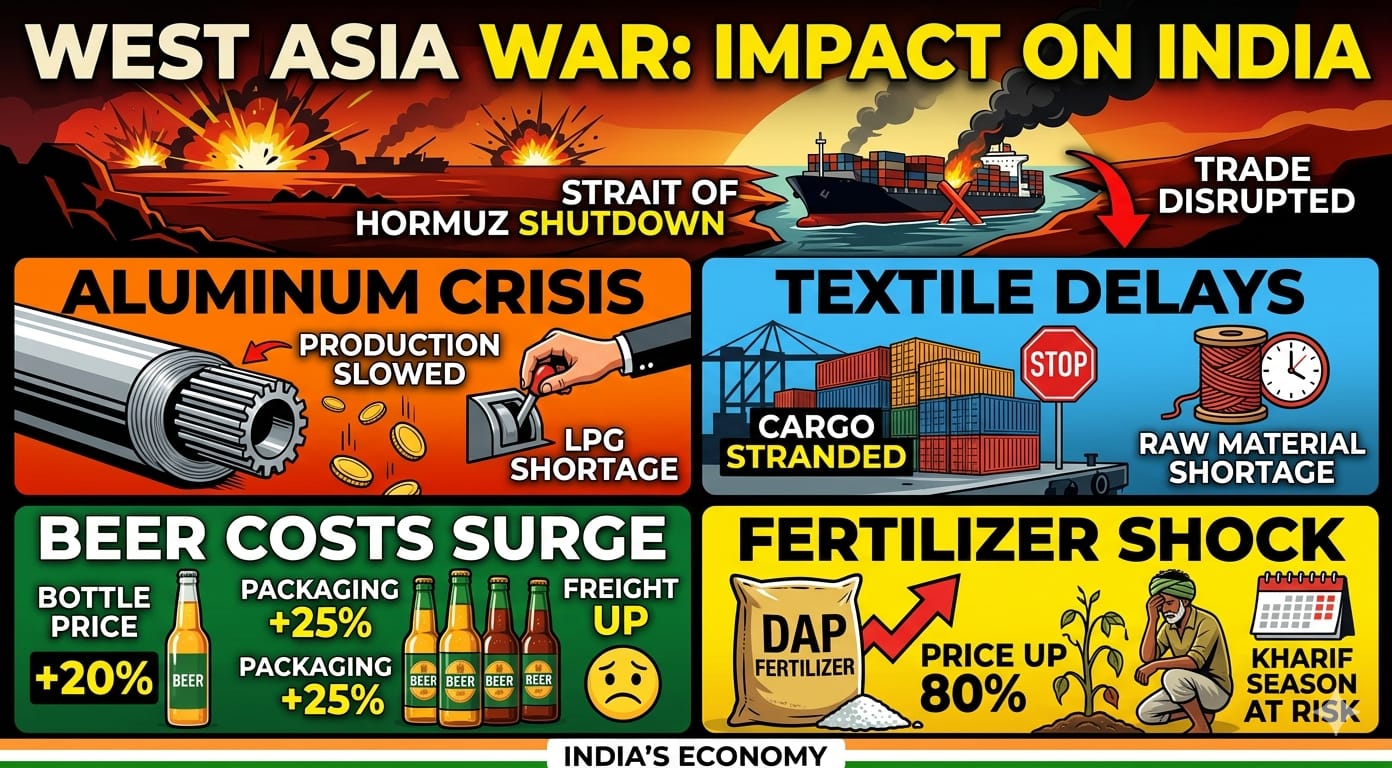
At the heart of the crisis is the Strait of Hormuz — the world’s most important oil and gas transit point. Almost one-fifth of global energy supplies, including liquefied natural gas (LNG), pass through this narrow waterway between Iran and the Arabian Peninsula. Its disruption has created a severe shortage of commercial gas in India, hitting industries that depend on LPG and PNG, such as aluminium, glass, steel, and food and beverages. Manufacturers are now caught between rising input prices and delayed shipments, slowing down production lines across sectors.
A leading textile brand based in Mumbai revealed that its import cargo containing flax from Europe has been stuck at Jebel Ali port in the UAE for nearly three weeks. The company is now left with just about 30 days of raw material stock. Similar shipments to Khalifa port are also uncertain due to the ongoing conflict and restricted movement through the Strait. If the situation doesn’t improve soon, the company warns it might have to halt production temporarily. The textile sector’s struggles reflect a broader pattern — industries across India are short of key inputs because their containers are stranded at foreign ports or waiting for clearance due to high-risk shipping conditions.
The chemical sector is among the worst hit. Analysts note that this is not just an oil crisis but a raw material shock that travels across multiple value chains, affecting everything from agriculture to consumer goods. Around 35 per cent of global sulphur supply comes from West Asia. With shipments blocked or delayed, sulphur and sulphuric acid prices have surged by almost 80 per cent in a year. This directly impacts phosphoric acid and fertilizer production, especially Diammonium Phosphate (DAP) and Mono Ammonium Phosphate (MAP), which are vital for India’s agriculture. The timing is critical — this disruption could hit the Kharif sowing season, making fertiliser costlier and food inflation more likely. Experts warn that this is as much a food security issue as an industrial one.
Aluminium manufacturers, especially the MSMEs in the extrusion segment, are also battling production cuts. The Aluminium Extrusion Manufacturers Association (ALEMA), which represents around 250 small and medium firms, has raised concerns about LPG and PNG shortages. Some units have stopped production of extruded aluminium because gas supply has become both scarce and expensive. Without urgent government support, many firms could default on loans or face long-term shutdowns due to rising operational costs.
In the brewing industry, the impact is even more visible. The Brewers Association of India says that brewing costs have surged by 12 to 15 per cent in just three weeks. Prices of glass bottles have gone up by 20 per cent, paper cartons have doubled, and other packaging materials like LDPE, adhesive, and BOPP films have risen by 25 per cent. Freight costs are up by 10 per cent, and the rupee has weakened by 3 per cent against the dollar due to geopolitical tensions. This combination is making beer production and distribution unviable in some states. Breweries fear supply shortages during the coming summer season if packaging materials and fuel availability do not stabilize soon.
Steel and stainless-steel producers are also reporting challenges, especially in the seamless pipes and tubes segment where LPG is essential. While some operations running on electric furnaces are unaffected, gas-dependent units are struggling to keep costs under control. Industry executives believe that if the conflict continues and trade remains restricted, the market could see a steep rise in steel and alloy prices over the next few months.
The cascading disruption — from stuck cargo to expensive gas and rising freight costs — is creating a severe liquidity crunch across sectors. Exporters are also facing financial stress as shipments remain idle at Indian ports, forcing them to pay higher storage and demurrage charges. In a globalized supply chain where logistics are planned precisely, every extra day a container sits idle adds to costs and delays entire production cycles.
In the larger picture, the West Asia war is revealing how vulnerable India’s manufacturing and energy sectors are to global logistics and geopolitical risks. From fertiliser plants in Gujarat to textile units in Maharashtra and breweries in Karnataka, industries are all feeling the same pain of supply chain paralysis. Unless shipping routes reopen and gas supplies stabilize soon, the cascading impact could extend for months, driving inflation, hurting exports, and slowing down India’s manufacturing momentum.