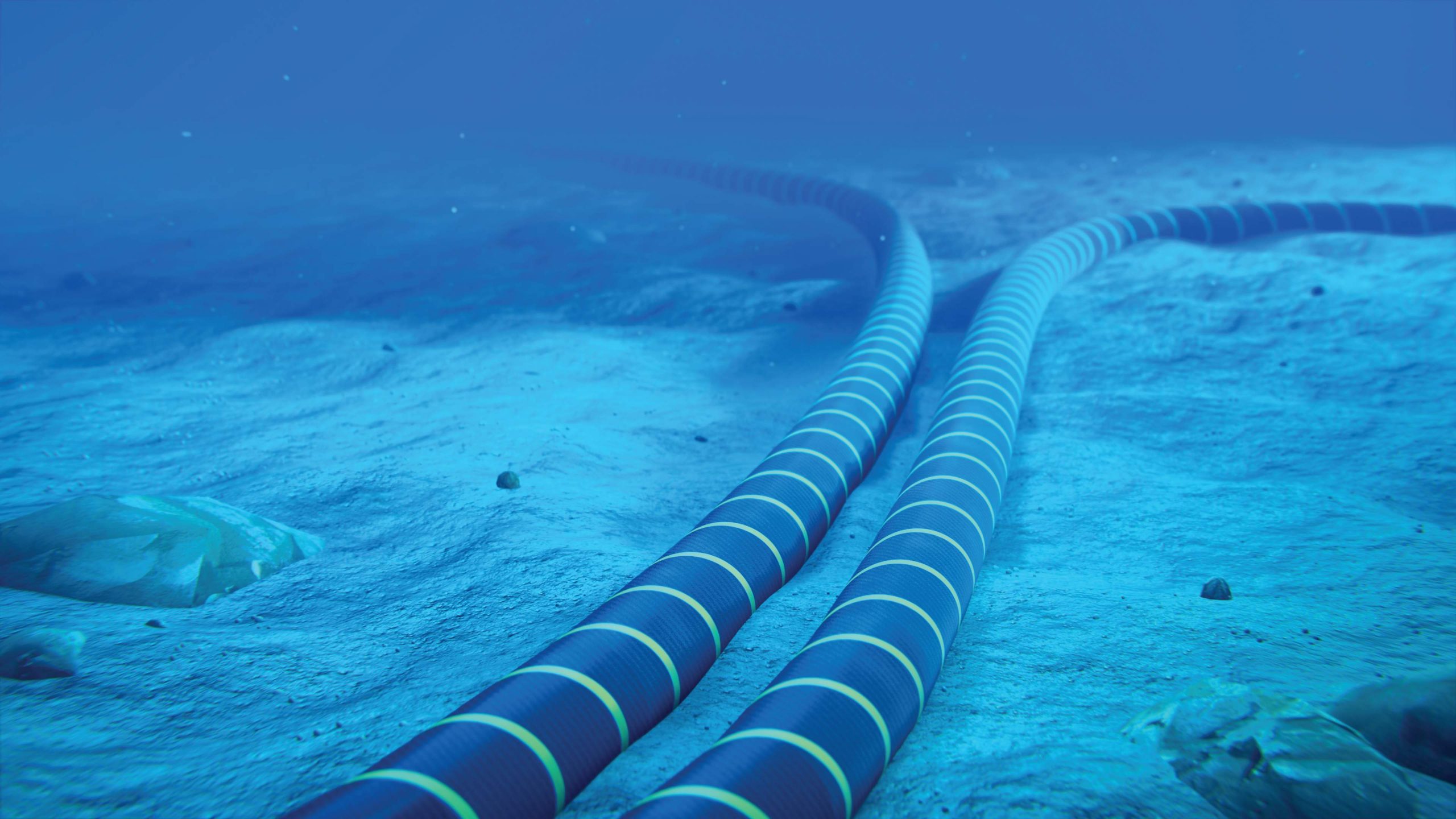
As the conflict between Iran and the U.S.-Israel axis escalates from proxy skirmishes to direct kinetic strikes, the world’s attention is rightfully fixed on the Strait of Hormuz and the price of crude oil. But beneath the churning waves of the Arabian Sea and the Mediterranean lies a far more delicate and vital cargo: DATA
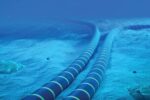
Over 95% of the planet’s international internet traffic, from trillion-dollar SWIFT transfers to the cloud-based operations of the global Fortune 500, flows through fiber-optic cables no thicker than a garden hose.
In the West Asian war of 2026, these undersea cables have shifted from being invisible infrastructure to becoming primary strategic targets. For India, the threat is not merely a “slow internet day”; it is a direct challenge to the $1 trillion digital economy goal.
Today, as Iran issues naval warnings for the Gulf and the U.S. reinforces its maritime presence, the digital stakes are unprecedented. The Strait of Hormuz and the Bab al-Mandab are no longer just oil corridors; they are “data chokepoints.” Major systems like the 2Africa (the world’s longest subsea cable) and the Blue-Raman (specifically designed to link Europe to Asia via Israel) are now operating in active war zones.
If a state actor, facing domestic and external pressure, decides to leverage “underwater leverage,” it could theoretically decapitate the digital connectivity between the Global North and the Global South. While a total global blackout is unlikely due to sophisticated rerouting protocols, the resulting “latency spike”, the delay in data transmission, would be catastrophic for high-frequency trading, automated supply chains, and real-time AI services that now underpin modern civilization.
The Anatomy of a chokepoint: Why the Red Sea matters
Historically, the global internet had a “Suez problem.” Approximately 17-18% of the world’s internet traffic, and nearly all of India’s connectivity to Europe, squeezes through the narrow Bab al-Mandab Strait.
The vulnerability was laid bare in 2008, when a series of cable cuts near Alexandria, Egypt, wiped out nearly 70% of the bandwidth connecting Europe to the Middle East and Asia, proving that a single dragging anchor in the Suez chokepoint could paralyze emerging tech hubs and financial centers alike. The threat turned sinister in March 2013 when Egyptian authorities caught three divers attempting to manually sever the SEA-ME-WE 4 cable. More recently, in 2024 and September 2025, the Houthi-linked disruptions in the Red Sea saw multiple lines, including the AAE-1 and EIG, severed. For India, the result was a 200% spike in latency, briefly crippling algorithmic trading on the Mumbai stock exchanges and slowing cloud-based IT services to a crawl. This wasn’t a “slow internet day”; it was a proof-of-concept for digital sabotage.
While many governments historically treated these as maritime “accidents,” the geopolitical shifts of the mid-2020s forced a realization: the “Hybrid War” has moved to the seabed.
The Modi Doctrine: Foreseeing the unthinkable
While many global capitals treated subsea cables as “private sector problems” until the 2024 Houthi attacks, the Modi government initiated a structural pivot years earlier. This “strategic foresight” was built on three pillars:
Breaking the “Mumbai Monopoly”: For decades, 15 of India’s 17 international cables landed in a single cluster in Mumbai. A localized strike or a natural disaster could have digitally decapitated the country. Since 2022, the government has fast-tracked the “East-Coast Diversification”:
- Chennai as the New Gateway: The SEA-ME-WE 6 (landed by Airtel in 2025) and the MIST cable have turned Chennai into a massive digital fortress, providing a direct “East-bound” exit to Singapore.
- The Island Outposts: The CANI (Andaman) and KLI (Lakshadweep) projects were not just for local connectivity; they serve as strategic “listening posts” and potential landing hubs for future trans-Pacific lines that bypass the Malacca Strait entirely.
The “East-West Split” (Jio’s IAX and IEX): The most significant move was the India-Asia-Xpress (IAX) and India-Europe-Xpress (IEX). Initiated in 2020 and expected to become fully operational by early 2026, these are the first cables designed with a “War-time Logic.”
- IAX heads East to Singapore, linking India to the Pacific ecosystem.
- IEX arcing toward Europe but designed with multiple “branching units” that allow traffic to be diverted to Mediterranean hubs if the Red Sea segment is compromised.
From “Telecoms” to “Critical Infrastructure”: In 2023, the Indian government formally designated Cable Landing Stations (CLS) as Critical National Infrastructure (CNI). This wasn’t a mere name change. It moved cable security into the hands of the National Critical Information Infrastructure Protection Centre (NCIIPC) and the Indian Navy. Today, any “unidentified vessel” lingering within 5 nautical miles of a cable route in India’s EEZ triggers a kinetic response from the Coast Guard—a level of protection few other nations provide.
The Quad shield: Multilateral deterrence
Prime Minister Modi’s “Act East” and “Look West” policies converged in the 2023 Quad Partnership for Cable Connectivity and Resilience. By early 2026, this has evolved into the Cable Connectivity and Resilience Centre.
- Real-time Intelligence: India now shares “Seabed Domain Awareness” with the U.S. and Japan. When Iranian-linked vessels turned off their AIS (Automatic Identification System) in the Gulf last month, Indian naval intelligence was alerted in real-time, allowing for “shadowing” operations that deterred potential tampering.
The Last Mile: Domestic repair & sovereign control
One of the UPA-era’s greatest weaknesses was a total reliance on foreign-flagged repair ships, which could take 3-5 months to arrive. Under the 2026 Digital Sovereign Infrastructure mandate, India has:
- Streamlined Clearances: Reduced the “50+ permits” required for cable repair to a single-window “Green Channel” for trusted partners.
- Domestic Fleet: Incentivized the creation of an Indian-flagged cable repair fleet, ensuring that if a cable is cut in the Arabian Sea, an Indian vessel can be on-site in 48 hours, not 4 weeks.
A Nation secured
As of March 2026, India is no longer a “digital hostage” to West Asia’s geography. While a conflict in Iran will always cause tremors, the Modi government’s decade-long project to diversify routes, militarize monitoring, and domesticate repair has ensured that India’s digital heart will keep beating, even if the world’s most volatile waterways are set ablaze.
Author Rohini A V is a Brand Strategist and a Political Consultant