The government has approved a significant renewable energy initiative to tap the unexploited potential of its rivers and streams through a newly established Small Hydro Power (SHP) Development Scheme.
The Union Cabinet on 18 March approved the ambitious ₹2,584.60 crore programme for FY 2026–27 to FY 2030–31, aiming for installation of around 1,500 MW capacity countrywide. Besides, the decision marks the revival of a hydropower initiative that was discontinued in 2017 and comes at a time when India’s clean energy capacity has crossed the 50 percent mark of total installed power generation. The scheme is a crucial step in India’s broader effort to expand renewables and achieve its climate and energy independence goals over the next decade.
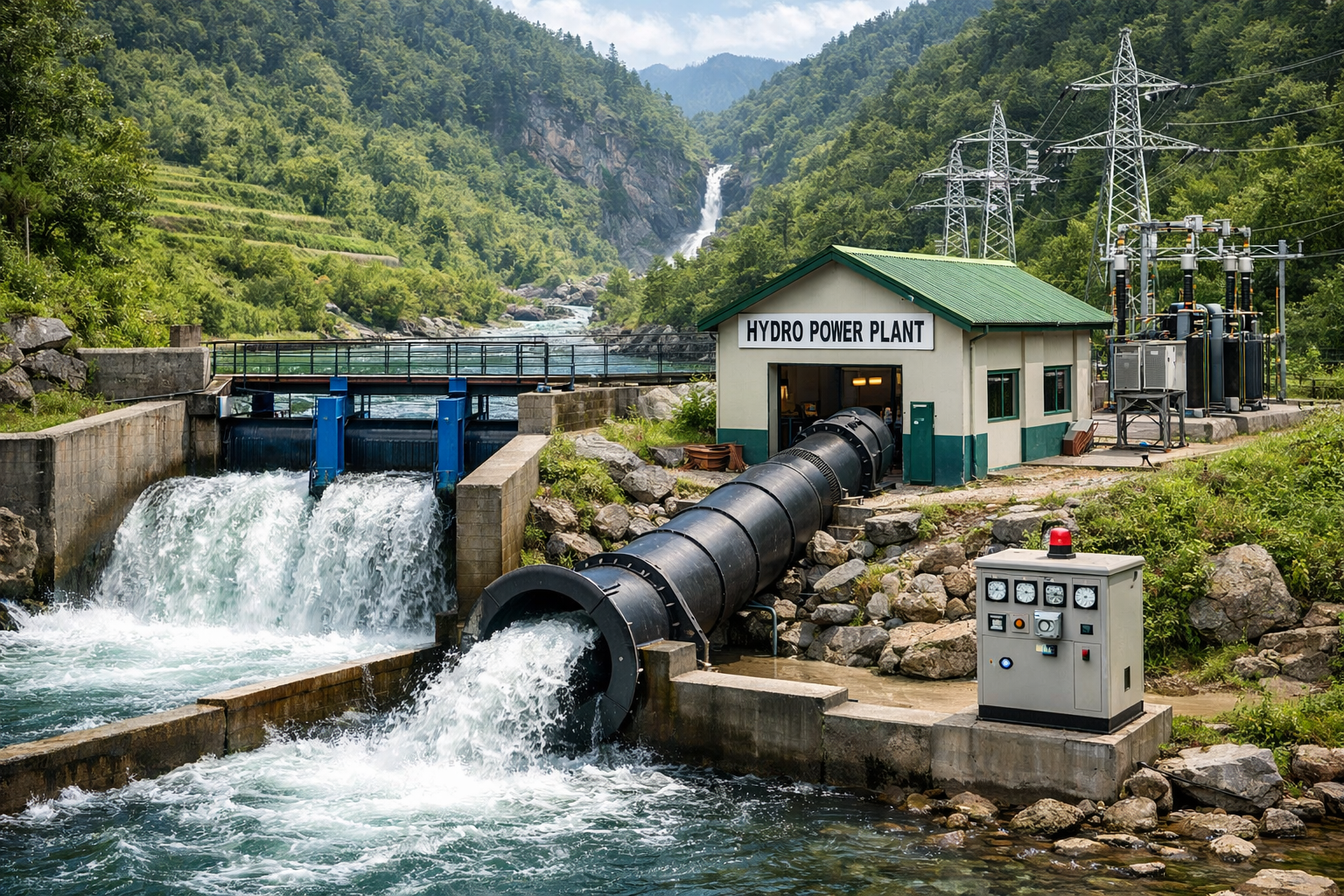
Smalls hydro power projects that are between solar and large hydro in scale and impact (1 MW to 25 MW). They could be operated independently in small catchment areas and are useful for hilly states and Northeastern states where there are small rivers and waterfalls that flow through the area throughout the year. And the central government’s fresh scheme to harness this potential.
In the case of small hydro potentials that are spread across over 7,000 sites, only about 1,196 sites have been developed out of an estimated 21GW of small hydro potential in the country. This has been estimated at 21 GW, spread over more than 7000 small hydro potential sites out of which only about 1196 sites have so far been developed.
According to Union Minister Ashwini Vaishnaw, small hydro projects have multiple benefits that make them fit for sustainable growth. They do not call for extensive building of dams or reservoirs, and thus minimal environmental disruption is involved. The estimated lifespan for small hydroelectric projects is over 40 years, they can be completed within shorter periods and do not lead to displacement of local residents – a critical issue raised by large hydropower schemes.
Cost of electricity generation also remains competitive, between ₹4.5 to ₹5.5 for a unit of electricity, making it affordable for consumption by local grids and also, for off-grid consumption in remote communities. Its modularity further enables quick commissioning with the available materials and equipment, most of which will be procured locally consistent with the Atmanirbhar Bharat initiative.
Financial design of the scheme offers differentiated central assistance so as to facilitate wider participation of both public and private players. For projects based in Northeastern states and districts having international boundaries, the Centre will provide 3.6 crore rupees per MW or 30 percent of the project cost (whichever is lower) with a ceiling of 30 crore rupees per project. In other areas of the country, the financial assistance is capped at ₹2.4 crore for every MW or 20 percent of the cost of the project and a maximum of ₹20 crore per project.
The small hydropower sector can attract the private sectors and public investment, 000 crore and can generate thousands of direct and indirect employment which can energize the remote and rural economy, estimates government.
Experts view the move as both a clean energy push and a regional development strategy. The northeastern and hilly states which have been limited in industrialization due to geographic circumstances are now major beneficiaries of this move. Small hydropower plants reduce losses in long transmission lines and increase the reliability of the grid in places where linking the big grid to remote areas is challenging. Also, they balance other renewables like solar and wind, which depend on round-the-clock generation in these hilly regions where strong water flow occurs.
In essence, India’s renewed emphasis on small hydropower symbolizes a shift towards more decentralized, environmentally sound energy development. Large hydropower plants along major rivers have traditionally been the dominant mode of hydropower, but due to the development of small but more compact and efficient turbine technologies, it has become possible to tap into small water sources in a cost-effective manner.
For a country investing highly in sustainable infrastructure, this scheme fills a missing gap in the renewable energy mix, combining environmental responsibility with economic opportunity. The government’s latest decision is not merely about megawatts; it’s about empowering local communities, accelerating green growth, and making sure every drop of water in India’s hills and streams is used to create a cleaner, self-reliant future.