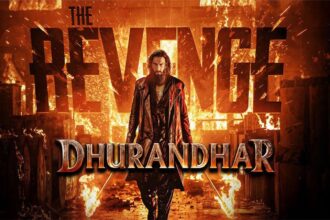
The political storm surrounding the film Dhurandhar: The Revenge has once again brought into focus a long-standing and uncomfortable question in Uttar Pradesh’s politics: the nexus between crime and political patronage. The recent remarks by leaders of the Samajwadi Party criticising the film’s portrayal of gangster-politician Atiq Ahmed and dismissing his alleged links to Pakistan’s ISI, have reignited debate over the party’s historical association with strongmen who straddled both crime and electoral politics.
According to recent reports, SP leaders have described the film as “propaganda” and rejected claims that Atiq Ahmed had any links to Pakistan’s intelligence networks, arguing that such portrayals are meant to malign certain communities and political opponents. At the same time, the film itself draws from a widely acknowledged reality: the deep entanglement of organized crime and politics in Uttar Pradesh over several decades.
The rise of gangster-politicians in Uttar Pradesh
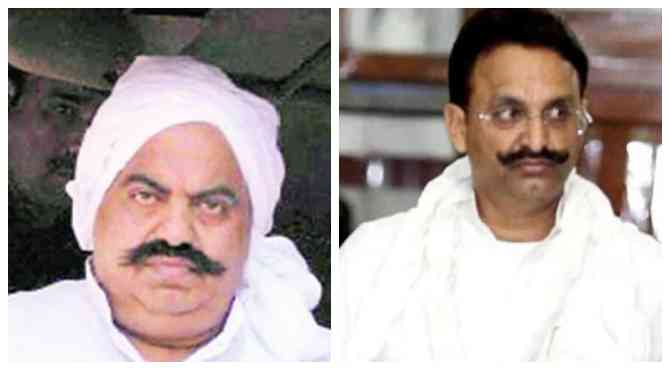
Few figures embody this nexus more starkly than Atiq Ahmed. Atiq Ahmed began his career as a local strongman in Allahabad (now Prayagraj) and he went on to become a five-time MLA and later a Member of Parliament. His political journey, including his association with the Samajwadi Party, was marked by a staggering number of criminal cases – reportedly over 160 – including charges of murder, kidnapping, extortion and land grabbing.
Despite this, Ahmed not only contested elections repeatedly but also won them, illustrating how muscle power translated into electoral success. His ability to operate from jail, influence witnesses and allegations of intimidating institutions became symbolic of what political analysts called the “mafia raj” era in Uttar Pradesh.
Another prominent example is Mukhtar Ansari, a figure whose political career ran parallel to his criminal notoriety. Ansari, too, served as an MLA multiple times and was accused in numerous cases ranging from murder to extortion and organized crime. For years, he wielded influence in eastern Uttar Pradesh, with political backing enabling his sustained relevance.
Patronage and political calculus
The key issue is not merely that such individuals entered politics, but that they were often given tickets, protection or tacit support by political parties, especially the Samajwadi Party at various points. The logic was straightforward: these strongmen commanded local loyalty, controlled caste and religion based vote banks and could ensure electoral victories in tightly contested constituencies.
This patronage blurred the line between governance and criminality. In many constituencies, the state’s authority appeared secondary to that of local dons. It was almost like they were running a parallel government while the elected government played a supporting role. The justice system struggled to function effectively, with witnesses turning hostile and cases dragging on for years.
The controversy surrounding Dhurandhar: The Revenge taps into this history. The film’s depiction of a character inspired by Atiq Ahmed, including alleged cross-border links and involvement in counterfeit currency networks, has been rejected by SP leaders as fictional and defamatory. Yet, even setting aside cinematic exaggeration, the broader issue of criminalization of politics remains difficult to dismiss.
Law and order under SP govts
During periods when the Samajwadi Party was in power, particularly in the 1990s and again between 2012 and 2017, law and order became a central political issue. Opponents frequently accused the government of allowing a climate where criminal elements operated with relative impunity, especially those with political connections.
Incidents of land grabbing, extortion rackets and targeted violence were widely reported. The term “goonda raj” became a recurring political slogan used by opposition parties to describe the situation. While such characterisations were politically contested, the persistence of high-profile criminal figures within the political system reinforced these perceptions.
The shift in recent years
In contrast, the period since 2017 under the government led by Yogi Adityanath has been marked by a declared policy of zero tolerance towards organized crime. High-profile crackdowns, encounters, property seizures and the dismantling of criminal networks have been projected as evidence of a transformed law-and-order landscape.
The killing of Atiq Ahmed and his brother in 2023, while controversial, was widely seen as the symbolic end of an era dominated by mafia-politicians. The administration has also highlighted the use of legal tools such as the Gangsters Act and the seizure of illegally acquired assets to weaken entrenched criminal networks.
These measures have restored public confidence and reduced the influence of criminal elements in politics, even as some cry ‘excesses’ in enforcement.
Politics, cinema and memory
The reaction of the Samajwadi Party to Dhurandhar: The Revenge is nothing but a deeper discomfort with how this history is being retold in popular culture. By calling the film “propaganda,” party leaders seek to challenge not just its specific claims but the broader narrative it reinforces – that of its political ecosystem that has been intertwined with organized crime.
Yet, cinema often draws from lived realities, even if it takes creative liberties. The enduring public memory of figures like Atiq Ahmed and Mukhtar Ansari ensures that such portrayals resonate widely.
Hence, the controversy over Dhurandhar: The Revenge is therefore not just about a film. It is about competing narratives of Uttar Pradesh’s past and present. On one side is a political party defending its seemingly criminal legacy and questioning the motives behind cinematic portrayals. On the other is a narrative that highlights decades of criminal-political overlap and celebrates recent efforts to dismantle it.
Ultimately, the debate forces a larger question: can Indian democracy fully insulate itself from the influence of criminal power? Uttar Pradesh’s journey from the rise of gangster-politicians to the current crackdown offers both a cautionary tale and a case study in political transformation.