The latest episode in West Bengal’s pre-election political theater has all the ingredients of a farce: A dramatic complaint alleging threats to national sovereignty, breathless headlines about an FIR being registered, and then the quiet admission buried in police sources that actually, no FIR has been registered at all, just a “preliminary examination” of the complaint.
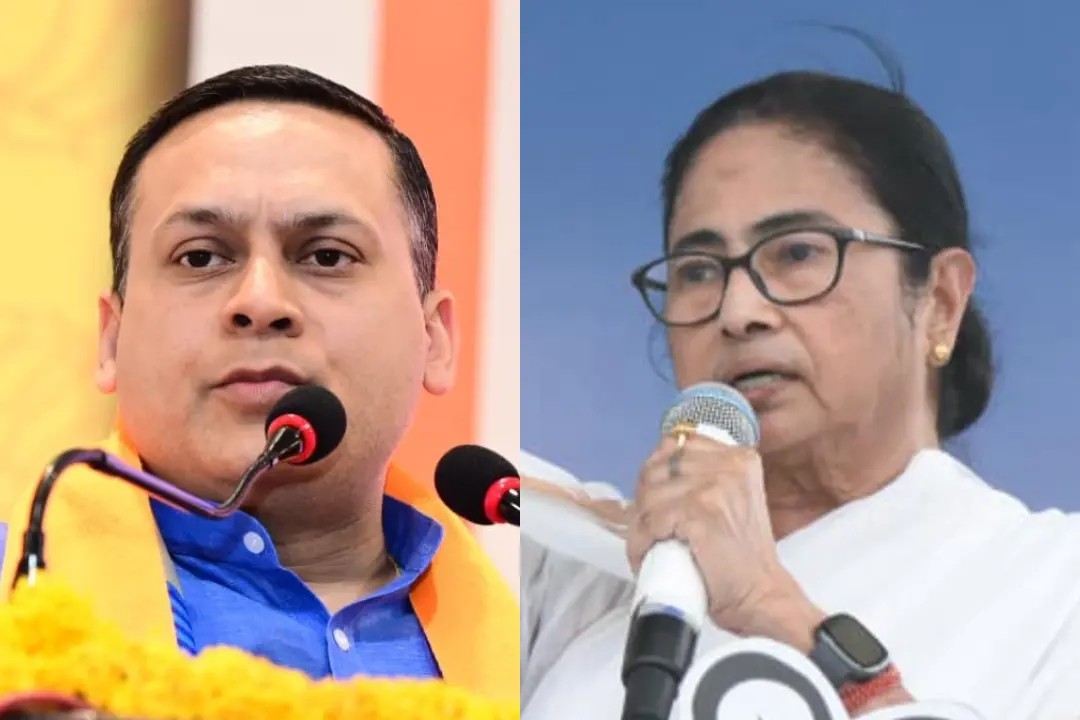
Trinamool Congress leader Tanmoy Ghosh filed this complaint at Narendrapur Police Station on December 19, 2025, accusing BJP IT Cell chief Amit Malviya of posting an “incendiary statement” that allegedly threatened communal harmony and insulted West Bengal, the TMC, and Chief Minister Mamata Banerjee.
The outrage machine was activated immediately, with TMC spokespersons calling the post “dangerous,” but when you actually read what Malviya wrote, you’re left wondering: dangerous to whom—communal harmony, or the TMC’s electoral prospects?
Let’s examine the supposedly incendiary content that has TMC leaders clutching their pearls. Malviya’s December 19 X post described a verifiable incident: “Last night, Islamist mobs vandalised Chhayanaut Bhavan, a historic institution and a cornerstone of Bengali arts and culture in Dhaka.”
Last night, Islamist mobs vandalised Chhayanaut Bhavan, a historic institution and a cornerstone of Bengali arts and culture in Dhaka.
— Amit Malviya (@amitmalviya) December 19, 2025
The pattern unfolding in Bangladesh is unmistakable:
attacks on media houses, journalists, and cultural centres, carried out under Islamist… pic.twitter.com/ELlbuwvkJy
Malviya then identified what he called an “unmistakable pattern” in Bangladesh—attacks on media houses, journalists, and cultural centres under Islamist pressure and intimidation. His post continued: “This is a warning. This is exactly how societies unravel when extremism is appeased, and lawlessness is normalised. It is also why the trajectory of West Bengal under Mamata Banerjee is deeply worrying.”
He concluded by stating that years of political patronage, erosion of institutions, and selective silence have pushed Bengal onto a dangerous path, warning that if the current regime continues beyond 2026, the consequences would be irreversible, because “culture, free expression, and democracy cannot survive where mobs rule, and the state looks away.” Now, read that again slowly and point to the sentence that incites violence, fabricates facts, or threatens sovereignty. The crickets you hear are the same sound of legal substance in TMC’s complaint.
What Malviya did was textbook political commentary: Cite an incident, interpret its significance, draw a comparative analogy, and issue a political warning about electoral consequences.
According to reports, BJP sources defended this as “expressing concern over Bangladesh,” which they correctly noted “is no crime.” The party argued that drawing parallels between governance failures in neighboring countries and domestic politics constitutes protected political speech.
But TMC, through spokesman Kunal Ghosh and others, manufactured outrage by claiming the post was “dangerous” because it compared West Bengal to Bangladesh’s instability. The Week’s PTI report quoted TMC leaders alleging that such comparisons create false narratives equating democratic governance with mob rule. Here’s the problem with that logic: If criticizing a government’s handling of law and order by referencing regional patterns of extremism is criminal, then every opposition party leader in India should be behind bars for their daily commentary on governance failures.
The TMC’s complaint alleges violations under the Bharatiya Nyaya Sanhita for promoting enmity and threatening sovereignty, but these serious charges require demonstrating actual intent and impact, not just hurt political feelings dressed as legal grievance. Did Malviya invent the Chhayanaut Bhavan vandalism? No, it was reported by multiple Bangladeshi sources and international media. Did he call for violence against any community in West Bengal? Nowhere in the post is there any such exhortation. Did he threaten India’s sovereignty? Only if you believe that criticizing a state government’s policies somehow undermines the nation— A logic that would make every opposition leader from Rahul Gandhi to Arvind Kejriwal guilty of sedition whenever they criticize the central government.
What Malviya offered was an opinion that appeasement of extremism leads to societal breakdown, and that West Bengal under Mamata Banerjee exhibits warning signs of institutional erosion. Whether that opinion is right or wrong, fair or unfair, is irrelevant to whether expressing it constitutes a cognizable offense.
The real comedy here is TMC’s selective amnesia about political speech. This is the same party whose leaders routinely make inflammatory statements about BJP, whose Chief Minister has compared central agencies to “tailed demons,” and whose spokespersons use colorful language daily on social media. But when Malviya draws a parallel between Bangladesh’s cultural vandalism and West Bengal’s governance trajectory, suddenly it is a threat to sovereignty requiring police action.
The Hindustan Times report confirms that police sources themselves admit no FIR has been registered, only that the complaint is under “preliminary examination”.
As 2026 elections approach, this FIR controversy reveals TMC’s strategy: Weaponize the police complaint system to harass opponents, generate headlines about “action against BJP”. If expressing concern about extremism and governance failures is now criminal in West Bengal, then TMC has accidentally admitted that the state’s democracy is more fragile than anything Malviya wrote in his post.