
The recently held assembly elections in 4 states and 1 Union Territory have thrown some fascinating results. From BJP sweeping Bengal and forming government there for the first time to Congress-led UDF dethroning Left alliance LDF to the spectacular political debut of actor Vijay in Tamil Nadu, it has been a very interesting election season.
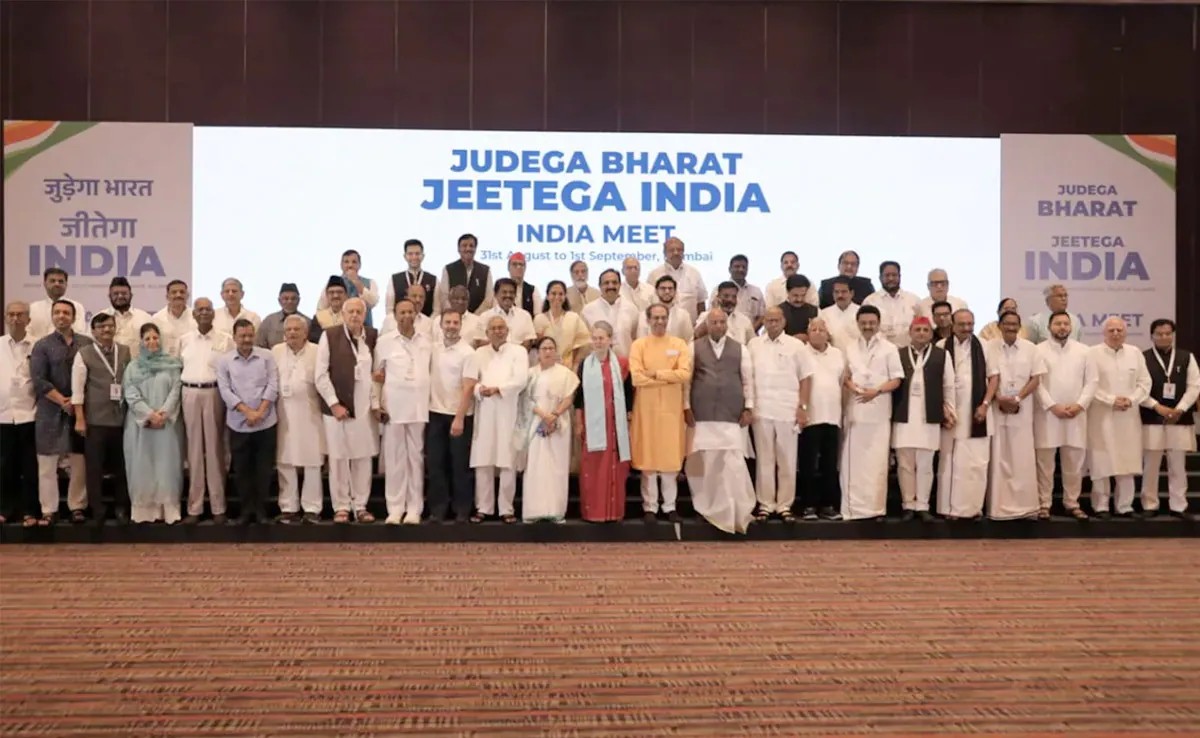
These assembly elections and the subsequent developments have also put a major question mark over the future of the opposition INDI Alliance.
The united opposition under the banner of the Indian National Developmental Inclusive Alliance — better known as the INDI Alliance — now appears to be facing its toughest political test yet. The alliance was formed in 2023 as a broad anti-BJP platform. However, now it has turned into a coalition riddled with mistrust, ideological contradictions and regional rivalries.
The recent state elections have exposed the deepest fault lines within the opposition camp. In Kerala, Congress and the Left fought a bitter and high-voltage election against each other, with the Congress-led UDF eventually ending the CPI(M)-led LDF’s decade-long rule in the state.
In West Bengal, Congress chose to go solo while the Left Front attempted to revive itself separately, effectively helping create a direct BJP-versus-TMC battle. The result was catastrophic for the opposition ecosystem, the BJP swept to power in Bengal for the first time, ending Mamata Banerjee’s long dominance.
Tamil Nadu produced perhaps the most damaging rupture. After the assembly election delivered a fractured mandate and actor-politician Vijay’s TVK emerged as the surprise power centre, Congress abruptly abandoned its long-time ally DMK and shifted support to TVK. The DMK reacted furiously, accusing Congress of betrayal and opportunism.
These developments have strengthened a criticism that has haunted the INDIA bloc since its inception, that it was less a coherent political alliance and more a temporary anti-BJP arrangement.
Notably, many INDIA bloc parties are direct regional competitors. Congress and the Left are adversaries in Kerala. Congress and TMC are rivals in Bengal. AAP and Congress clash in Punjab and Delhi. DMK and Congress may now be headed for a split in Tamil Nadu. Regional satraps may agree on opposing Prime Minister Narendra Modi and the BJP nationally, but at the state level they are fighting for the same political space.
The 2026 assembly elections have intensified these contradictions instead of resolving them.
For Congress, the situation is especially complicated. The party’s emphatic victory in Kerala has boosted its confidence and revived its ambition to reclaim space nationally. That naturally brings it into conflict with regional allies who fear Congress becoming dominant again.
At the same time, regional parties increasingly believe that Congress is unreliable and politically weak in key states. Mamata Banerjee’s TMC has long accused Congress of indirectly helping the BJP in Bengal. The DMK now feels abandoned. The Left views Congress as both partner and principal rival depending on the state.
Yet declaring the INDIA bloc “dead” may still be premature.
Indian politics has repeatedly shown that anti-BJP compulsions can override regional bitterness. Many opposition leaders understand that fragmented contests benefit the BJP disproportionately because of India’s first-past-the-post electoral system. These parties can always come back together to oppose the BJP by using their favourite phrase “to avoid division of secular votes”.
Congress may be buoyed by its performance in Kerala and may start thinking about going alone nationally, but the fact is that Congress presence has shrunk so much in major states that it just can’t hope to get a major share of the seats in Lok Sabha elections. In states like Uttar Pradesh, Bihar, Bengal, Tamil Nadu etc, the party now has very limited presence and will need its INDI Alliance partners’ support to make an impact.
Ultimately, the future of the INDIA bloc may depend less on ideological unity and more on political necessity. Opposition parties may dislike each other, distrust each other and compete fiercely at the state level. But if the BJP continues expanding electorally, fear of political irrelevance could once again become the glue that binds them together.
For now, the question remains whether the alliance is nearing its end, or whether the fear of the BJP’s growing dominance will eventually force its constituents back together before the next Lok Sabha elections.

