
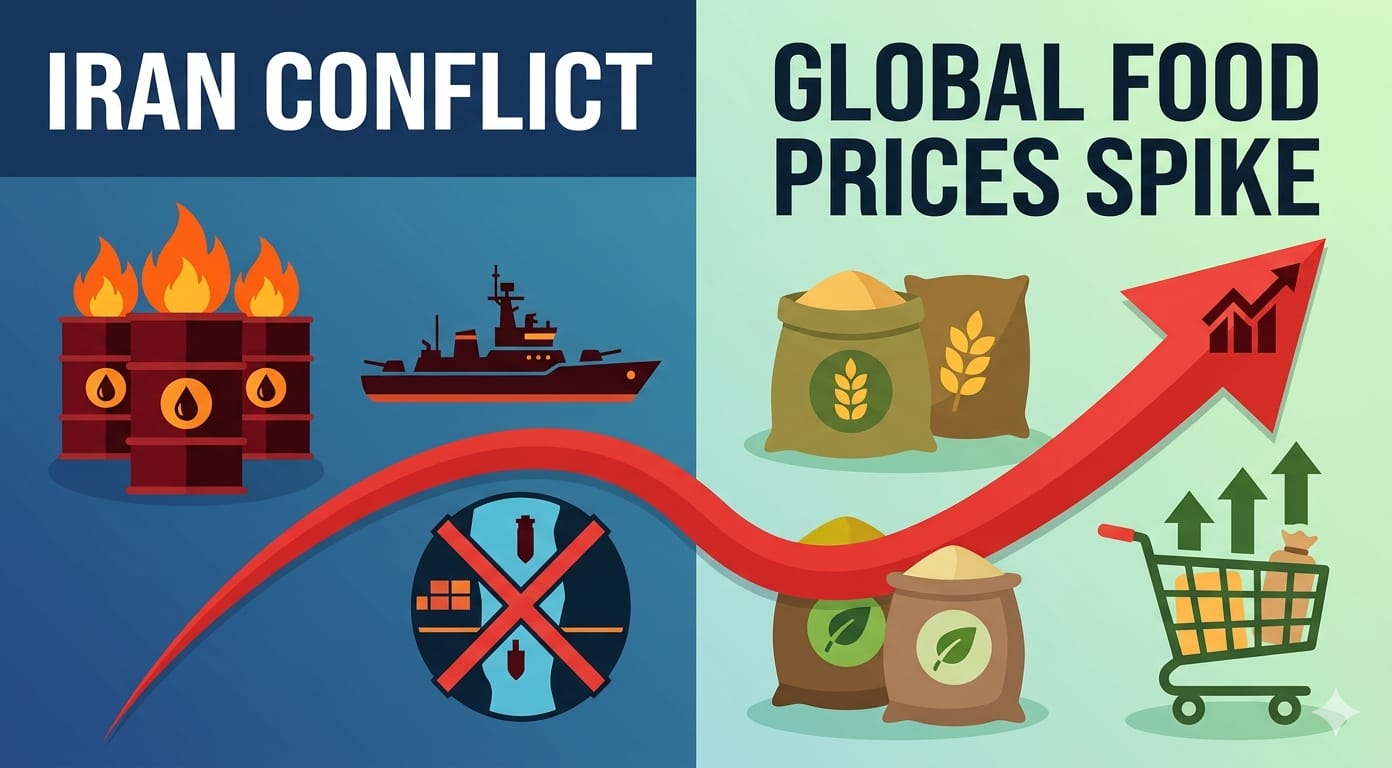
Global food prices have risen to the highest levels in more than three years, indicating new inflationary pressures around the world. Its food price index stood at 1.6 percent in April, marking the third month of consecutive increases, according to the United Nations Food and Agriculture Organization (FAO).
Prices are already 2.5 percent higher than in the previous year. The rise is predominantly in vegetable oils, cereals, and meat prices – all of which are key ingredients in daily consumption. That said, the price spike has been primarily attributed to active geopolitical conflict in the planet, which has been epitomized by the Iran war.
The conflict has thus led to the closure of the Strait of Hormuz, which is one of the most important trade routes for the supply of energy resources. This cascading effect is because agriculture largely depends on fuel and fertilisers in modern farming techniques. Diesel is needed to operate farm machines and move goods, while fertilisers are necessary to boost crop production. With supply routes blocked, fuel and fertilizer prices are sharply on the rise. In consequence, input prices on agricultural products are shooting up, which in effect causes inflation in food prices. The evidence for this hike in fertilizer and fuel prices is already witnessing a surge in vegetable oil prices.
Other factors contributing to pressure include rising demand for biofuels. As oil prices rise due to supply disruptions, countries are turning more towards biofuels as an alternative. This, however, shifts vegetable oils such as palm oil, soybean oil, and sunflower oil from food markets to energy production. The output is a shortage of edible oils, therefore increasing prices of edible oils further. The meat index has also hit a record high, and the cereals have risen in price amid fears about weather conditions and prospects of lower wheat production in the coming year.
Major agriculture regions are already incurring agricultural cost adjustments measures. In Europe’s major agricultural zones, farmers are already changing their strategies, with those in France and Romania cutting corn sowing because the grain requires more fertilizer. Instead, they are moving to grow crops that require fewer inputs. This means fewer overall outputs, which will tighten global supply and prolong elevated prices. First warning signs by the producers propose that if the status quo remains, affected planting areas and yields will sell in convincing evidence that food inflation is a global problem that will last for a long time.
It is important to understand that the FAO index reflects raw commodities prices and not retail prices. This means that the impact is usually felt at a later stage by consumers. This means that food prices in grocery stores are set to go up in the forthcoming months. There are myriad talks of a peace deal between the US and Iran but just as it is, the uncertainty lingers enough to keep the markets unpredictable.
From the perspective of India, there is relatively stability in the situation for the time being, especially when compared to a number of other countries which have experienced sharper spikes in food inflation. One of the key reasons is that India’s supply chain is still intact and there is no major disruption in the availability of essential goods. Domestic petroleum prices have also not been excessively volatile hence transportation and farming costs have not shot up out of control. As a result, across the world, inflation in India has not pushed up in a similar manner as in food. This risk, however, still exists.
Since India depends on imports for edible oils, any supply disruption coupled with prolonged global price rise is likely to be passed to domestic markets. If crude oil prices rise further or fertilizer imports become more expensive, food prices in India could eventually also rise. So while the current situation looks manageable, however, it is necessary to be watchful as the situation changes with continuing developments globally.

