
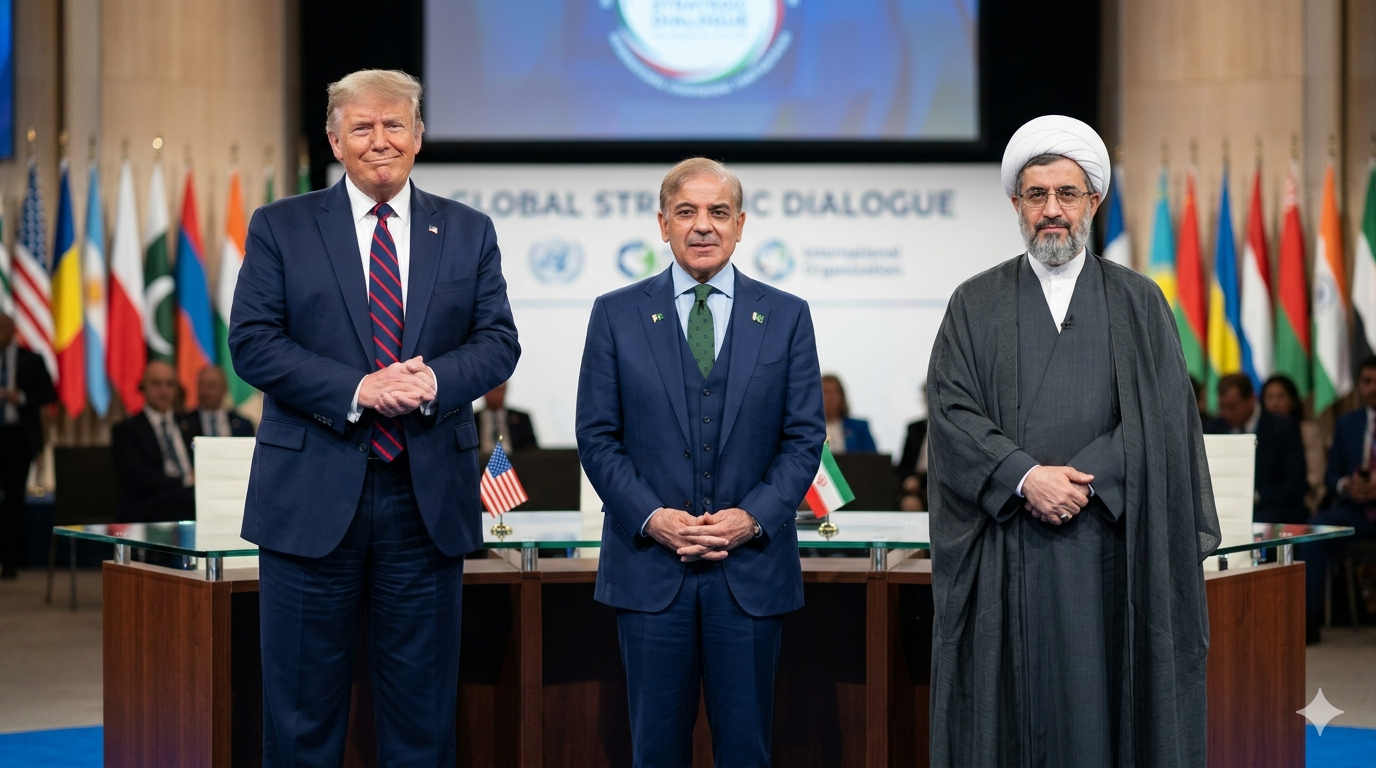
The US President Donald Trump has been making overtures to Iran over the past two days, discussing talks and ending the conflict, but what’s come to light is Pakistan’s efforts and potential hosting role.
Pakistani Prime Minister Shehbaz Sharif wrote on his X page: “Pakistan welcomes and fully supports ongoing diplomatic efforts to end the conflict in the Middle East, which is in the interest of peace and stability in the region and beyond. If the US and Iran agree, Pakistan is ready and honored to host meaningful and final talks towards a comprehensive resolution of the ongoing conflict.”
President Trump reposted Mr. Sharif’s statement on his social media, making headlines in Pakistani media. This has raised skepticism about Pakistan’s potential hosting role, given its past mixed record of facilitating negotiations, such as the 2015 talks between the Afghan government and Taliban in Murree.
After the meeting at the time, the Taliban expressed disappointment, claiming they weren’t negotiating with the “main party” and that a few individuals, including a detained leader, were misrepresented as Taliban. Pakistan’s hosting efforts in the Afghan conflict haven’t had the best track record, with the 1990s civil war among mujahideen groups in Kabul being a notable example.
The US-Iran talks are different, involving negotiations between two countries. Pakistan sees an opportunity to strengthen ties with both the US and Iran, a neighbor.
The bigger challenge for Pakistan is navigating the Middle East crisis, if the conflict escalates, it’ll have to honor commitments to Arab allies like Saudi Arabia, risking military deals and loans if it doesn’t.
Israel’s Channel 14 and other media report that the US and Israel have granted Iran’s Parliament Speaker Mohammad Bagher Ghalibaf and Foreign Minister Abbas Araghchi 5-day temporary immunity for potential negotiations.
Trump administration sources told media that Ghalibaf has been a favored candidate for talks with Trump in recent days, though he dismissed the reports as “fake news” on X (formerly Twitter), calling it a propaganda effort to control oil markets.
In response to the US President’s comments that talks are underway to end the conflict with Iran, Iran’s military said, “America is negotiating with itself.” This stance raises many questions about what’s really going on.
A source in Pakistan with ties to government and military says, “Talks have been ongoing for several days, but they’re not direct. Pakistan is a trusted player in this.” The source added that everything is happening indirectly so far, and direct talks haven’t been arranged yet.
“Pakistan talks to Iran and conveys messages to US officials, and vice versa.” They also mentioned Egypt, Turkey, and Oman are involved, but Pakistan is the main conduit.
Saeed Muhammad Ali, a defense and nuclear expert in Islamabad, says, “Pakistan is a neighbor Iran has no deep conflict with, making it a more trusted mediator than Turkey or Egypt. Oman isn’t seen as strong enough by the US, given their past mediation attempts didn’t go well.”
Ali notes that Pakistan’s army chief, Asim Munir, recently assured President Trump that Pakistan will make every effort to end the conflict. Western analysts think Trump wants to de-escalate the situation to avoid further complications.
Iran’s state TV, Press TV, quoted a “senior political-security official” as saying Iran has rejected the US offer to end the current conflict.
Press TV, quoting the official, didn’t disclose their name or position, but said, “Iran will end the war when it decides to, and when its conditions are met.” Iranian officials have repeatedly stated they want a complete end to the war, not just a ceasefire that might lead to another conflict.
According to Press TV, the official presented five conditions, including: a complete halt to “aggression and terrorism” by the enemy, establishing a robust mechanism to ensure no further attacks on the Islamic Republic, guaranteeing compensation for war damages, and clearly defining terms.
An end to the war on all fronts and for all resistance groups involved across the region, and international recognition and guarantee of Iran’s sovereignty and authority over the Strait of Hormuz. Press TV says Washington is pursuing talks through various diplomatic channels, but Tehran considers these offers “overly simplistic”.
The 15-point plan Trump says he sent to Iran hasn’t been officially released, but Israeli and US media claim to know some details. Israel’s Channel 12 says it includes demands the US has made before, like dismantling and removing Natanz, Esfahan, and Fordow nuclear facilities.
Iran’s nuclear activities would be under transparent IAEA monitoring, it would stop supporting proxy groups in the region and cut their funding and arms supply, existing nuclear capabilities would be dismantled, and Iran would commit to not pursuing nuclear weapons.
Iran would stop uranium enrichment on its soil and hand over all enriched materials to the IAEA, the Strait of Hormuz would remain open as a “free maritime zone”, and missile programs would be limited in number and range for defensive purposes only, with final decisions postponed.
Under the proposal, Iran would get: US help expanding the Bushehr civilian nuclear project for power generation, removal of all sanctions, and an end to threats of imposing sanctions.
Reports suggest a possible one-month ceasefire during talks, but it’s unconfirmed, and the White House hasn’t commented.
Saeed Muhammad Ali says Iran’s stance of denial isn’t new. He notes there’s internal debate within Iran’s government circles about talks. “The government can only succeed if they convince the Islamic Revolutionary Guard Corps, who control war decisions.” He adds Iran might be projecting strength to avoid appearing weak, and countering Trump’s claims of winning the war.
Ending the war, regardless of who wins, could alleviate concerns in the Middle East and wider region. For Pakistan, it could mean financial and political gains from closer ties with the US, something its military and civilian leaders have sought in recent years. It might also help restore some credibility lost after the killing of al-Qaeda leader Osama bin Laden in Abbottabad.
By- Laiba Yousafzai

