
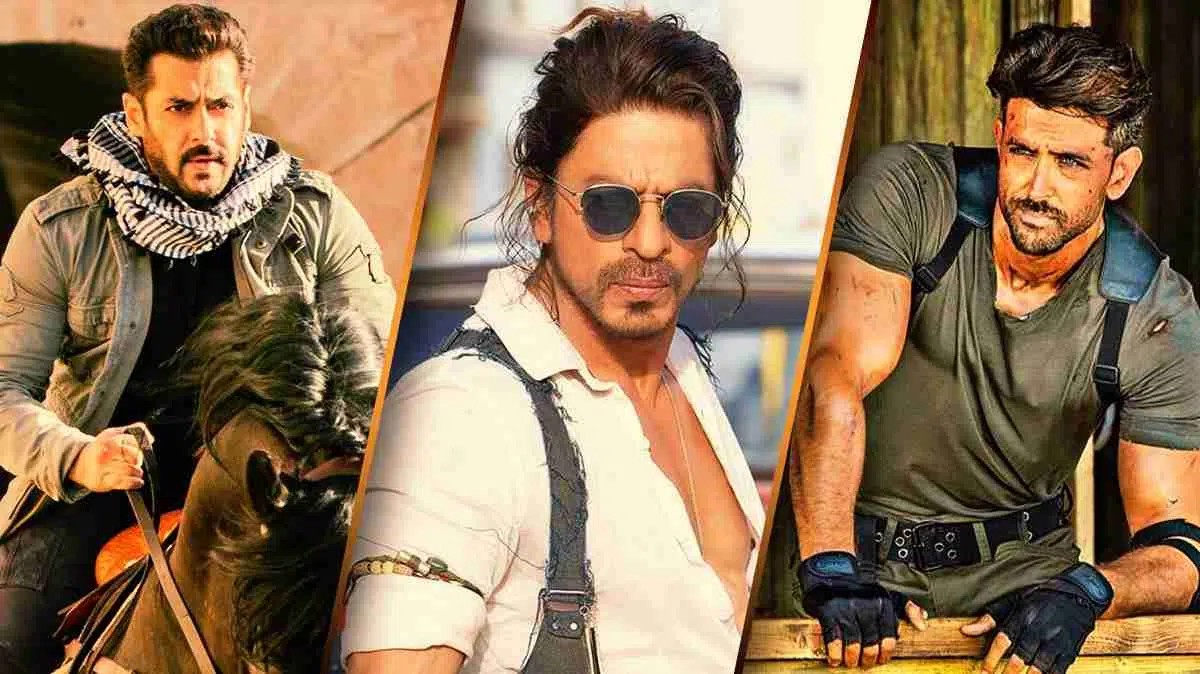
The ISI didn’t need a PR firm. It had Yash Raj Films. And you paid for the subscription. Six films. One agency. Thirty years of Indian blood shed. Not a single one of their writers thought to Google about it.
In July 2011, a film crew landed in Dublin, Ireland. Salman Khan was in tow. A love story was being written, one in which India’s greatest RAW operative would lock eyes with a Pakistani ISI agent and fall head over heels in love.
Back home, that same July, Mumbai was bombed. Again. Twenty-six dead. One hundred and thirty injured. By September, Delhi’s High Court had been bombed as well. Fifteen more dead. Both attacks by ISI-linked networks, both traceable to the usual geography of violence that has been exporting death into India since 1993.
In Dublin, production continued without any interruption.
Ek Tha Tiger released on Independence Day 2012.
This was not just bad timing. The Treaty of Versailles, for all its failures, at least waited for the war to end before planting the seeds of the next one. YRF began filming an ode to ISI romance while, back home, the bodies were still being counted. If that is not historical amnesia, it is something considerably worse: Historical indifference, dressed up in couture, doing parkour across a European rooftop and saving the day.
The underwhelming premise
At the beating heart of the YRF Spy Universe lives one spectacular, unshakeable, borderline clinical romantic conviction: That India’s finest intelligence operatives are constitutionally incapable of falling for anyone except Pakistani ISI agents.
Not CIA. Not MI6. Not Mossad. Not the FSB, the BND, ASIS, or any of the fifty-odd intelligence services of nations India is actually friendly with, nor a neutral one. The entire planet’s worth of romantic possibility, and the YRF writers’ room kept returning, film after film, to the one agency that has spent three decades funding the deaths of Indian civilians as a matter of documented policy. Creative liberty, right?
The ISI reportedly spends over ₹2,000 crore annually on anti-India activities. YRF spent ₹2,900 crore making it the love interest. Bollywood, in a feat of financial creativity that deserves its own award, slightly outspent Pakistan’s terror budget to do Pakistan’s PR. Truly, nobody does it like us.
By Tiger 3, our hero was calling Pakistan his sasural, crossing into Islamabad to personally rescue Pakistan’s Prime Minister from a military coup, and conducting himself as not only India’s greatest spy, but Pakistan’s shaan, the committed son-in-law who takes family obligations earnestly. Such a diplomatic marvel quite possibly dethroned Nick Jonas as the jiju.
James Bond would not just rise from his grave. He would file a formal complaint, demand a recount, and go back to sleep in protest.
The women: Eye-candy and serrated eyeliner
In a franchise theoretically about elite intelligence operatives, female characters are deployed with the strategic precision of a prop department. Men get arcs. Women get ambiguity, a beach song, and in Rubina’s case, a bikini that generated more column inches than her actual role in saving India from a bioterror attack.
Here is the franchise’s most unintentionally hilarious achievement: The most competent, most fully realised women in the entire spyverse work for the ISI. Zoya fought, fled, and flirted with genuine menace. Rubina had an agenda, even if her eyeliner was doing most of the heavy lifting. Meanwhile, India’s side offers a dancer with a tragic past and approximately zero spy credentials in War, and Kavya in War 2, who waltzes across European landmarks like a spy moonlighting as a travel influencer for a mid-range hotel chain.
So in the YRF universe, want to be a woman with actual purpose? Join the ISI. Want to work for India? Pack a bikini and clear your schedule for a beach song.
Ignorance isn’t bliss
Allow me to be precise about the history this franchise cheerfully vaulted over on its way to the next action sequence.
1993: Mumbai bombings. 257 killed. ISI logistical support documented.
2001: Parliament attack. Nine killed. ISI-run training camps implicated.
2006: Seven bombs on Mumbai’s suburban trains. 209 people killed on an evening commute.
2008: Six days at the Taj, Oberoi, CST, Nariman House. 166 killed. Direct ISI handlers confirmed by Kasab’s own confession and David Headley’s testimony.
2019: Pulwama. Forty CRPF soldiers. Explosives and handlers traced across the border.
2025: Pahalgam. Twenty-six tourists shot dead in a valley where families go on holiday, selected by religion.
This is not ancient history. A train station was bombed. A hotel lobby. A valley where ordinary Indians were on vacation.
It could be anyone’s commute. Anyone’s holiday. Anyone’s front door next.
And the franchise playing in the cinema next door made the organisation behind all of it the most consistently romantic presence in thirteen years of Indian blockbusters.
India’s oldest bad habit: Telling sad stories for foreign approval
For much of its independent existence, Indian cinema has had a peculiar relationship with its own identity. When it was not consuming Hollywood’s version of American exceptionalism, it was producing films that showed India’s poverty, its suffering, its wounds, for an audience that responded with pity and awards. There is nothing dishonourable about depicting hardship. But a national culture that produces only victimhood narratives teaches its people that the only stories worth telling about themselves are stories of suffering, and that the only audience worth impressing is one that pities them.
The YRF Spy Universe, to its credit, rejected that template. It chose spectacle over suffering, swagger over sympathy, blockbuster over arthouse.
It simply forgot to be Indian in its loyalties.
Because the other way to stop being the victim, apparently, was to make the aggressor the hero. To take the agency that has spent thirty years treating Indian lives and recast it as glamorous, complicated, ultimately sympathetic.
There is nothing enlightened about it. Tolerance is a virtue between equals. It is not a virtue you extend to an organisation that would not blink before eliminating its own Indian sympathisers, let alone Indians who are simply in the wrong place on the wrong day. The ISI does not romanticise India. It does not make films in which Pakistani operatives fall for RAW agents and change their minds about the whole enterprise.
“It’s just a movie.”
You might say: it’s not that deep, it’s just a movie, relax, have some popcorn.
To which the only reasonable response is: Wonderful. Then kindly explain why Dhurandhar, a film that depicted actual documented terrorist attacks on Indian soil, was called dangerous state-sponsored propaganda by the same critics who watched six films of ISI romance without so much as a raised eyebrow.
Either cinema shapes public perception and these things matter, in which case six films of ISI glamourisation is a legitimate problem. Or nothing matters and it is all just entertainment, in which case sit down and stop calling things propaganda.
A RAW agent working for his own country: Propaganda. A RAW agent saving Pakistan’s Prime Minister inside Islamabad: Fun weekend watch.
What the man who actually ran RAW said
Vikram Sood ran India’s actual intelligence agency. His verdict on the franchise was brief and not diplomatic.
On the ISI romance: “Take a break yaar.”
On what would actually happen to a real RAW officer who developed romantic feelings for an ISI operative: “He will be shot.”
Not transferred. Not counselled. Shot.
The man who ran RAW said the officer would be executed. YRF made six films about the relationship and called it a cinematic universe. The critics who gave these films glowing reviews had his number. They did not use it.
The real Zoyas
Speak this to the woman who lost her husband not on a battlefield but on a Tuesday morning bus. A hotel corridor. A valley where she had planned to join him the following week.
Speak it to the women who gave up their own love, completely and without negotiation, because their love for this country was greater, more sacred, more urgent than anything they could have kept for themselves. Who came back from the other side carrying damage that no screenplay has adequately captured. Who asked for nothing. Who received less.
No Vienna for them. Only vain.
You are not innocent either
This empire was built with your money. ₹2,900 crore is not a passive number. It is a decision, renewed film after film, that this was acceptable. That the ISI could be the co-hero, the love interest, the institution worth crossing into Islamabad for, and everyone would go home satisfied.
The glamourisation of the ISI does not stay in the cinema hall. It builds sympathy where there should be clarity. It manufactures complexity around an organisation whose record is not complex at all. It makes room in the public imagination for the idea that this agency is misunderstood, that it contains good people making hard choices, that somewhere in Karachi there is a Zoya waiting to change her mind.
There is not. There is Unit 412. There are fake profiles and honey traps and a spreadsheet of Indian engineers to compromise. And there is Pahalgam, 2025, where twenty-six tourists were shot dead in a valley, selected by religion, because the ISI-linked network that planned it has never once looked at Indian tolerance and mistaken it for safety.
The films told you the ISI was the love interest.
Pahalgam told you what it actually is.
The next installment of the franchise is in production. The ticket counter will open. You know what to do.
Choose wisely.

