
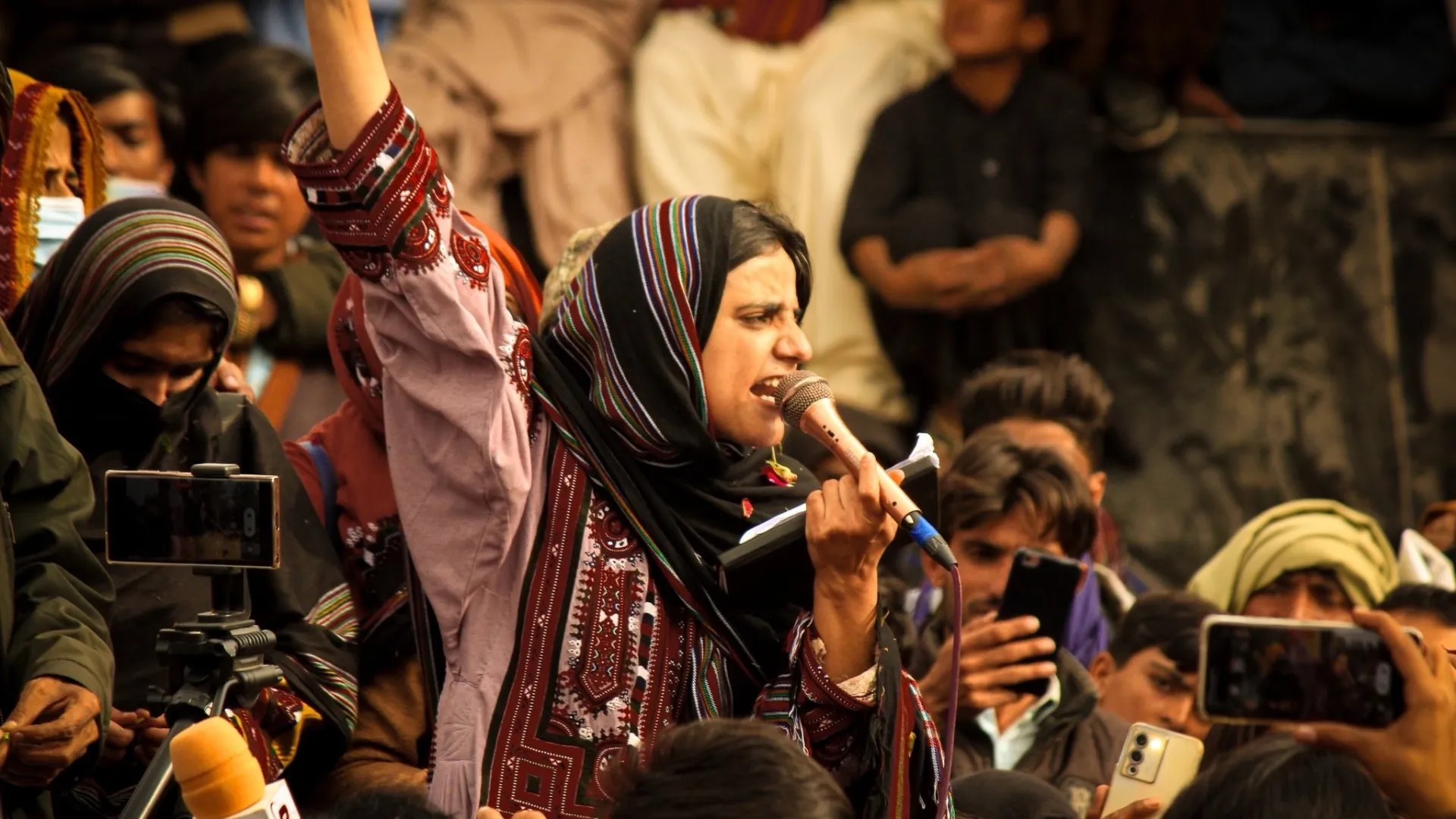
The organization expressed concern over Mahrang Baloch’s deteriorating health in prison, stating that her mobility has been severely impaired.
The detention of Mahrang Baloch, a prominent Baloch activist, has sparked widespread condemnation and protests.
Amnesty International is calling for her immediate release, emphasizing that the Pakistani government should respect the rights of peaceful protesters and release all those detained for exercising their freedom of expression.
Amnesty International has called on the Pakistani government to release Dr. Mahrang Baloch, leader of the Baloch Unity Committee, and other activists who were detained.
The international human rights organization wrote on its website on March 21 that Mahrang Baloch has completed a year in prison, and while people celebrate Eid, some Baloch families await the release of their loved ones. The leader of the Baloch Unity Committee has been detained in Quetta, Baluchistan, since March 2025, facing several charges.
The Karachi Terrorism Court acquitted her in a sedition case in December 2025. The Baloch Unity Committee is a non-governmental organization and movement that campaigns for the rights of Baloch people and the recovery of missing persons, often organizing protests and gatherings.
The committee’s activists, including Mahrang Baloch, have held several protests and sit-ins since last spring against the detention and enforced disappearances of their colleagues. The Baluchistan government had arrested several activists, including Dr. Mahrang Baloch, leader of the Baloch Unity Committee, on charges of attacking police and damaging government property.
Baloch and dozens of other activists were arrested on March 22, 2025, in Quetta while protesting for the release of their detained colleagues. Dr. Mahrang Baloch told, on March 21 that police fired on peaceful protesters, killing three and injuring 13.
However, Baluchistan government spokesperson Shahzad Rind alleged to media on the same day that protesters had attacked police, injuring 10 personnel, including officers.
Quetta’s then-commissioner, Hamza Shafqat, also alleged on March 22 that protesters had damaged CCTV cameras, post office buildings, transport terminals, and vehicles on Siriab Road. However, the Baloch Unity Committee denied these allegations.
Mahrang Baloch is known for criticizing Pakistan’s security and intelligence agencies, accusing them of enforced disappearances, illegal detentions, and extrajudicial killings of Baloch people. She’s not alone, the Human Rights Commission of Pakistan, Pashtun and Baloch nationalist politicians, and human rights activists also accuse Pakistan’s security and intelligence agencies of enforced disappearances.
People, mostly Baloch and Pashtun, have gone missing in Pakistan for years. In 2024, Minister for Law Azam Nazeer Tarar stated that the issue of missing persons is complex and it’s undeniable that state institutions are involved in enforced disappearances, but added they haven’t found concrete evidence.
The Pakistani military broadly denies allegations of enforced disappearances, stating that some missing individuals have joined militant groups, while others have been killed in operations and clashes.
The Pakistani government’s Commission of Inquiry on ‘Enforced Disappearances’ stated in September 2025 that it has registered 10,636 missing persons cases since 2011 and resolved 8,986 of them.
By- Laiba Yousafzai

