
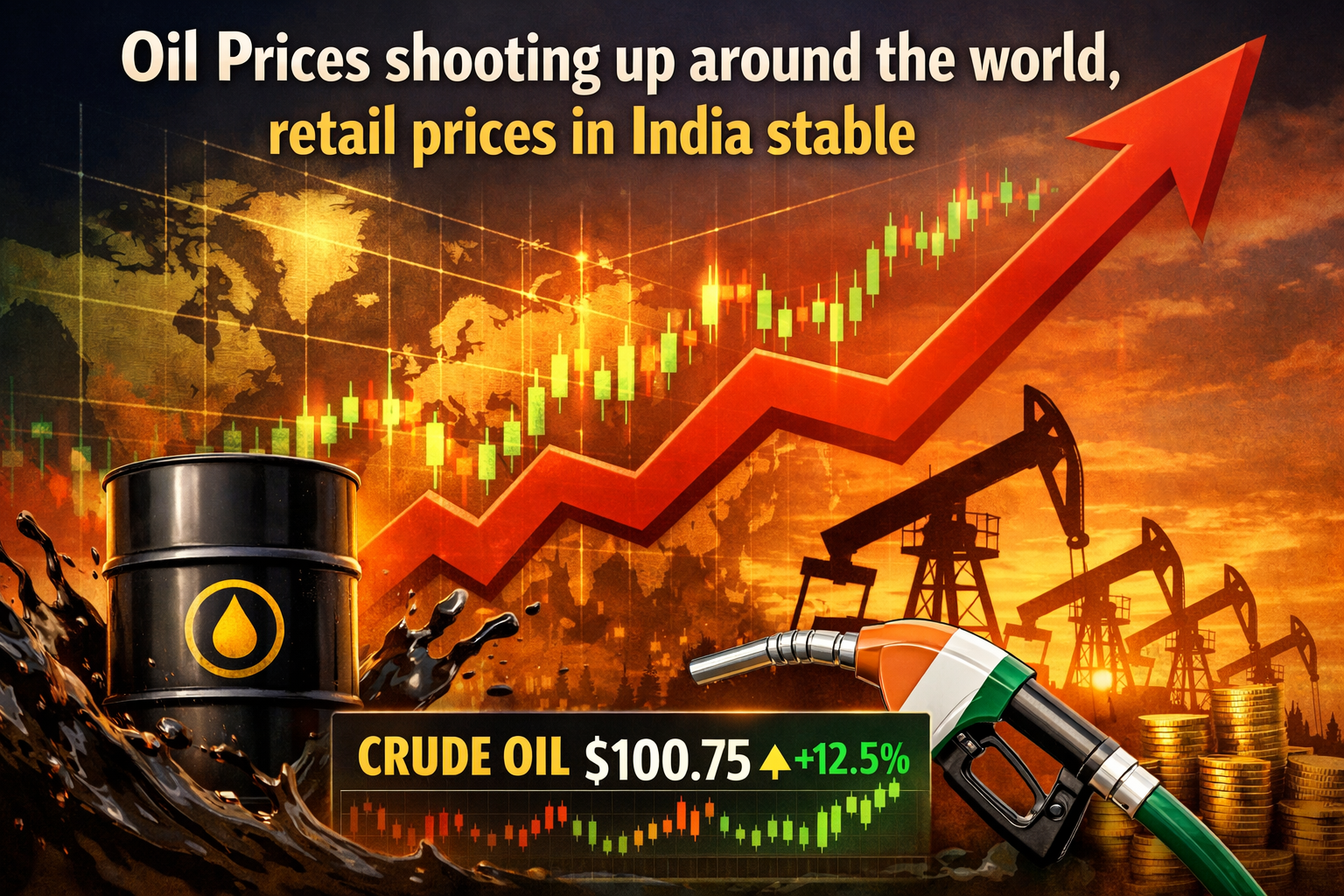
The world has been thrown into turmoil ever since US and Israel launched air strikes on Iran on the 28th of February. Iran’s Supreme Leader Ali Khamenei was among several senior Iranian political and security figures killed in the strikes.
Since then, the conflict has continued to escalate with all the gulf countries also getting embroiled. Iran in retaliation has targeted US bases in the gulf region along with several key infrastructure. Gas fields are being hit, oil facilities are being hit, LNT plants have been hit as the conflict continues. Even the critical Strait of Hormuz has been closed by Iran.
The escalating conflict has led to the fears of the biggest oil crisis in the world since 1973. The region is the nerve centre of global oil supply chain and with the disruption in the region at this scale, there is widespread panic in the world.
Crude oil has jumped by as much as 60% since the conflict started. Petrol, Diesel, Gas prices have skyrocketed across the world. Nearly a 100 countries have reported prices shooting up in last 3 weeks.
USA has seen retail prices going up by nearly 20%, Canada has seen them rise by 29%, many European countries have gas prices going up by 25%, even China has retail prices going up by over 10%.
South East nations have been worst affected with prices going up by over 60% in some cases. Island countries that totally rely on oil imports are facing an oil crisis.
However, amidst this global chaos and panic over oil availability and its prices, one country has kept the retail prices absolutely stable, India. The prices of Petrol and LPG have remained at the same level as they were before the conflict began. Not only that, the availability in retail outlets has also not been affected. The only change being, regulation of LPG supply to ensure that hoarders don’t try to take advantage of the situation and start hoarding cylinders.
This contrast highlights how carefully calibrated policies and crisis management can help mitigate the economic impact of international conflicts.
The Iran war has directly affected global oil supply because the Middle East remains the world’s most important energy-producing region. A significant portion of global oil shipments passes through the Strait of Hormuz, a narrow maritime corridor that handles roughly one-fifth of global oil trade. Disruptions in this region quickly ripple through the global economy. Since the conflict escalated, crude oil prices have crossed the $100 per barrel mark and even surged toward $120 at certain points, creating panic in global energy markets.
As a result, petrol prices have climbed rapidly in many countries. Several economies have already witnessed substantial fuel price hikes within weeks of the conflict beginning. In the United States, gasoline prices jumped sharply, while parts of Europe recorded increases of around 7–8 percent. Some countries have seen even steeper rises as supply concerns intensified.
Globally, the scale of the crisis is evident. According to reports, more than 90 countries have experienced rising petrol prices since the war began, reflecting the widespread dependence on Middle Eastern energy supplies.
There are several factors behind this stability in retail prices in India. Following the spike in crude oil prices, Indian oil marketing companies have the capability to absorb these short term shocks instead of passing them on immediately to consumers.
Secondly, thanks to Indian government’s policies in world oil markets, India is well positioned to tackle any supply chain disruptions. Over the last few years, India has diversified its sources of crude oil. This ensures that disruption in one region doesn’t impact the entire supply of crude oil to India.
To safeguard Indian interests, India went around the world, securing the best deals for Indians, and widening its oil supply chain. With Middle East on fire, this strategy has proved particularly useful.
Another important thing is that this is a success of Indian diplomacy as well. While Strait of Hormuz is closed for most countries, Indian oil tankers are still passing through it. India is among the handful of countries with this exception, allowing the crucial oil to reach India.
Of course, the challenge is not over. If the Iran war continues and global oil prices remain elevated for a prolonged period, India too may eventually face pressure to adjust domestic fuel prices. Economists warn that sustained oil prices above $120 per barrel could affect inflation and trade balances for oil-importing countries like India.
Nevertheless, India’s current performance demonstrates a relatively effective crisis-management strategy. While many countries are already grappling with fuel price spikes and economic disruptions, India has managed—at least for now—to maintain stability in one of the most sensitive sectors of the economy.

