
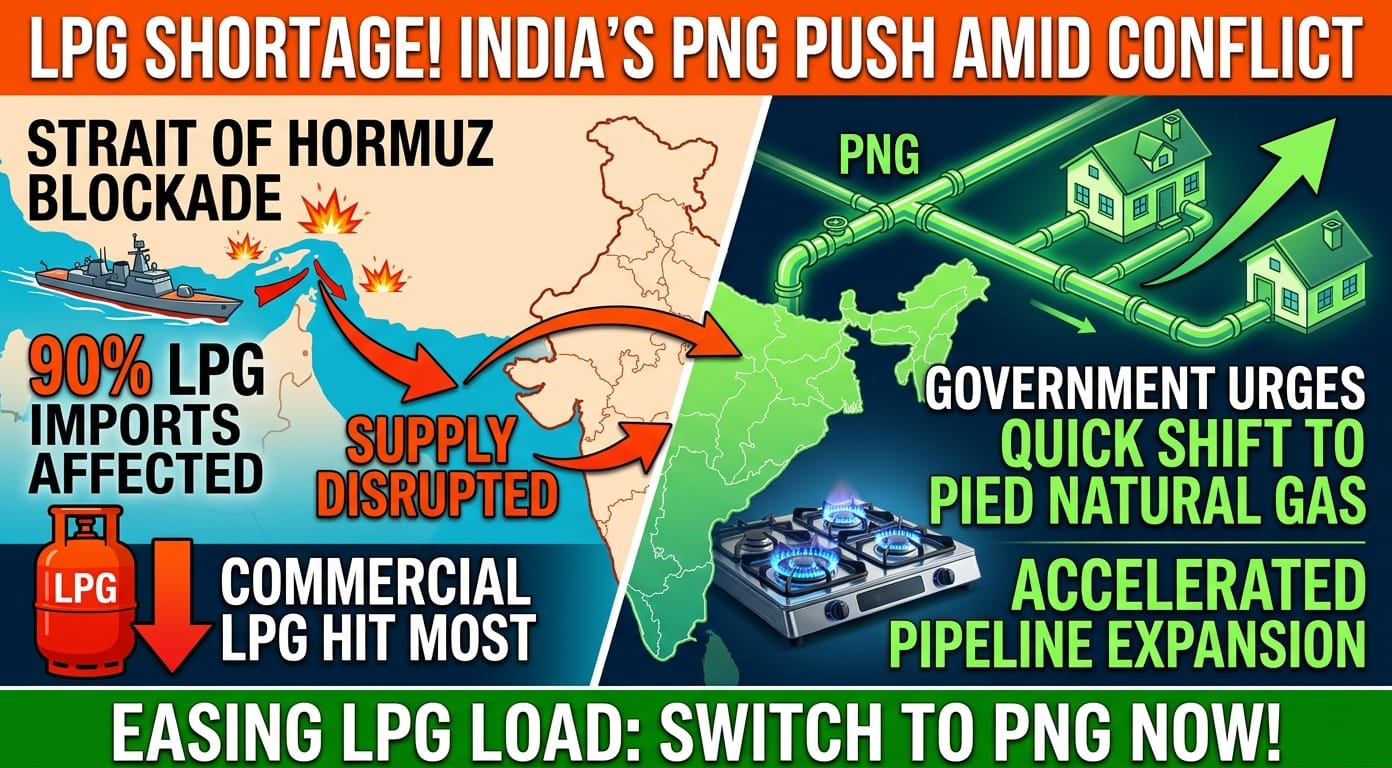
India is facing a tough time with cooking gas supplies because of the ongoing war in West Asia that has shut down the Strait of Hormuz, a key sea route for most of its imported liquefied petroleum gas or LPG. The country gets about 60% of its LPG from imports, and 90% of those shipments pass through this narrow waterway between Iran and Oman, meaning over half of daily LPG needs are suddenly unavailable.While homes are still getting their regular cylinders thanks to government steps, shops, restaurants, and factories are really struggling without enough commercial LPG.
To fix this fast, the central government wrote to all states and union territories on March 16, 2026, asking them to speed up approvals for city gas companies to lay more pipes for piped natural gas or PNG right to homes. They want states to okay new permissions in just 24 hours, give automatic approval for pending ones, drop all fees for road cuts and fixes, allow work anytime without season limits, and name special officers to help get things done quickly. This push comes as officials urge everyone—homes and businesses—to switch to PNG where pipes are already nearby, since about 60 lakh households could connect easily and ease the load on LPG.
The Petroleum and Natural Gas Regulatory Board, or PNGRB, also told city gas firms to add more workers, reach out to people actively, and hook up new users super fast in ready areas. Right now, India has around 1.5 to 1.65 crore PNG home connections, compared to over 33 crore LPG ones, but PNG needs pipes at the door while LPG comes in easy cylinders.[8] Some companies are sweetening the deal with free gas for a bit or no signup fees to get folks on board quickly.
On the LPG side, things are holding up for families with smart moves. Oil companies are pumping out 50 lakh cylinders a day like before, even hitting 60 lakh some days, and no dealership has run dry across 2,500 spots. Panic buying peaked at 88.8 lakh bookings on March 13 but dropped to 70-77 lakh by March 16, still above the usual 55-56 lakh daily average.
Domestic LPG output jumped 38% from before the trouble by ordering refineries to skip petrochemicals and focus on cooking gas, with more gains expected soon. To stop hoarding, urban homes now wait 25 days between bookings (up from 21), rural ones 45 days, and online orders are up to 87%.
Crackdowns are on too, with over 12,000 raids seizing 15,000 cylinders, big busts in Delhi, UP, Kerala, and others, plus 2,500 checks by oil firms. Businesses get backup fuels like kerosene, biomass, or even coal, and everyone is told to use electric induction stoves or save LPG. Natural gas for PNG and CNG vehicles is steady at 100%, less hit since only half of imports use the strait.
Overall, the government says the LPG pinch is real but managed—no worse than start—and PNG growth will build tougher energy safety long-term. Petroleum Ministry’s Sujata Sharma stressed no panic, stick to online bookings, and shift fuels where you can.With ships dodging risks and costs up, imports from US and elsewhere help, but quick PNG rollout is key now.

