
Nestled away within the forests of Chhattisgarh’s near the regions of Bastar, are some villages that were previously used as ambush sites by the Maoist Naxalites. Some have now begun to make changes and become places of hope and unity.
Jagargunda village, located in Sukma district, was one of these villages and has transformed itself from one that gave the Naxalite groups cover to one that supports the Bastar Olympics. The Bastar Olympics is an example of how the people of Bastar can come together to celebrate athletic ability in an area that was once extremely violent. The development that has begun to take place in Jagargunda signifies that the communities are finally beginning to move on from the troubles of recent history.
The Bastar Olympics created a new democratic space in the Red Corridor of India
Bastar has a notorious history of violence and war that can still be seen today in its land. It has been the centre of Maoist violence in India for over 40 years, and roughly corresponds to the ‘Red Corridor’ (the area where Maoist and Naxali groups hold sway). Jagargunda served as an operational centre for attacks against police and other security forces, as well as construction activities or other infrastructure projects. Encounters between Maoist guerrillas and security forces were a regular occurrence, and development came to a halt. Schools were close,d and roads fell into disrepair; fear permeated villages throughout the region. Utilising Adivasi grievance issues over lost land or economic exploitation, Maoists created one type of alternative governing structure based on threats and terror. By 2010, within India, Bastar contained a large percentage of total Naxal deaths.
Guns give way to sport and hope in ‘Red Corridor’
However, there was a significant turn of events from 2015 onwards, with the aggressive counter-insurgency efforts through initiatives such as Operation Prahar and the establishment of community-based programs, resulting in many insurgents surrendering their weapons. Between 2020 and 2025 provides evidence to back this point, with over 1,000 insurgents choosing to turn in their guns. Perhaps the true measure of the lasting effects of this peace has been realized through the sister relationship to the establishment of the Bastar Olympics.
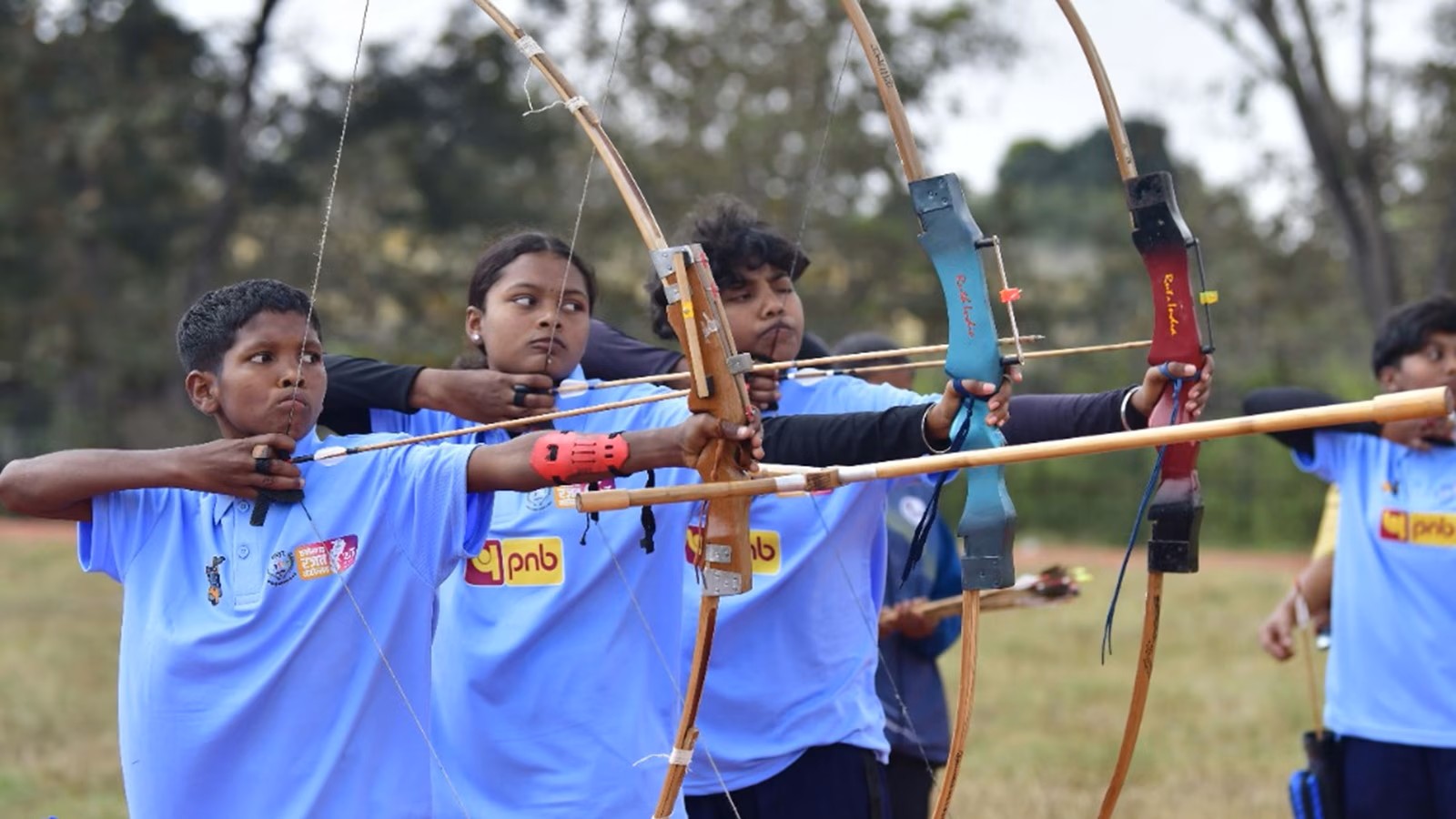
Developed with the combined support of the local administration and security forces of Bastar, the Olympics were created as an alternative to counteract radicalism on a community level. The first Olympic-type events were hosted in Jagargunda in 2018 with very few sporting events, yet the current Bastar Olympics have grown to 15 distinguishable sports across many types of athletic competitions (i.e., kabaddi, badminton, kho-kho, archery and several tribal sports (e.g., Gedi Race and Mareli saila).
Olympics brought down the hammer of Justice
Transformational figures of this transformation are previous Naxalite members like Ramu Devi, who carried out a role with the People’s Liberation Guerrilla Army, while using an AK-47 in an ambush attacked military convoys during the nighttime 10 years ago, now they share stories of hiding and committing unrelenting acts of murder or assassination for a violent
organization. Ramu Devi (captured by police in December 2019), along with other former Naxalites (including Mandavi), now live in a location used primarily to rehabilitate former Naxalites, where they were taught skills and assisted to rebuild their lives after surrendering to police in exchange for support. As former Naxalites, they currently work as coaches who provide training to teams of former Naxalites as well as boys who reside in their villages to compete in sporting competitions. Currently, they state: “The gun has taken away all from me…my family, my future…sports gives it back to me.” There are numerous stories of similar individuals like Ramu Devi, including women who, in their pasts, planted IEDs and are now breaking badminton rackets or seniors who used to have to survive by throwing javelins and are hitting targets with it.
From AK-47 to Khadi: Bastar celebrates a new kind of revolution
This redemption arc is reinforced within the Olympics’ structure. The Games are held annually during February (to fall during the dry season and be able to accommodate everyone). However, Jagargunda is still always the final event. In 2026, there were over 10,000 participants from over 500 villages competing, compared to only 2,000 in 2019/ Participants compete in categories from Junior to Masters (50+) in order to be inclusive. Cash prizes, trophies, and bicycles are provided as incentives for the last participant’s draw, providing them with empowerment through these means. As the district’s sports officer, SPK Singh explains, “It’s not just about playing; we’re also demonstrating that we belong.”
Bastar’s resurrection: How the Bastar Olympics will change the Naxal landscape
The Games bring about economic development beyond the sports arena as well; the local area is now rapidly growing due to infrastructure development. Mobile health camps are being established to provide thousands of vaccinations at no cost to participants. The schools serve as qualifying sites and have seen a 30% increase in student enrollment in the areas hosting the events. The Government of Chhattisgarh has linked the events to their programmes, such as the Mukhyamantri Suposhan Abhiyan (providing meals for players). Tata Steel, JSW, and other corporations are funding equipment kits and floodlights for the events, all of which they view as CSR-related projects that they can support.
Exploding miracles: Naxal coaches helping create the future of sport in Bastar
Data underscores the shift. Naxal incidents in Sukma plummeted 85% from 2018 to 2025, per Ministry of Home Affairs figures. Youth radicalisation, once rampant (with recruiters targeting dropouts), has nosedived as sports to fill idle hours. A 2024 study by the Institute for Conflict Management found that 70% of surrendered militants cited “community programs like Olympics” as key to reintegration. Economically, tourism trickles into eco-resorts near game sites, employing locals, selling tribal handicrafts.
The Future of Bastar: Sport, Surrender, and the Denial of the Naxals’ Historical Claims
Of course, there are still many challenges that exist today. There are still several groups of hardcore Maoists that are disrupting events by threatening and/or sabotaging them. There are also many logistical challenges in getting to remote teams, organizing tests, and providing supplies. However, there is tremendous continued resilience and strength with many people continuing to participate in the Bastar Olympics. During the 2025 Bastar Olympics, after a brief flare-up, players from teams formed a human chain calling out “Amar Bastar, Amar
Olympics” (My Bastar, My Olympics) to highlight the true ownership of their community by assembling as one.
40 years of bloodshed and chaos: The rise of a new Bastar is here
The feedback from participants paints a picture of diverse backgrounds. For example, when asked about competing as a kabaddi raider, 19-year-old Lakshmi Netam stated, “I was offered to be recruited as a youth by Maoists when they visited my school. They claimed they would give me power; I won’t have it now…I will raid on behalf of my team and win.” However, there are 65-year-old competitors, like Ganga Markam, who compete in masters’ events with young people; they are able to provide mentorship and are bridging the generation gap. Ganga said, “We have seen many young people die. Let them have freedom to run.”
The transition of Bastar to Bharat: Olympics bridge from red shadows to national glory
The goal of the Bastar Olympics is to compete on a national level in the future. One plan we want to implement is to put winners of the Bastar Olympics against winners of state competitions in other parts of the country through our “Bastar to Bharat” invitational. We also want to create a digital streaming solution using MyGov for everyone who will not be able to attend but would like to watch the games take place. We are using existing platforms in Jharkhand or Odisha as models. During an event in Jagargunda, Chief Minister Vishnu Deo Sai said in his 2026 budget speech, “This is our peace dividend.”
Jagargunda’s anthem of redemption: From warfare to Coliseum
At the Jagargunda stadium, as the sun sets behind the hills & the anthem begins to play, the message is very clear: sports are more than just a way to help heal individuals’ bodies; they are also a way to help heal societies as well. From Bastar’s history of warfare (conflict) to Bastar being a place of hope (coliseum), it shows how sports can help remove even the deepest of scars through play.
As the shadow of Maoism diminishes, the roar of the audience echoes in Jagargunda and gives us hope that we can live in a future free of gun violence.
Concluding remarks
The Bastar Olympics, born in the former Maoist stronghold of Jagargunda, symbolizes peace and redemption. With Naxal incidents down 85%, this community-led sporting event, dubbed a ‘peace dividend’ by Chief Minister Vishnu Deo Sai, sees former insurgents as coaches, schools reopening, and villages uniting. Despite challenges from remnants and logistics, the booming participation, new infrastructure, and the mantra “Amar Bastar, Amar Olympics” affirm a profound shift toward a hopeful future, where sport triumphs over violence and Bastar eyes national recognition.
Anirban Dutta is a Political Consultant and International Relations Expert, and tweets at @Anirban47576609

